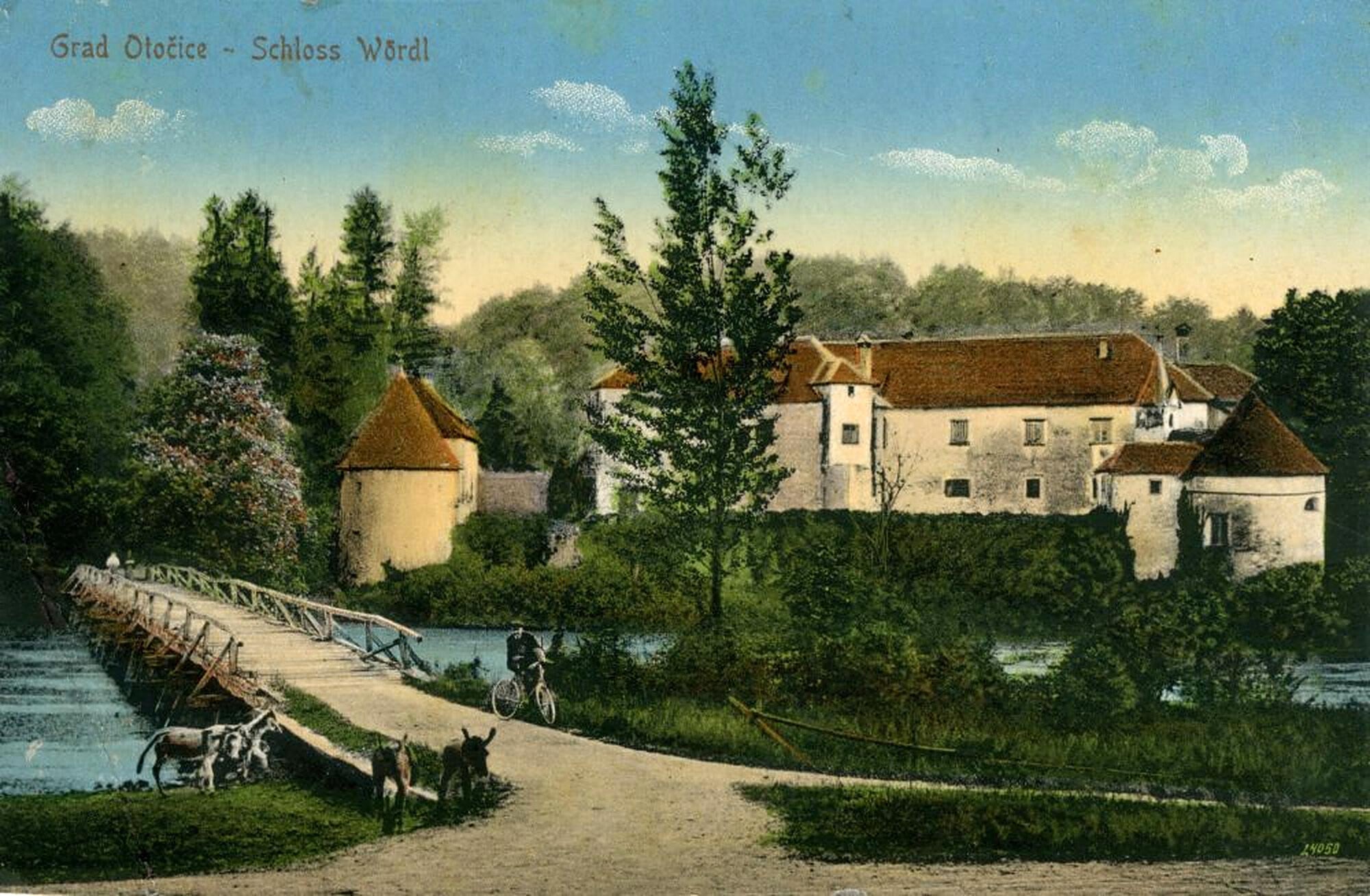
Getting to Hotel Grad Otočec involves a short walk across a wooden bridge, with the Krka flowing on both sides and the castle walls growing taller with every step. Halfway across, though, we started wondering about something else. For centuries, this was a private home, shaped by the river and by the families who lived here. So how did it turn into a place where anyone can walk in for dinner or oversleep? Finding out took us through old engravings, postcards, newspaper archives, and the notes of the architect who put the castle back together.
The short version starts with a road. In 1958, the castle became the headquarters of the youth brigades building the Ljubljana–Zagreb highway, and a year later its first restaurant opened. What happened between the wartime fire and those first paying guests explains a lot of what you see at the castle today, from the rebuilt southern wing to the stone columns in the courtyard.
Before the Hotel: A Castle on the Krka
Otočec first shows up in writing in 1252, when a certain Henrik of Otočec is listed as a witness on a charter. Two years later, in 1254, another document names Henrik and his brother as de Werde. The castle started out as a medieval residence near Novo Mesto, and over the centuries each new household added what it needed, from defenses and residential wings to larger windows.
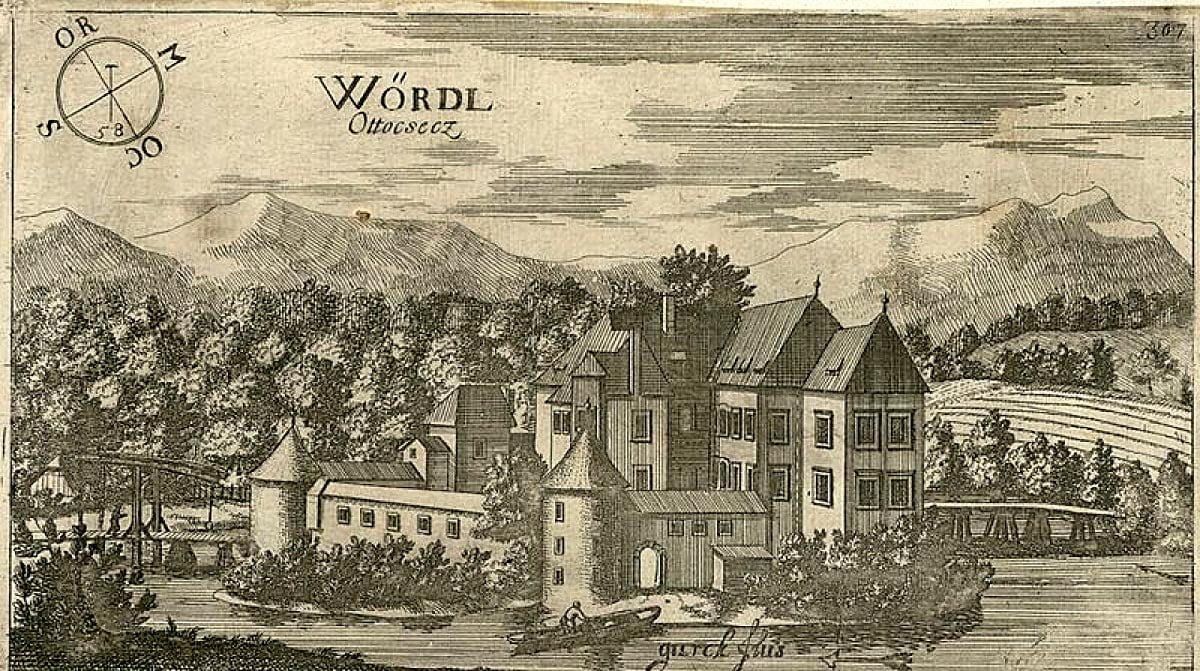
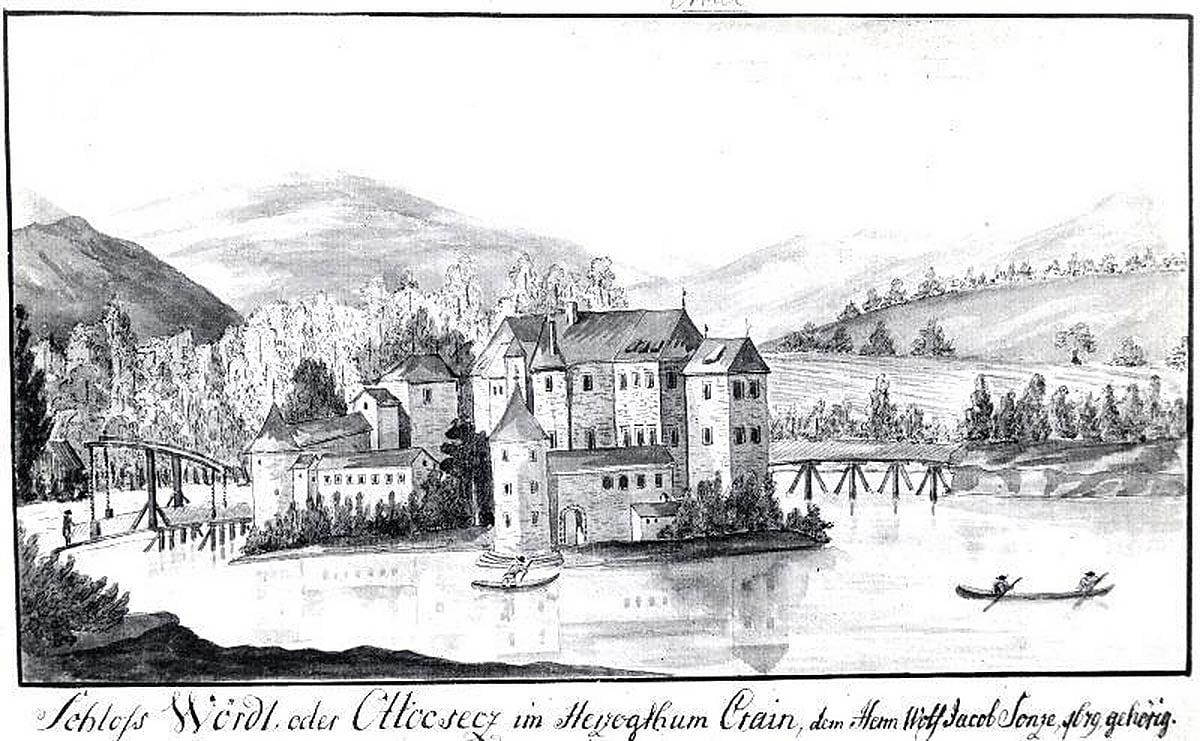
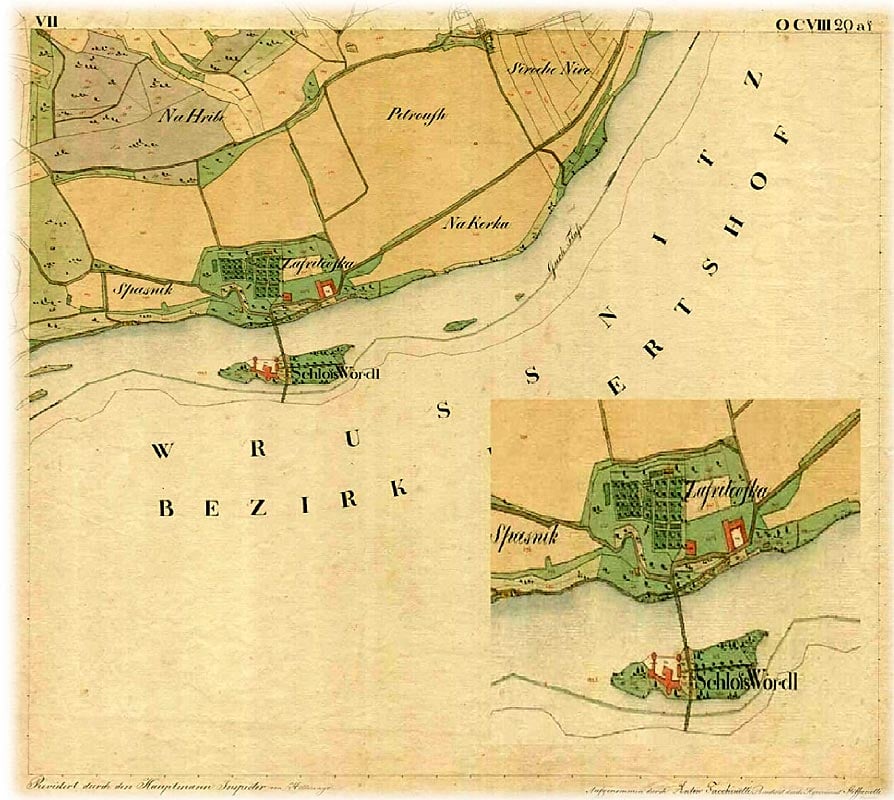
The island itself may not be entirely natural. Marijan Mušič, the architect who drew up the postwar restoration plans, noticed that the southern river channel was narrower than the main one and looked quite different. He suspected it had been dug, or at least widened from an older channel. Later accounts talk about a cut through the river bend to protect the castle. Nobody has settled exactly how that channel came about, so it stays one of Otočec’s open questions.
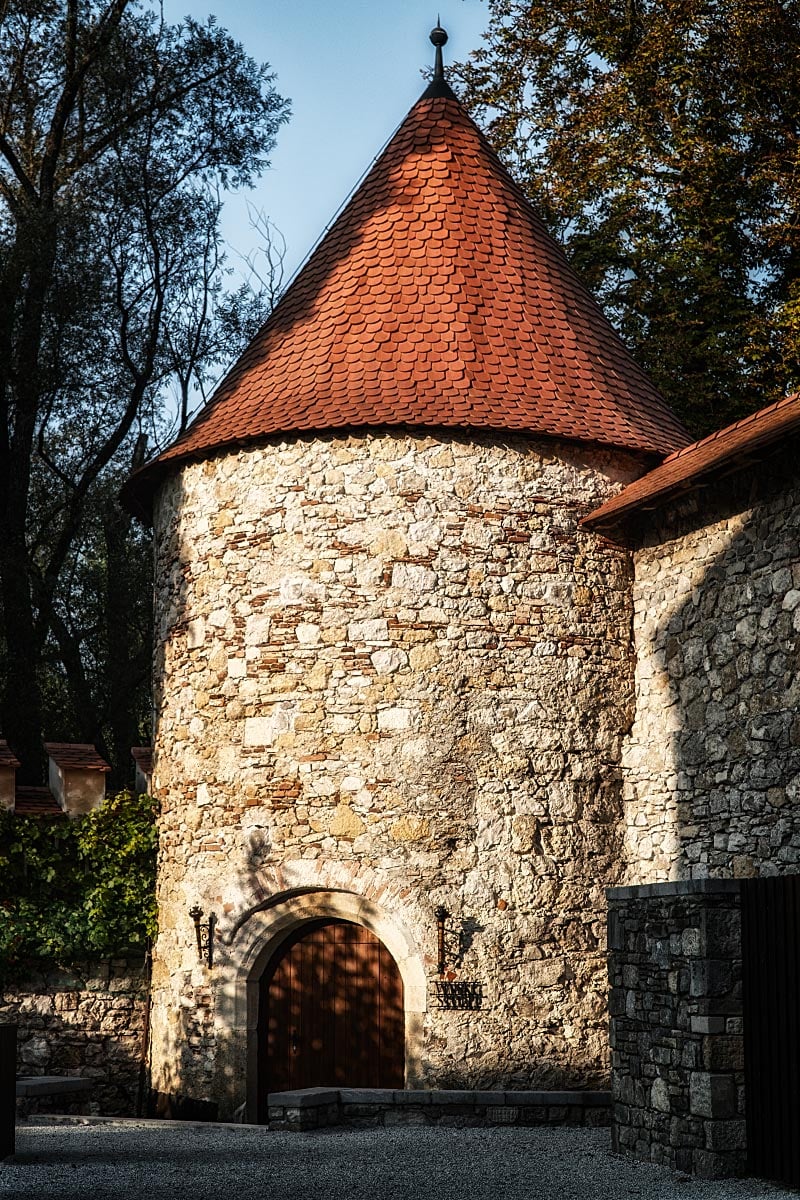
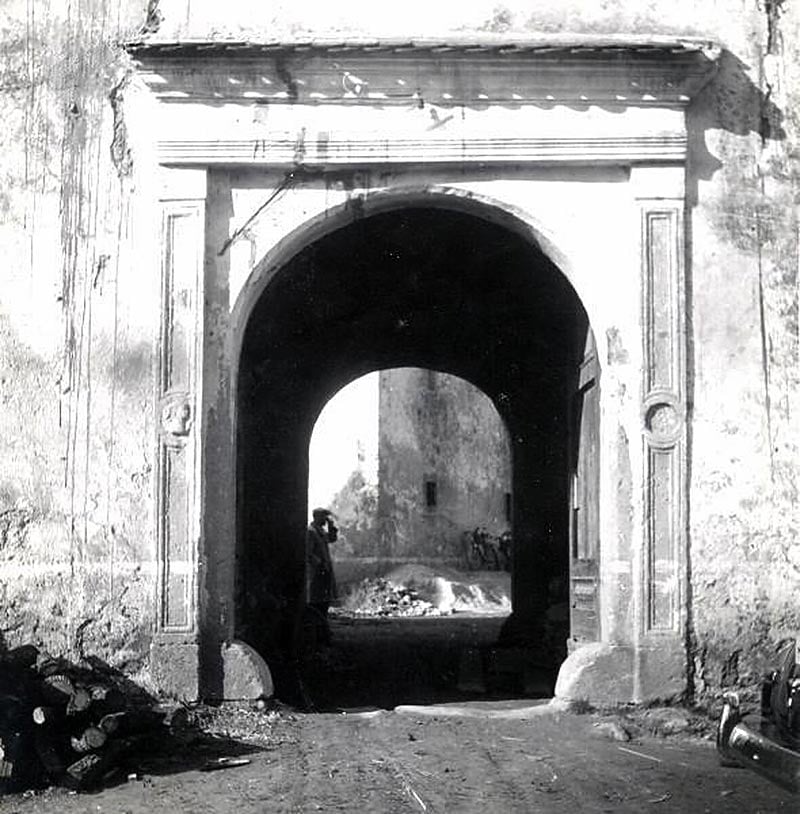
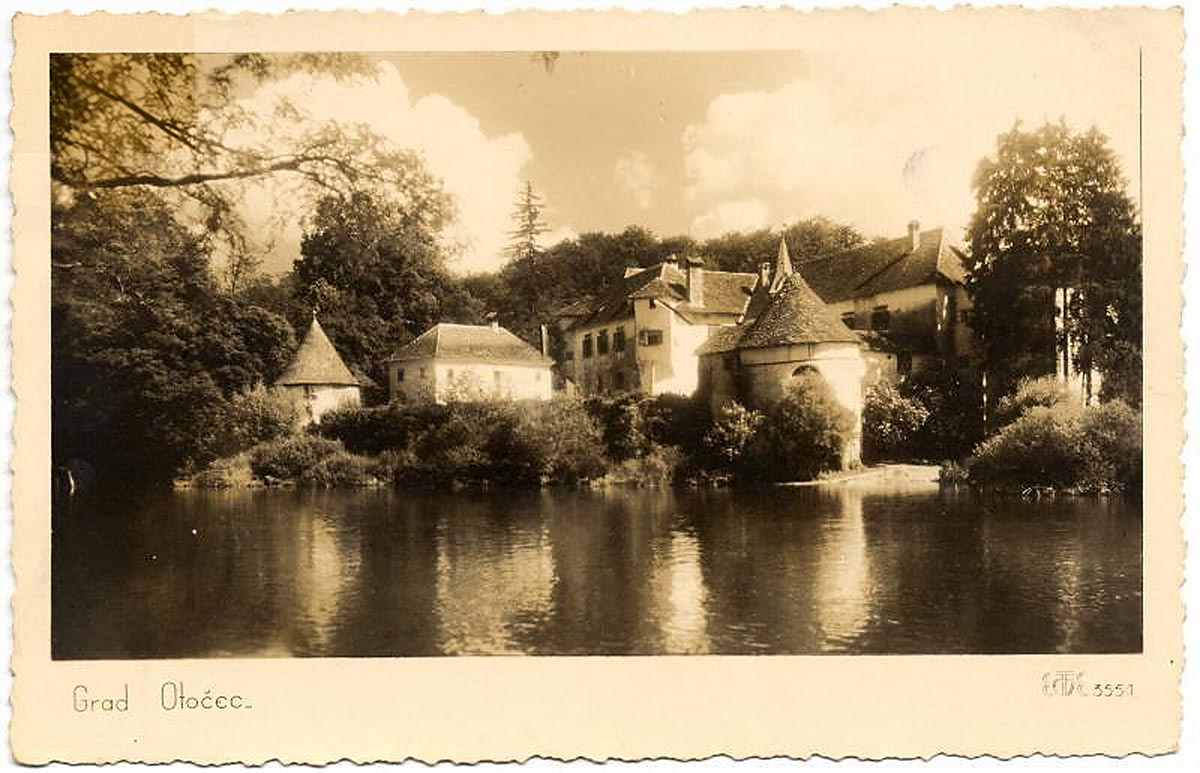
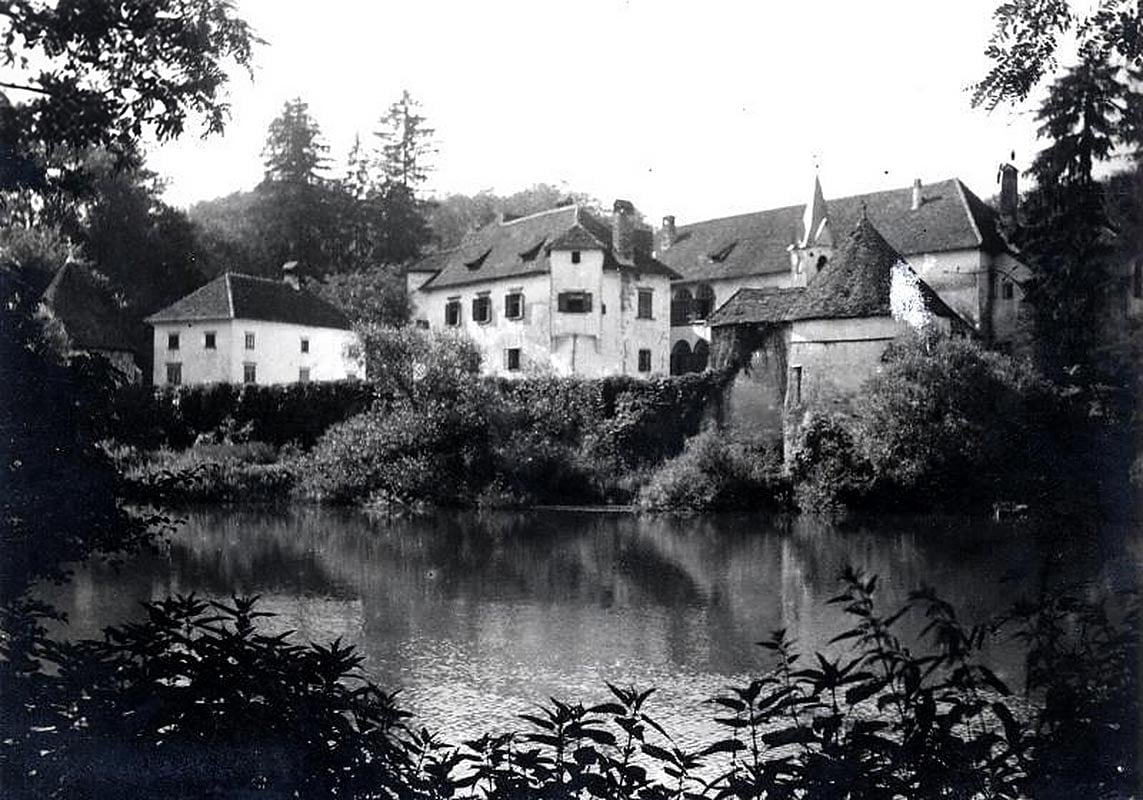
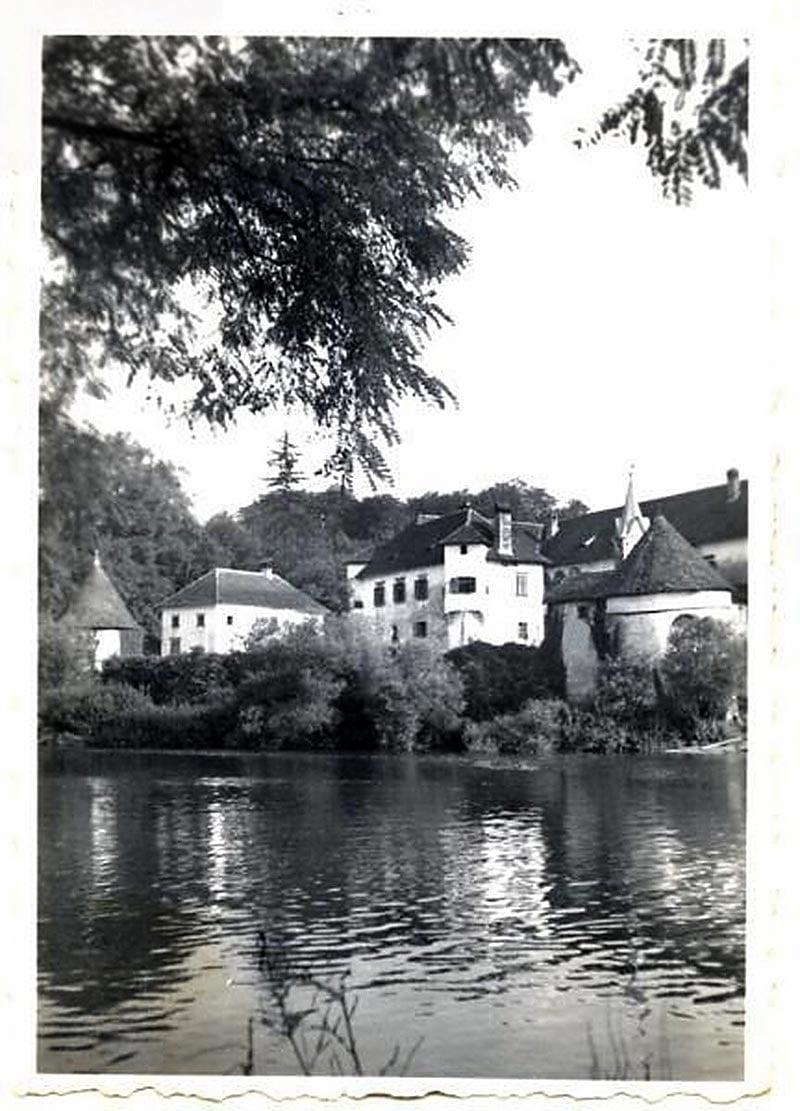
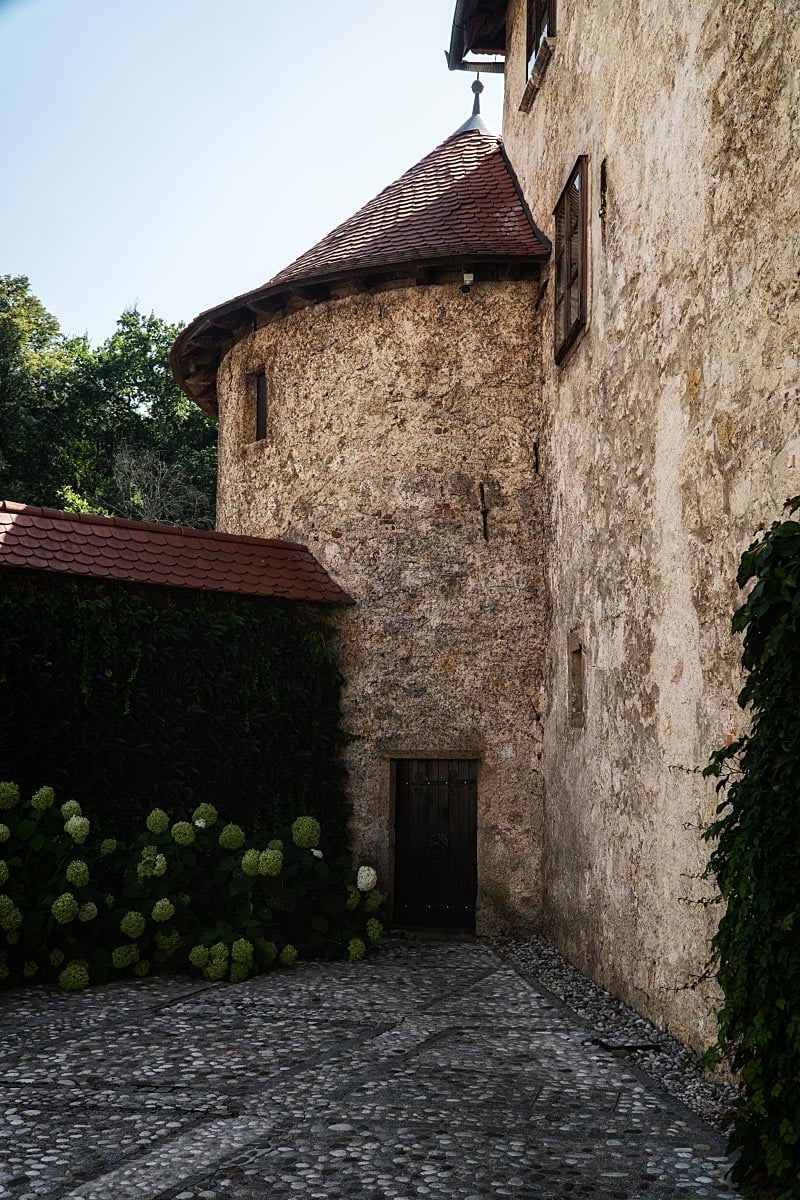
Several owners left their mark in stone, and you can still spot it if you know where to look. The Villanders family’s coat of arms sits on a projecting Renaissance window bay, while the date 1562 on another bay points to building work under Ivan Lenković. Later, the Schweigers turned a northwest defensive tower into a Baroque chapel. In 1738, Franz Karl Schweiger had it fitted with a white marble altar, a black marble floor, and paintings by Valentin Metzinger. The family took just as much care of the grounds. Dragica Poljanec, who wrote a study of the castle, mentions a greenhouse for pineapples and oranges and an avenue that once led to a pavilion. Pineapples by the Krka were not something we expected to find in this story.
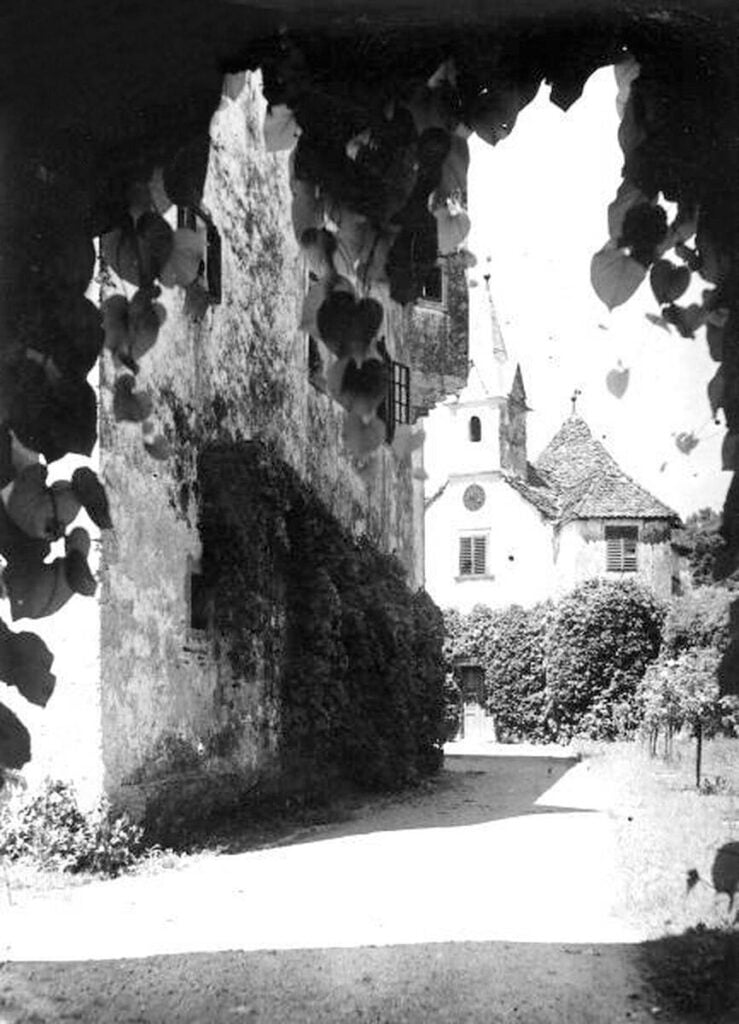
In 1854, Count Albin Margheri and his wife, Jožefina, bought Otočec. The family living here before the war still earned money from the estate’s mill and sawmill, and the people who worked there remembered the mill mostly for its buckwheat bread. Their memories also tell us what two of today’s hotel rooms used to be. The Hunting Room was once the workers’ kitchen, and the space later known as the Knights’ Salon was a wine cellar.
The Fire and the Road to the Castle
In 1942, during the Second World War, Partisans set fire to Otočec Castle. The southern wing and the corner where the wings meet were hit hardest, but part of the roof over the old core held. Then came years of rain and frost getting into the exposed walls, and parts of the masonry started to fall. When Mušič examined the building, he found that some of the oak piles under the foundations had rotted as the water around them changed. The southern façade had to be rebuilt from scratch, on new foundations.
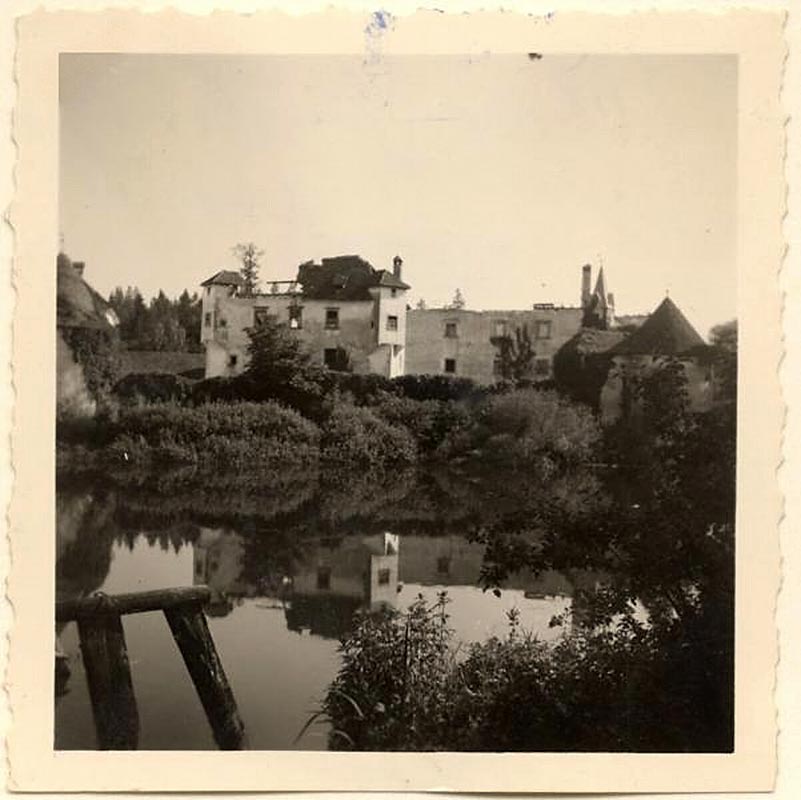
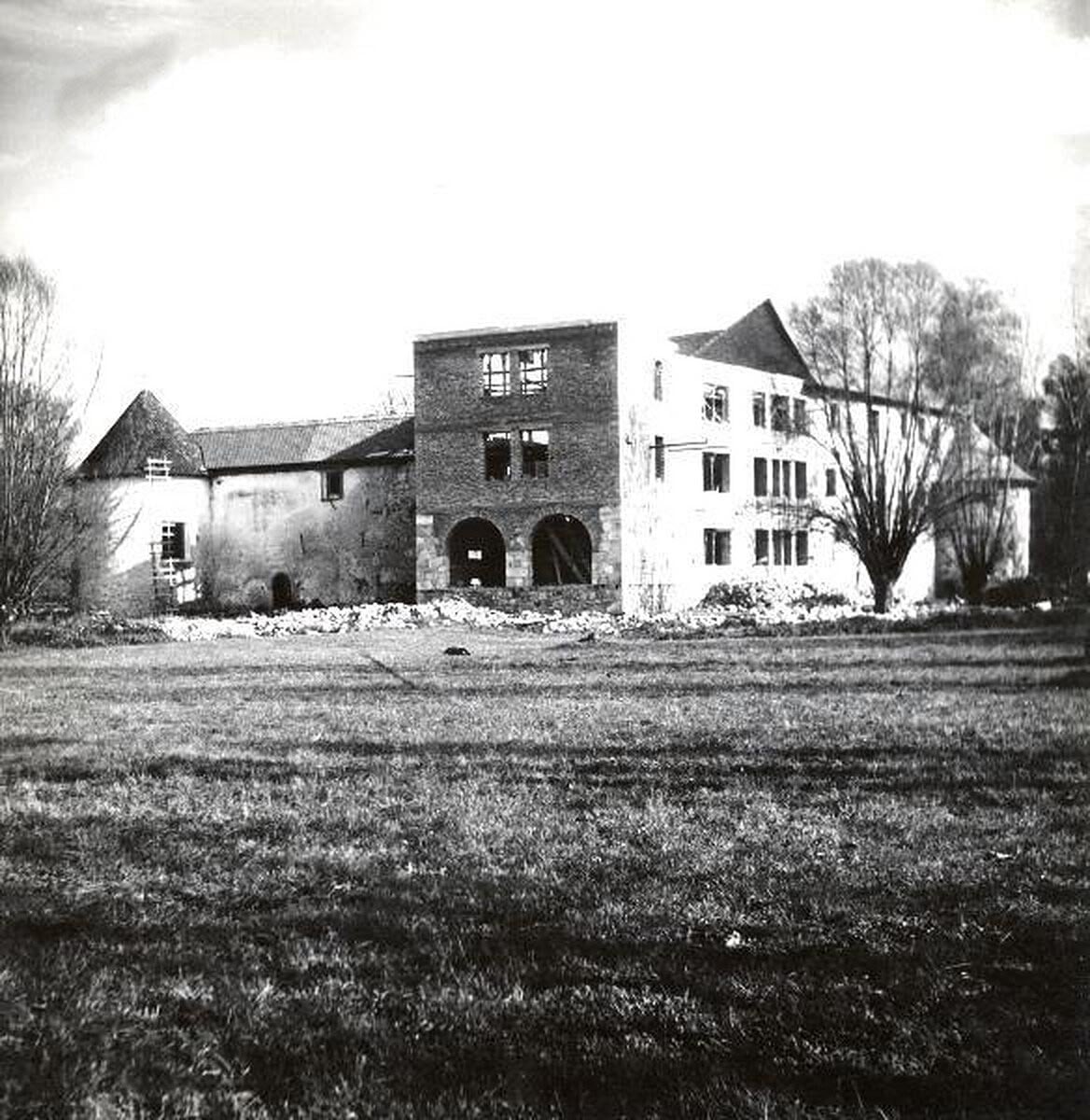
Protection of the ruins began in 1952, led by conservator Ivan Komelj and based on Mušič’s plans. In 1958, the new highway gave some of the rooms a job straight away. The brigades needed a headquarters, so workers from the Pionir construction company got the castle ready for the staff, while the young road builders slept in wooden barracks across the river. There was even a press center inside the castle, and a Radio Ljubljana transmitter sent out a daily broadcast on how the work was going.
Once the road was finished, the plans changed again. Otočec was suddenly right next to a busy route between Ljubljana and Zagreb, and Mušič later remembered how quickly the number of visitors grew beyond what anyone had expected. In December 1958, the local newspaper Dolenjski list reported a loan of 35 million dinars to convert the castle for tourism, a report ethnologist Petra Šinkovec cites in her research. Now there was both a good reason to keep the castle open and the money to do the work.
When Did Otočec Castle Become a Hotel?
According to the hotel’s own history, the first restaurant in the restored castle opened in 1959. Turning the rest of the building over to guests took a few more years. The ZRC SAZU heritage inventory puts the end of the restoration in 1961, while Poljanec gives 1962. In other words, the castle became a hotel step by step, and we couldn’t find a reliable date for the first guest who actually spent the night here.
The restaurant plans go back to 1954, when architect Milica Detoni drew them up. Most of what a hotel needs, including the dining rooms, guest rooms, and kitchen, went into the rebuilt southern wing, which meant the older rooms could keep more of their original layout. After so many years open to the weather, the decision about which wall to keep often came down to what the workers found once the plaster came off.
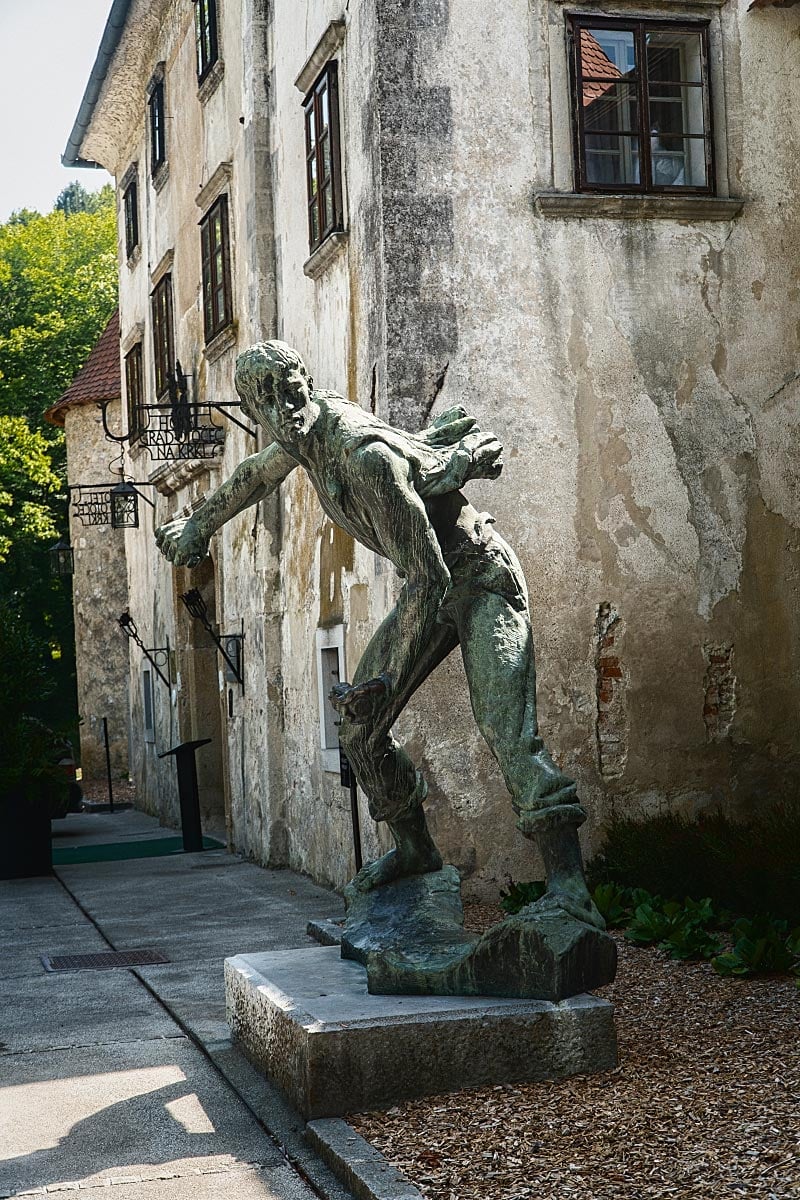
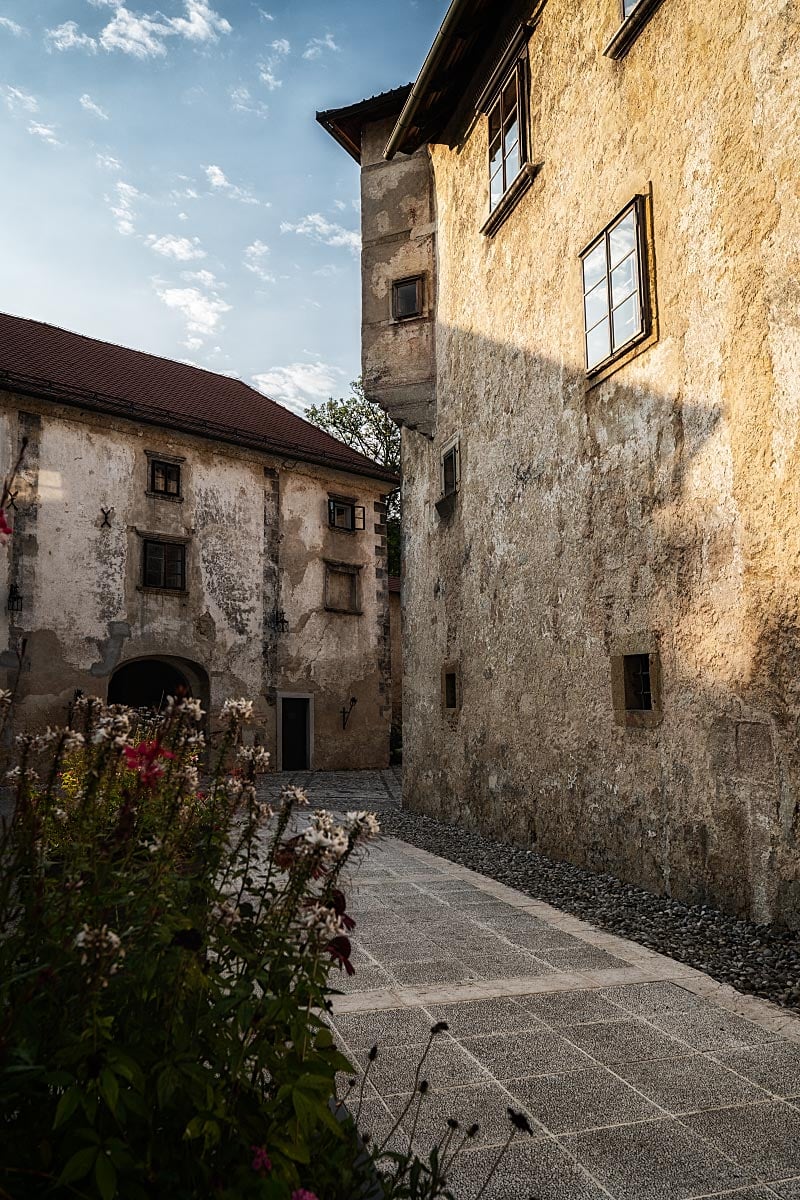
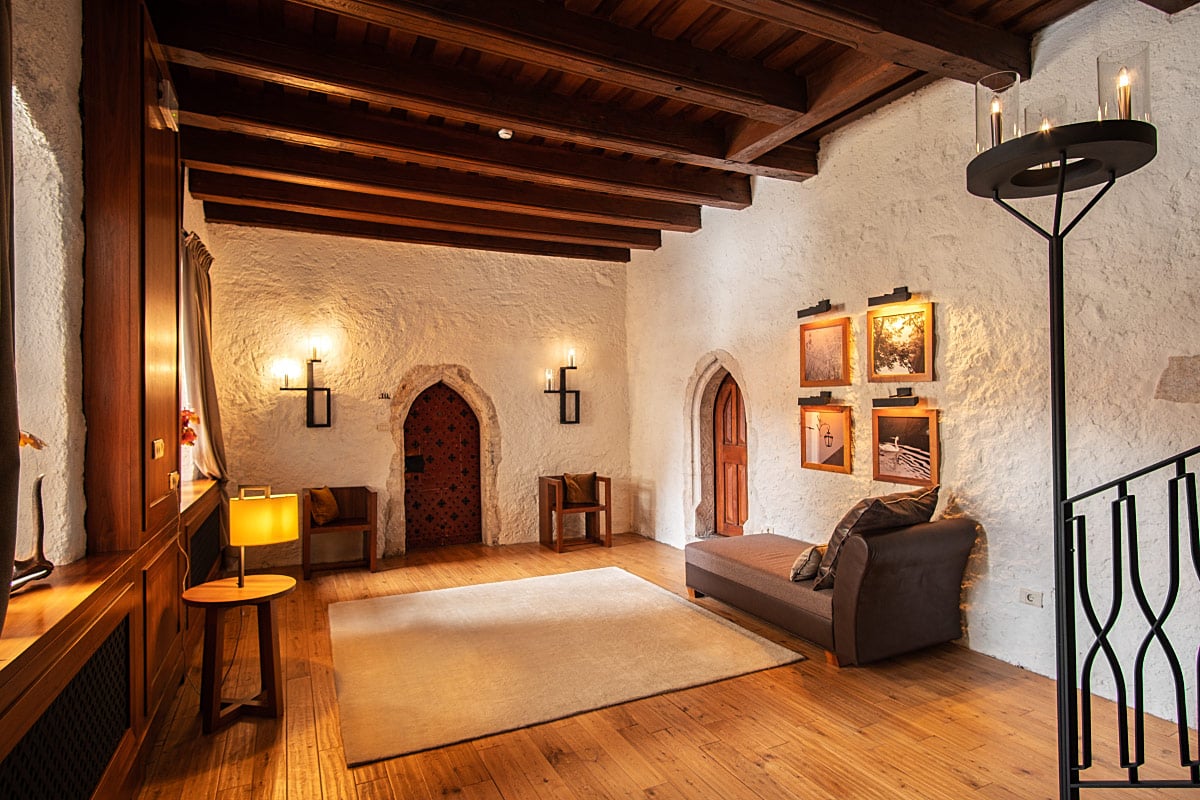
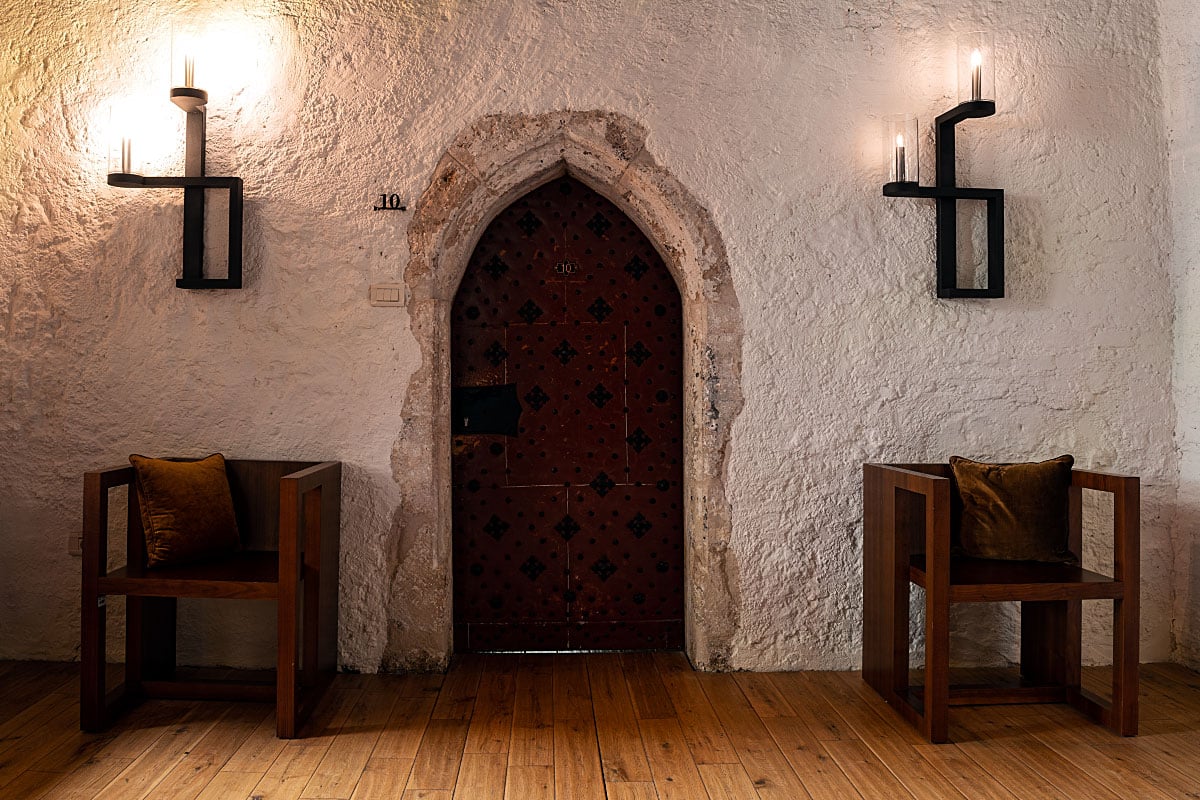
Take the ground-floor hall. A damaged Baroque brick vault there had been hiding the sockets where the beams of an older timber ceiling once rested, and some of them still held bits of rotted wood. Wherever the earlier construction could be documented like this, timber ceilings went back in. A Gothic entrance portal and a window that had been walled up were opened up and used again. On the roofs, copper spouts shaped like dragons carried the rainwater away, so no drainpipes had to run down the façades. A few pieces had to come from somewhere else entirely. The courtyard arcade had lost its columns, so the restorers brought in similar ones from Mirna Castle. They were slightly taller, and the arches were adjusted to fit them.
Not everything made it through the work. In a room next to the former chapel, there were fragments of a Renaissance painting showing a young woman with a fan, three girls, and a dancing rabbit. According to Mušič, these fragments were accidentally destroyed during the restoration. Luckily, he had already drawn the scene in his sketchbook. Even after the hotel opened, he didn’t consider the job done, and he named the glazing and several stone details as work still waiting to be finished.
A Picnic for 3,500 and a Hotel for a New Crowd
On Sunday, September 16, 1962, the castle hotel threw a picnic. Dolenjski list counted around 3,500 people at the castle and in its grounds, who had come in more than 400 cars and 20 buses. On the menu were roast suckling pig and lamb, plus ražnjiči and ćevapčići, and the wine was cheaper for the day. Only three years after the first restaurant opened, people were already driving out to the castle just for the day.
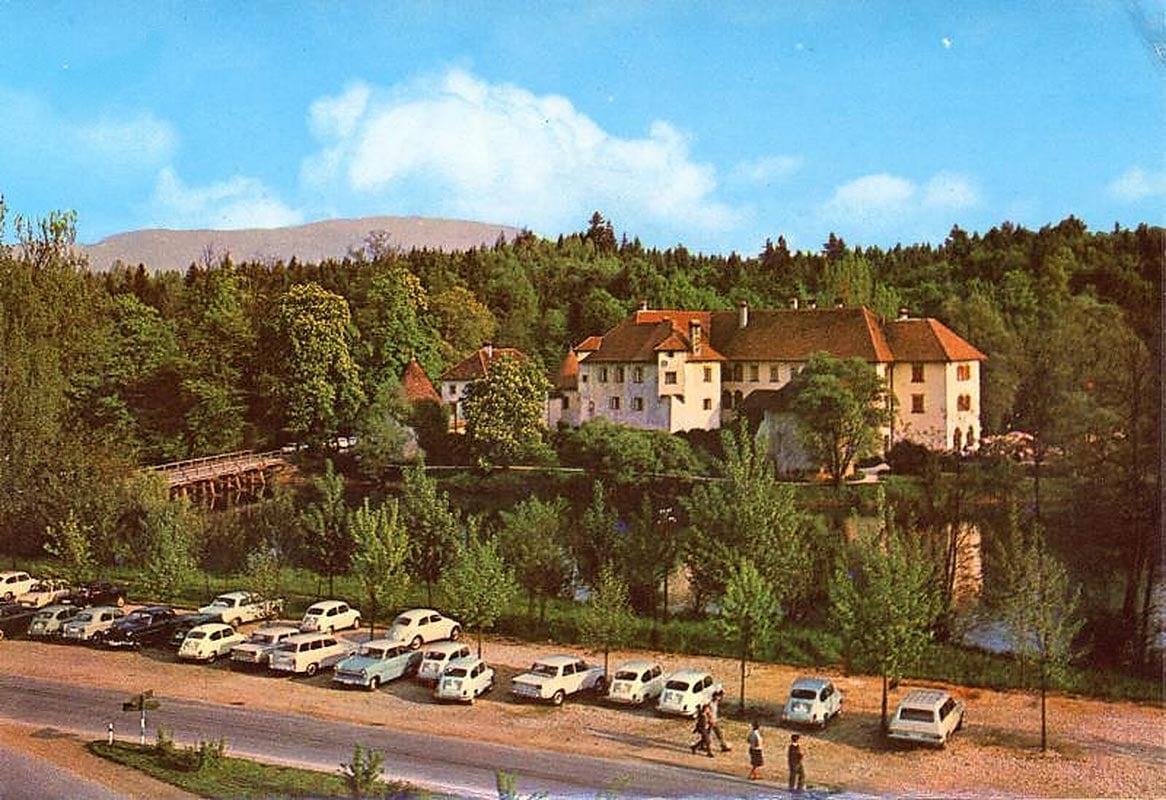
Soon the riverbanks had tourist facilities of their own. Motels and holiday cabins gave drivers somewhere to stay the night, and a separate restaurant took some of the pressure off when the crowds grew. In summer, during the Dolenjsko poletje program, the castle grounds also doubled as a stage. In 1967, a theater group from Novo Mesto performed Federico García Lorca’s The House of Bernarda Alba inside the castle walls, along with an adaptation of Ivan Tavčar’s Otok in Struga, a story linked to Otočec and the neighboring castle of Struga.
Poljanec also mentions a much smaller arrival from those years, one that outlasted the early motels. In 1966, castle manager Franc Kirn brought four swans over from Switzerland. Local folklore had already given swans a part in the castle’s story, as defenders called in to save Otočec from an attacking army.
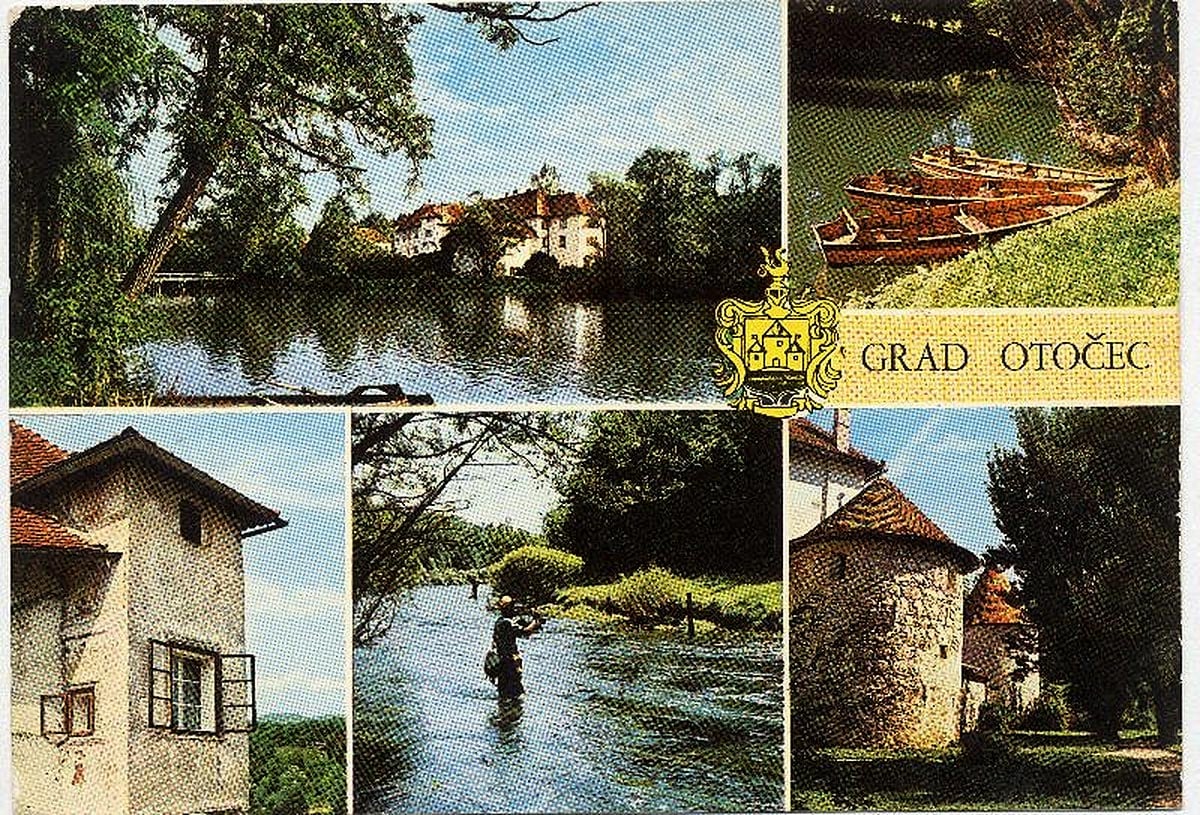
The people who lived nearby remember those years well. Ivanka Jerič recalled cars from Zagreb and Italy, and Italians who came over for Sunday lunch. Štefka Pucelj, an apprentice in the kitchen at the time, remembered the parking lots filling up every weekend. By 1974, Dolenjski list was writing that the castle’s prices were out of reach for many locals. The village children still had their connection to the hotel, though. One local teacher told Šinkovec about school performances at the castle and about pupils celebrating the end of primary school in the restaurant.
From Roadside Stop to a Small Castle Hotel
In 1974, Hotel Grad Otočec became part of Krka’s health resort and hospitality group. By 1987, a big refurbishment was underway, adding suites and private bathrooms and replacing the furnishings. Newspaper reports that year described a castle hotel for guests looking for peace and attentive service, while coach groups could stay at the hotel and motel nearby. From then on, the castle and the rest of the resort were aimed at quite different kinds of travelers.
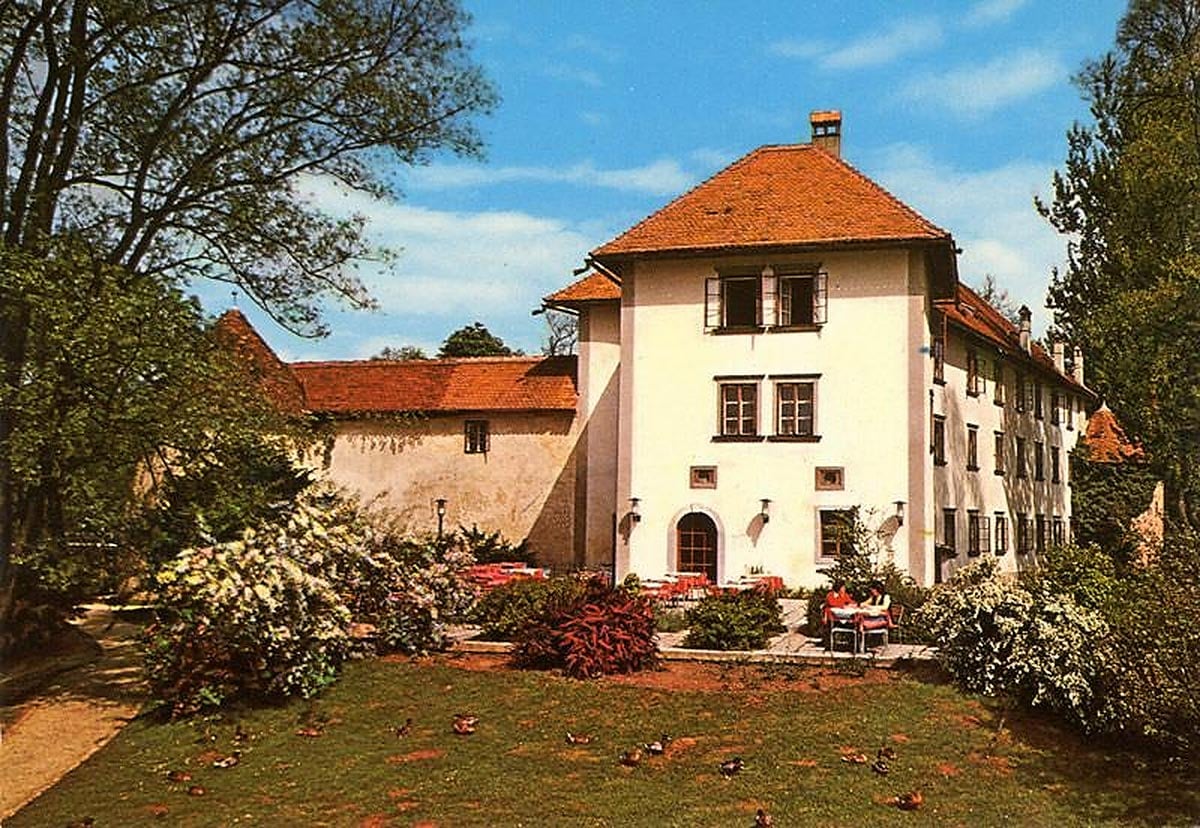
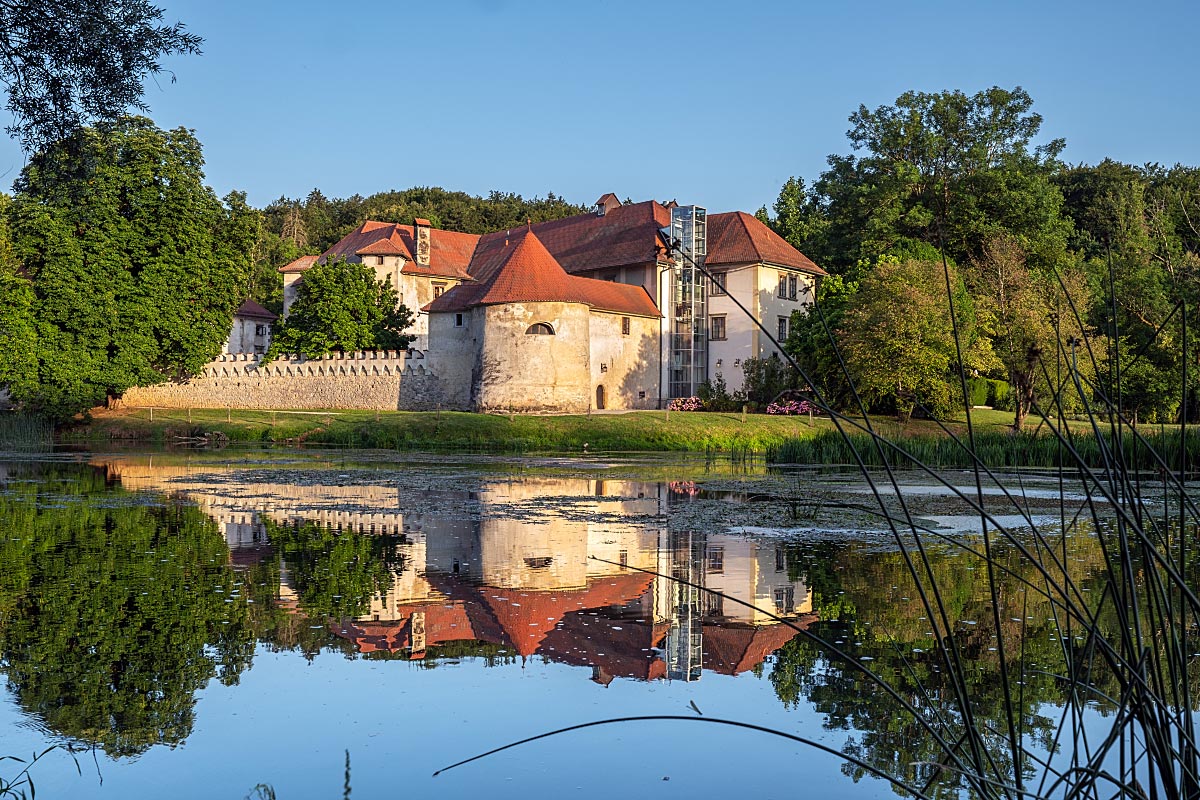
In 1999, the castle area was declared a cultural monument of national importance. Another interior renovation followed in 2007, updating the rooms, the restaurant, and the building systems, and adding a panoramic elevator. Conservators recorded repairs to the stone portals and window frames and the restoration of windows, but they also had doubts about the Gothic-inspired interior design that now ran through rooms from several different periods. It was the same question Mušič had faced half a century earlier. How much character can each room keep when the building also has to work as a hotel?
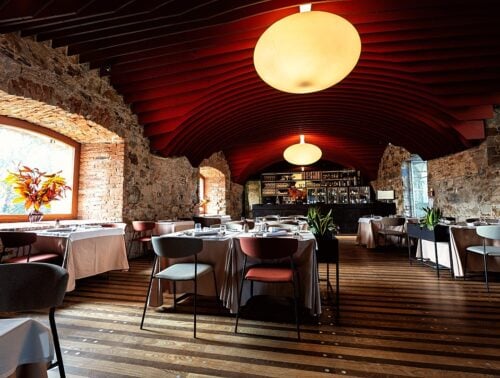
Since the end of 2009, the hotel has been a member of Relais & Châteaux, and today it has 16 rooms and suites. We stayed in a Junior Suite, and in our Otočec Castle Hotel review we wrote about the room and about how quiet the island gets once the last visitors leave the park. The restaurant gets a story all to itself, with a tasting menu and Slovenian wines, in our Restaurant Grad Otočec review.
What the Bridge Brings Into View
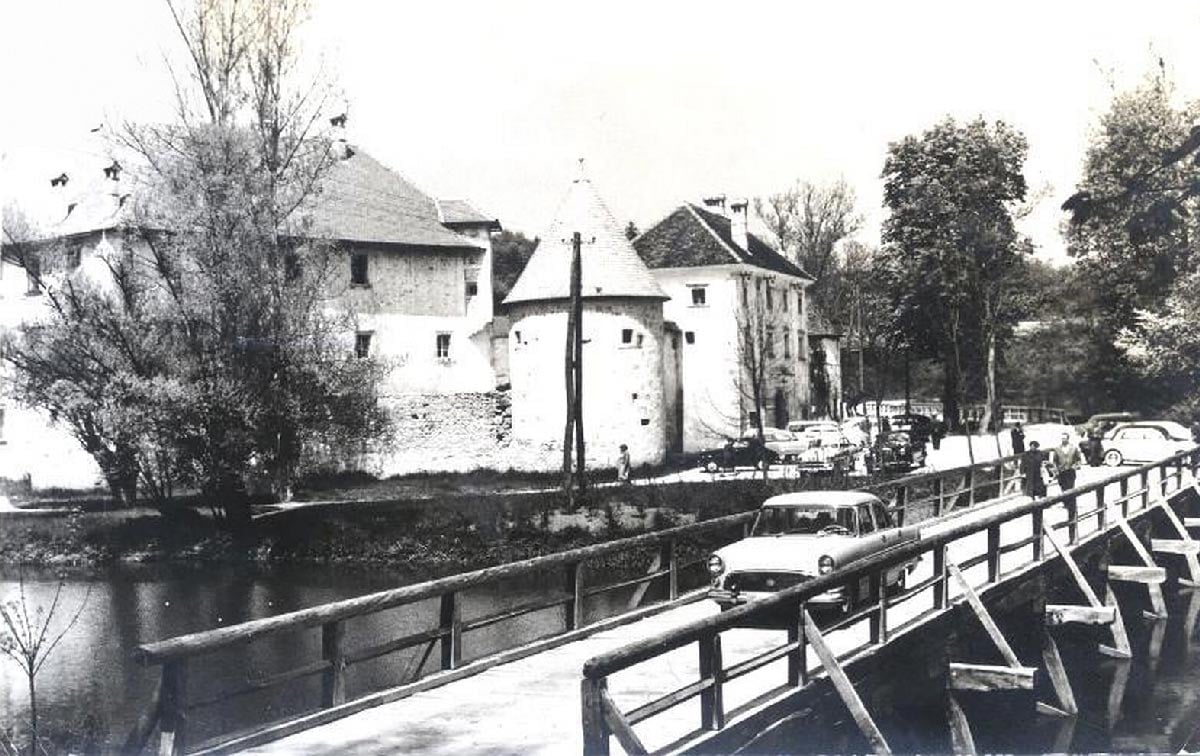
Both wooden bridges were rebuilt after the war. We crossed one as hotel guests, on the same route that once brought people to picnics, plays, and long Sunday lunches. For us, that’s the nicest way to think about Otočec. A restored Gothic doorway tells you about the people who lived here centuries ago, while the bridge tells you about everyone who has kept coming ever since.
Otočec Castle History FAQ
How old is Otočec Castle?
Its origins lie in the 13th century. A charter mentions Henrik of Otočec in 1252, while the castle’s surviving fabric reflects work from several later centuries.
When did Hotel Grad Otočec open?
The castle’s first restaurant opened in 1959. The conversion into a castle hotel took shape in the early 1960s, and a September 1962 newspaper report already names the castle hotel. The date it first welcomed overnight guests inside the castle remains unconfirmed.
What happened to Otočec Castle in World War II?
The castle was burned in 1942, and its southern wing suffered severe damage. Postwar conservation began in 1952, and the castle later became the headquarters for youth work brigades building the Ljubljana–Zagreb highway in 1958.
When did the hotel join Relais & Châteaux?
Krka records Hotel Grad Otočec’s admission to Relais & Châteaux at the end of 2009.
Sources
For the medieval records, estate life, and the postwar timeline we used Dragica Poljanec’s Zgodovina gradu Otočec in njegova turistična funkcija (2010) and the ZRC SAZU heritage inventory. Marijan Mušič’s account of the work appears in Varstvo spomenikov, volume VIII (1962). For the later renovation we consulted the heritage service’s conservation report.
The opening of the restaurant is recorded in the hotel’s historical account. The history of the resort and village draws on Petra Šinkovec’s Družabno življenje v Otočcu (2017) and the September 21, 1962 issue of Dolenjski list. The 1999 heritage decree and Krka’s 2009 annual report document later milestones. Images are mostly from kamra.si.
Image credits
[1] Public domain. Wikimedia Commons catalog record.
[2] Knjižnica Mirana Jarca Novo mesto, Posebne zbirke Boga Komelja, via Kamra. CC BY-NC as listed by Kamra. Digital watermark retouched.
[3] Archives of the Republic of Slovenia, SI AS 176, sheet N 190A07, Št. Peter. Reproduced from Dragica Poljanec’s 2010 thesis, map 2, p. 27.
[4] The photograph is undated. Knjižnica Mirana Jarca Novo mesto, Posebne zbirke Boga Komelja, via Kamra. CC BY-NC as listed by Kamra. Digital watermark retouched.
[5] Knjižnica Mirana Jarca Novo mesto, Posebne zbirke Boga Komelja, via Kamra. CC BY-NC as listed by Kamra. Digital watermark retouched.
[6] Knjižnica Mirana Jarca Novo mesto, Posebne zbirke Boga Komelja, via Kamra. Public domain as listed by Kamra. Digital watermark retouched.
[7] Knjižnica Mirana Jarca Novo mesto, Posebne zbirke Boga Komelja, via Kamra. CC BY-NC as listed by Kamra. Digital watermark retouched.
[8] Catalog credit to Kornič, Ljubljana. Knjižnica Mirana Jarca Novo mesto, Posebne zbirke Boga Komelja, via Kamra. Kamra lists CC BY-NC and also notes that copyright has expired. Digital watermark retouched.
[9] Knjižnica Mirana Jarca Novo mesto, Posebne zbirke Boga Komelja, via Kamra. CC BY-NC as listed by Kamra. Digital watermark retouched.
[10] Knjižnica Mirana Jarca Novo mesto, Posebne zbirke Boga Komelja, via Kamra. CC BY-NC as listed by Kamra. Digital watermark retouched.
[11] Knjižnica Mirana Jarca Novo mesto, Posebne zbirke Boga Komelja, via Kamra. CC BY-NC as listed by Kamra. Digital watermark retouched.
[12] Published by Putnik – Fotoslužba, Zagreb. Knjižnica Mirana Jarca Novo mesto, Posebne zbirke Boga Komelja, via Kamra. Public domain as listed by Kamra. Digital watermark retouched.
[13] Photograph by Mirko Kambič. Knjižnica Mirana Jarca Novo mesto, Posebne zbirke Boga Komelja, via Kamra. CC BY-NC as listed by Kamra. Digital watermark retouched.
[14] Knjižnica Mirana Jarca Novo mesto, Posebne zbirke Boga Komelja, via Kamra. CC BY-NC as listed by Kamra. Digital watermark retouched.
[15] Photograph by Niko Paulič. Published by Dolenjska turistična zveza. Knjižnica Mirana Jarca Novo mesto, Posebne zbirke Boga Komelja, via Kamra. CC BY-NC as listed by Kamra. Digital watermark retouched.

You might also like