Cafe Botanica at Bangkok’s Museum of Floral Culture was unlike the city’s formal hotel afternoon teas. Ian and I sat in a leafy garden behind a century-old teak house, ordered floral teas and assembled our own afternoon spread from scones, Asian sweets and cakes. This Cafe Botanica review preserves that 2019 experience, including the mango cheesecake that became my favorite, while acknowledging that both the café and museum closed in 2022.
Was Cafe Botanica’s floral afternoon tea worth visiting?
What We Loved
- A peaceful garden setting filled with flowers and birdsong
- Unusual floral teas with a strong sense of place
- Firm-crusted raisin scones with cream and berry jam
- A memorable mango cheesecake and a varied selection of Asian sweets
What Could Be Better
- There was no fixed afternoon tea set
- The selection contained no savory course
- Service was friendly, though less polished than at Bangkok’s luxury hotels
Best for: Readers interested in a now-closed Bangkok café where floral culture shaped both the setting and the menu.
Contents
- Cafe Botanica’s Floral Afternoon Tea
- The Museum House and Garden
- Floral Teas at Cafe Botanica
- Scones and Sweets at Cafe Botanica
- Sakul Intakul and the Museum
- A Glimpse of Thai Floral Culture
- Cafe Botanica Review: Final Thoughts
- Cafe Botanica High Tea Review Card
- Cafe Botanica Practical Details
- Cafe Botanica FAQ
Cafe Botanica’s Floral Afternoon Tea
Cafe Botanica’s afternoon tea was an informal affair built from individual menu choices, not a traditional tiered set. Bangkok already had plenty of grand hotel teas, including the Authors’ Lounge afternoon tea at the Mandarin Oriental Bangkok. Cafe Botanica took another route. Here, the flowers were not merely table decoration. They belonged to the museum, the garden and even the tea list.

The experience had the comfort of a family-run garden café. The cakes tasted fresh and homemade, and the atmosphere was relaxed enough to linger with a book while birds supplied the background music. It lacked the choreography of a five-star lounge, though that was also part of its charm.

The Museum House and Garden
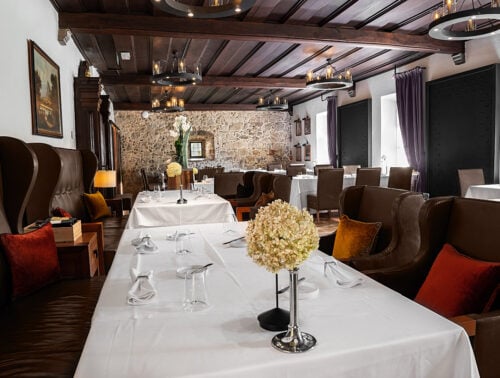
The café occupied the garden of the Museum of Floral Culture, which floral artist Sakul Intakul opened in 2012. The museum was housed in an old teak residence in Bangkok’s Dusit district, with a broad veranda, a generous garden and architectural details shaped by the period in which the house was built. It gave the visit a domestic character that a purpose-built museum would have struggled to reproduce.

For us, the garden behind the house was the real reward. Dense planting softened the surrounding city, and the seating beneath the trees made Cafe Botanica seem removed from Bangkok’s traffic. The place was not silent, nor did it need to be. Rustling leaves and birdsong were enough to change the pace.


Floral Teas at Cafe Botanica
Floral tea was the most natural choice in a museum devoted to flowers. The menu brought together infusions with roots in different parts of the world, alongside coffee and sodas. We chose Ten-Thousand-Miles-Scented Tea and iced payom flower tea with honey. Both were less conventional than the black-tea blends served at many hotel teas and suited the garden setting particularly well.

Scones and Sweets at Cafe Botanica
The raisin scones were one of the strongest parts of our improvised afternoon tea. Their crust was firm, with enough resistance to make each bite satisfying, and they came with clotted cream and homemade berry jam. The cream was different from the traditional English version I expected, though I still enjoyed the combination.


A selection of Thai, Indian and Chinese sweets made the experience more connected to its setting than a plate of familiar European pastries alone. Even Ian, who can be cautious around traditional sweets, found plenty to enjoy. The luk chup also reminded us of our earlier afternoon tea at Erawan Tea Room.


On a hot Bangkok day, the mixed-berry frozen yogurt was an easy first choice. Cafe Botanica’s Ongkarak cake brought together fruit, nuts, butter and sugar without becoming too heavy. It was comforting rather than showy, precisely the sort of cake that belongs in a garden café.

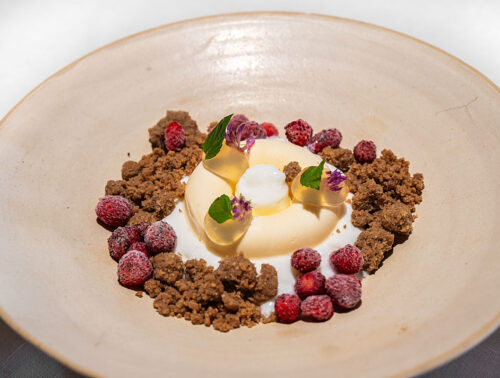
The mango cheesecake was the sweet I remembered most clearly. Citrus gave the cheese layer a gentle sharpness, while ripe mango and mango sauce added sweetness without burying it. I wrote at the time that it might be one of Bangkok’s best cheesecakes. Years later, I still remember why I was so enthusiastic.


Sakul Intakul and the Museum
Sakul Intakul created the Museum of Floral Culture and directed it from 2012 until its closure in 2022. His work extends from sculptural floral installations to books, teaching and royal commissions. According to his official biography, he supervised floral decoration for state banquets and royal functions at Bangkok’s Grand Palace between 2000 and 2010.

That background explained why the café and museum worked as one idea. Cafe Botanica did not serve a fixed afternoon tea set; we built our own combination from the menu. The result was less formal, with the museum’s garden and floral language doing much of the presentation work.


A Glimpse of Thai Floral Culture
Flowers carry practical, ceremonial and spiritual meaning in Thailand. Phuang malai garlands may be presented as offerings, worn or given as signs of respect and good wishes. Their materials, patterns and intended use vary, which is why treating every garland as simple decoration misses much of the story.


The museum gave those traditions space, context and an artist’s interpretation. I was less convinced by plastic garlands replacing fresh ones, because much of their meaning comes from careful handwork and natural material. The afternoon at Cafe Botanica made that argument without turning tea into a lecture.

Cafe Botanica Review: Final Thoughts
Cafe Botanica was best suited to travelers who valued atmosphere, local context and homemade sweets more than a formal three-tier presentation. We missed savory bites, and the service did not have the precision of Bangkok’s grand hotels. What stayed with me was the combination of floral tea, mango cheesecake, an old teak house and a garden alive with birds.

The venue’s closure in 2022 means this review can no longer serve as a booking recommendation. It remains a record of a distinctly Bangkok afternoon tea that connected food, art and place with unusual clarity. For experiences that can still be booked, see our guide to the best afternoon teas in Bangkok.

Cafe Botanica High Tea Review Card
- ATMOSPHERE – 9.5/109.5/10
- SERVICE – 8.8/108.8/10
- TEA SELECTION – 9.5/109.5/10
- PRESENTATION – 9.5/109.5/10
- BITES – 9.2/109.2/10
- VALUE – 9.3/109.3/10
Cafe Botanica Practical Details
| Detail | Information checked in September 2026 |
|---|---|
| Café | Cafe Botanica at the Museum of Floral Culture |
| Former address | 315 Samsen Road, Soi 28, Yaek Ongkarak 13, Dusit, Bangkok 10300, Thailand |
| Category | Former museum garden café and à la carte afternoon tea |
| Historical price guide (USD) | Sweets averaged about $6 each; tea cost about $4 during our visit |
| Service format | Individual teas and sweets, not a fixed afternoon tea set |
| Current status | Closed in 2022 |
| Founder | Sakul Intakul |
| Website | Official Sakul Intakul website |
Cafe Botanica FAQ
Is Cafe Botanica in Bangkok still open?
No. Cafe Botanica and the Museum of Floral Culture closed in 2022. This article preserves our 2019 experience and should not be used as current visiting information.
Was Cafe Botanica a traditional afternoon tea?
Not exactly. There was no fixed tiered afternoon tea set. We chose floral teas, scones, traditional Asian sweets and cakes individually from the menu.
Where was the Museum of Floral Culture?
It occupied an old teak house at 315 Samsen Road, Soi 28, Yaek Ongkarak 13, in Bangkok’s Dusit district. The museum is now closed.
Who founded the Museum of Floral Culture?
Thai floral artist Sakul Intakul founded the museum in 2012 and directed it until its closure in 2022.
What stood out most at Cafe Botanica?
The garden atmosphere, floral tea selection, raisin scones and mango cheesecake were the highlights of our visit. The lack of savory food and less formal service were the main limitations.

You might also like