Few hotels make you wonder what you would change if somebody handed you the architect’s pencil. Mandarin Oriental, Bangkok did exactly that. When I first wrote about the Mandarin Oriental Bangkok renovation in 2019, the hotel was preparing to close its River Wing for its most extensive restoration in decades. I had already admired the beautifully restored Authors’ and Garden Wings, and our afternoon tea at the Authors’ Lounge had shown just how gracefully this grande dame could balance history with fresh polish.
Still, one corner of the hotel kept bothering me: the riverside breakfast area. Its temporary-looking structure felt out of place beside a property with such character. So I began to imagine a different solution, one that would turn breakfast into an experience worthy of the setting. What follows is not a record of the renovation that was eventually completed. It is my utopian plan for a Victorian glasshouse beside the Chao Phraya River.

What Actually Happened During the 2019 Renovation?
The real River Wing renovation was completed later in 2019, with the wing reopening on 11 November. It followed the restoration of the Authors’ and Garden Wings in 2016 and brought redesigned rooms, suites and public spaces to the riverside tower. The number of rooms was reduced while the number of suites increased, giving the accommodation more space and a stronger sense of contemporary luxury.

That work is now part of the hotel’s story. My plan took a different route. I was less interested in changing the rooms than in rethinking the relationship between the restaurants, the gardens and the river. A heritage hotel should evolve, but it should also give guests a sense of place that could not be reproduced in another city. In Bangkok, the Chao Phraya offers more than a view. It gives the hotel its rhythm.
My Dream Mandarin Oriental Bangkok Renovation Plan
The hotel occupies a rare position. On one side, boats move constantly along the busy river; on the other, a quiet dead-end street softens the noise of Bangkok. Once inside, the pace slows almost immediately. The riverside terraces make excellent use of the view, although they leave surprisingly little room simply to sit among plants and watch the water. My fantasy plan begins by giving some of that space back to the garden.

A Victorian Glasshouse Beside the River
I would make the Verandah terraces slightly smaller, weave more planting between the tables and place a Victorian-inspired glasshouse at the center. The image in my head borrows something from the Enid A. Haupt Conservatory at the New York Botanical Garden: an elegant white structure, a generous central dome and long transparent walls filled with daylight. From the river, it would appear as a glowing pavilion set inside a tropical garden.
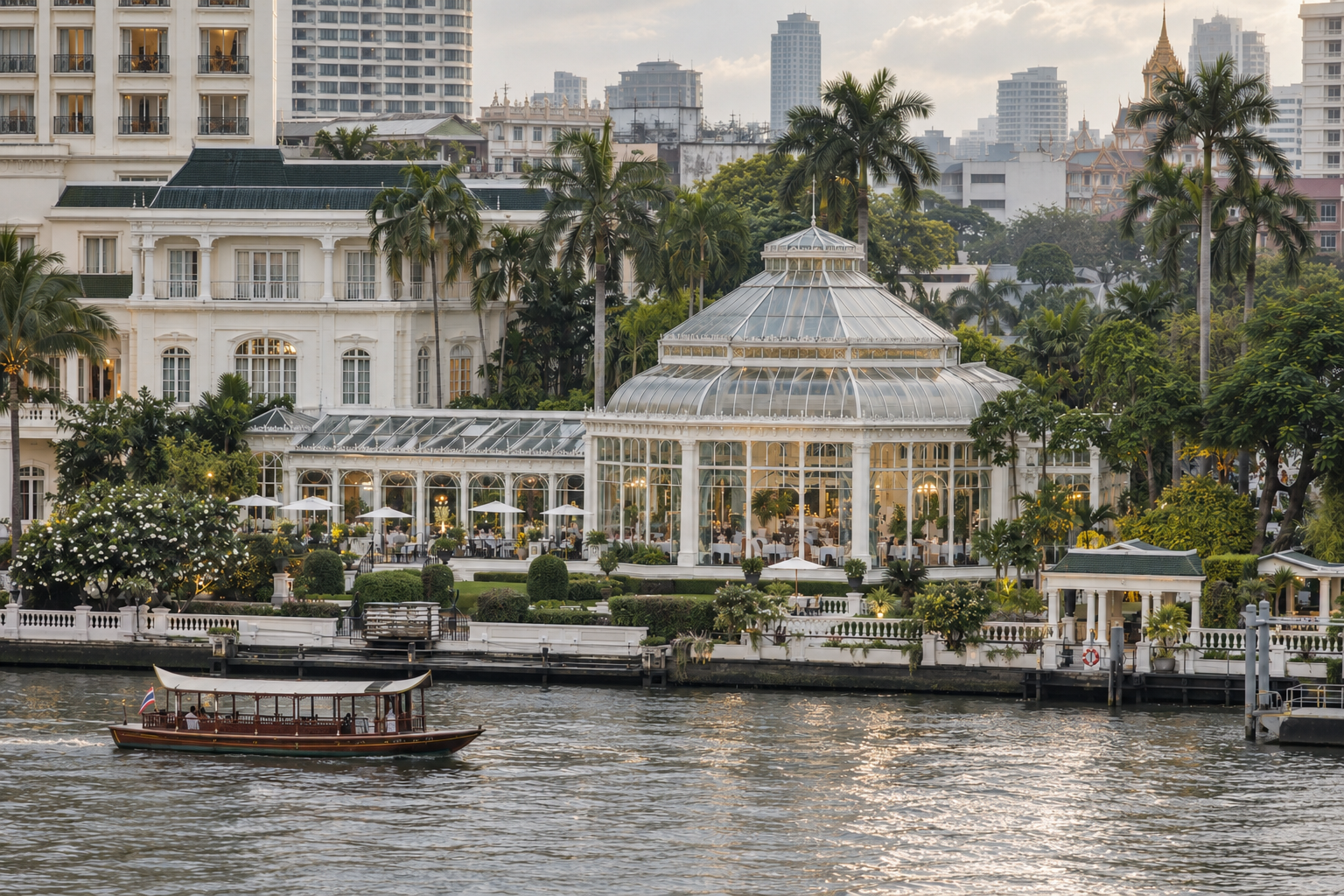
The glass would do more than keep out the rain. In my ideal version, photovoltaic panels would help generate electricity for the hotel, while carefully planned shading and efficient cooling would make the room practical in Bangkok’s climate. I imagined sustainability as part of the architecture, not a plaque placed discreetly near the entrance.

Guests arriving by boat would see mature trees through the glass and tables tucked between dense greenery. Across the water, even the Peninsula might look a little jealous. Inside, breakfast would unfold beneath the dome, turning the first meal of the day into one of the hotel’s most memorable experiences. The building would have two connected parts: a circular main pavilion and a longer dining gallery running beside it.

Breakfast Beneath the Main Dome
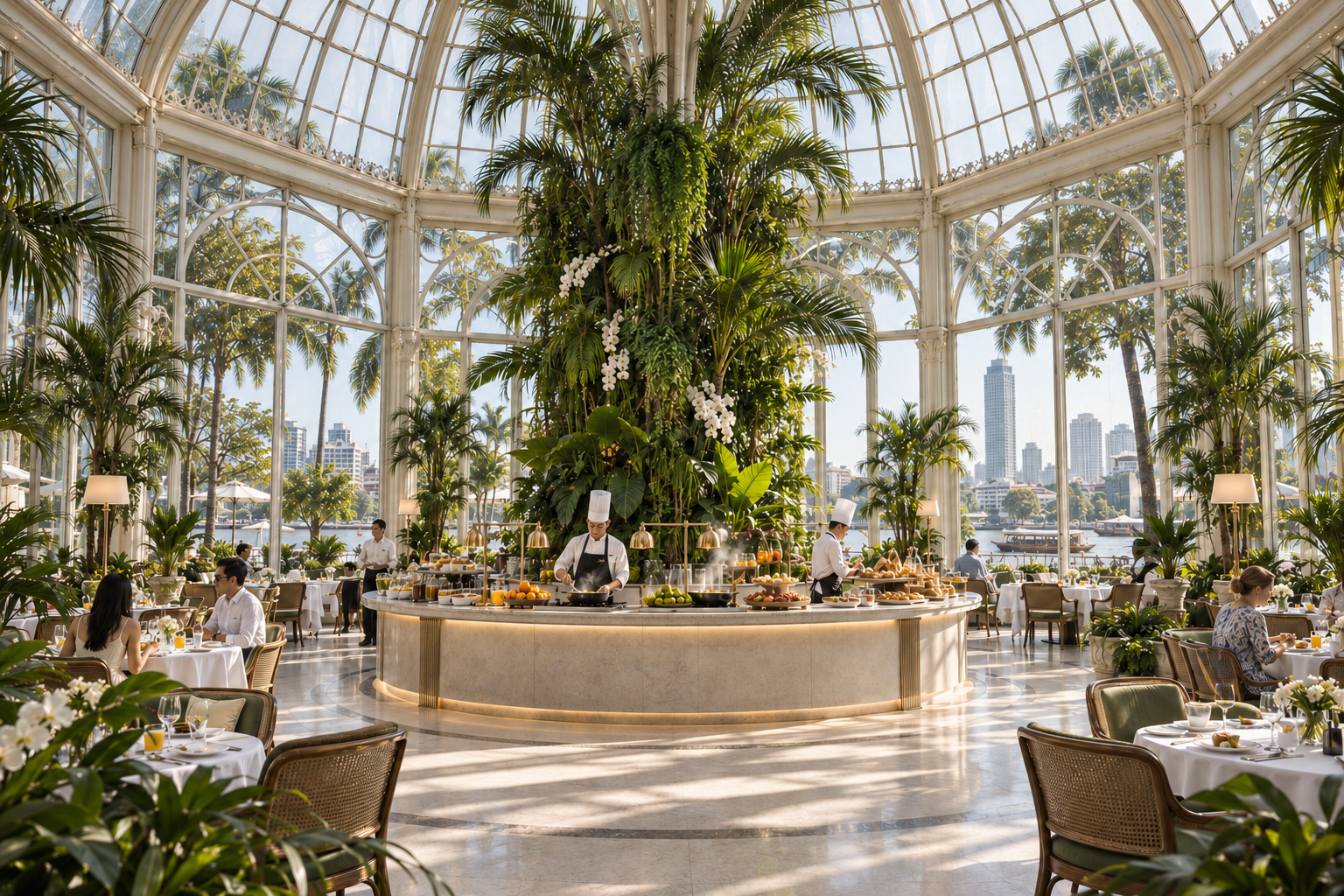
At the center of the dome, a planted column would rise from a circular concrete counter. During breakfast, the counter could hold live cooking stations and a carefully arranged buffet. Around it, smaller groups of tables would sit among broad leaves, palms and flowering plants. Good hotel breakfasts are often remembered for the food; this one would be remembered for the room before the first coffee even arrived.

A Garden That Earns Its Place
Concrete floors and slender white metal tables would keep the interior from becoming too nostalgic. Vines and tropical flowers could descend from the roof structure, while soft daylight would replace the flat atmosphere of a conventional buffet room. Hidden speakers might add a subtle layer of birdsong and gentle music, although restraint would be essential. Nobody needs an artificial rainforest performing beside the omelet station.

Some of the planting would also be useful. Pots of herbs could sit close to the live stations, allowing chefs to cut fresh leaves during service. That small gesture would connect the decorative garden with the kitchen and make the room feel alive. It is a fantasy, admittedly, but at least the basil would be earning its keep.

A Flexible Dining Room for Weddings and Events
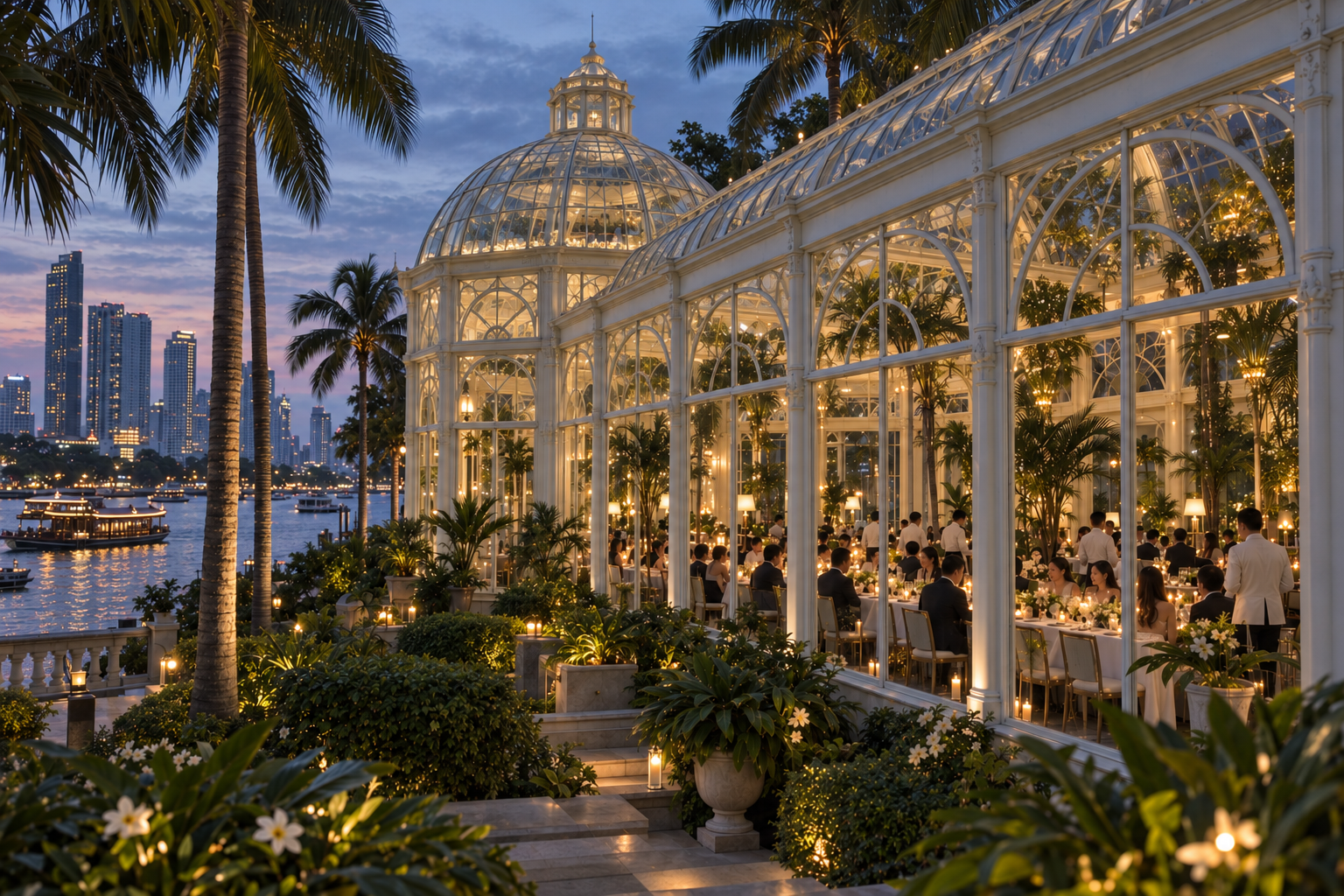
The longhouse would provide a quieter promenade with tables beside the windows and planting stretching toward the glass. On ordinary mornings, it would feel intimate and unhurried. For private events, the furniture could be rearranged to create a dining room for around 120 guests. With the river outside and a garden under glass, it would offer a very different atmosphere from the historic Authors’ Lounge.

In the most ambitious version of the idea, the glasshouse could continue beyond breakfast and host its own evening restaurant. I once imagined an experimental tasting menu here, perhaps even a playful exploration of note-by-note cuisine. It was an extravagant thought, but this was always meant to be a dream plan. If one is going to redesign a Bangkok landmark on paper, modesty seems a rather dull place to begin.

Conclusion: Some Hotels Are Worth Dreaming About
Mandarin Oriental, Bangkok did not build my Victorian glasshouse, and the real River Wing renovation followed a more measured path. That does not make this exercise pointless. The most interesting hotels invite strong opinions because they already possess a clear identity. You notice what works, what feels out of place and what might make the experience even more memorable.
I still think a riverside conservatory filled with tropical planting would suit the hotel beautifully. Perhaps it belongs only on these pages. For now, that is enough. Dreaming about a legendary hotel is much more enjoyable when somebody else is willing to dream along.
Mandarin Oriental Bangkok Renovation FAQ
Was Mandarin Oriental Bangkok renovated in 2019?
Yes. The hotel completed its major River Wing renovation in 2019, and the wing reopened on 11 November that year. The project followed the restoration of the Authors’ and Garden Wings in 2016.
Is the Victorian glasshouse shown in this article real?
No. The glasshouse is Ian’s independent design concept, created before the River Wing renovation was completed. It was never presented as an official Mandarin Oriental project.
What changed during the River Wing renovation?
The project redesigned the River Wing’s rooms, suites and public areas. It reduced the overall room count and increased the number of suites, giving guests more spacious accommodation while retaining views of the Chao Phraya River.
Where can I read the full Mandarin Oriental Bangkok hotel review?
You can read our complete Mandarin Oriental Bangkok hotel review, including our impressions of the rooms, service, breakfast and riverside setting.

You might also like