Last updated: August 2026
The first thing I noticed at Mosaic was not the seafood, the dessert room or even the Peranakan-inspired interiors, but how naturally everything seemed to flow together inside a restaurant that could easily have felt overwhelming.
Set inside Mandarin Oriental, Kuala Lumpur, beside the greenery of KLCC Park, the buffet brings together Japanese specialties, Malaysian cooking, Indian curries, Middle Eastern dips and a pastry selection that deserves considerably more attention than the word “dessert” suggests.

Ian and I came for a leisurely meal near the Petronas Twin Towers and discovered a restaurant where chilled oysters, freshly baked bread and an entire room of sweets made choosing just one favorite almost impossible.
Not every station reached the same standard, but the strongest dishes and the attentiveness of the staff made this Mandarin Oriental buffet feel like much more than an exercise in unlimited dining.
Contents
- A Refined Buffet Beside KLCC Park
- Mosaic Buffet Menu: A Culinary Tour Without Leaving the Table
- The Seafood Station Was the Natural Starting Point
- The Smaller Dishes That Deserved More Attention
- The Hot Dishes: Comfort, Variety and a Few Surprises
- The Dessert Room Was Worth Saving Space For
- Mandarin Oriental Buffet Prices
- Breakfast, Lunch and Dinner Hours
- How Mosaic Compares With Other Kuala Lumpur Buffets
- What Worked Beautifully, and What Did Not
- Mandarin Oriental Mosaic Buffet Review Card
- A Feast That Was Never Going to End After One Plate
- Frequently Asked Questions About the Mandarin Oriental Buffet
A Refined Buffet Beside KLCC Park
Mosaic sits inside Mandarin Oriental, Kuala Lumpur, within walking distance of the Petronas Twin Towers and Suria KLCC, making it a convenient place to slow down after exploring one of the busiest parts of the city.
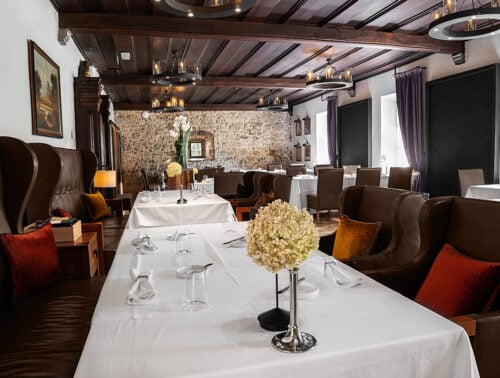
Daylight filtered across the dining room during our visit, catching the mosaic details and floral arrangements while giving the Peranakan-inspired interior a warmth that many international hotel restaurants never quite manage.

The stations were spaced far enough apart for guests to explore without crowding one another, which made returning to the table with a full plate feel considerably less hazardous than it does at some hotel buffets.
Staff cleared used dishes, refilled water and kept the counters orderly without hovering around our table, so the afternoon unfolded at an easy pace rather than feeling like a race against the next wave of diners.

Mosaic Buffet Menu: A Culinary Tour Without Leaving the Table
The Mosaic buffet menu covers an impressive range of cuisines, with live cooking stations and cold counters arranged around dishes from Malaysia, India, China, Japan and the Middle East alongside familiar Western preparations.
During our visit, there were chilled shellfish, sashimi, noodle soups prepared to order, curries, roast beef, freshly baked bread, tropical fruit and enough pastries to make the final part of the meal feel like an occasion of its own.

What made the selection interesting was not simply its size, but how differently two guests could approach the same meal, whether by concentrating on seafood, building a plate around local dishes or moving between vegetables and Middle Eastern spreads.
Ian and I took the less disciplined approach and tried as much as we reasonably could, although it quickly became clear that a single visit would never cover everything the counters had to offer.

The Seafood Station Was the Natural Starting Point
Beds of crushed ice held oysters, prawns, scallops, lobster and flower crab, immediately drawing our attention away from the hot stations and toward the freshest-looking corner of the restaurant.

The oysters tasted clean and delicate, while the sweetness of the crab and lobster made it easy to see why seafood features so prominently in conversations about the Mandarin Oriental buffet.
Having several varieties together also made the experience more interesting than a standard mixed seafood platter, because each shellfish had its own texture and flavor rather than disappearing into one indistinguishable pile.

The hotel now distinguishes its regular Monday-to-Saturday lunch from a dedicated Sunday seafood lunch, so guests interested mainly in oysters and shellfish should compare the available services before booking.

Sushi, Sashimi and an Unexpectedly Familiar Plum
The Japanese station stood close to our table, where tuna sashimi and neatly arranged sushi were accompanied by pickled ginger, cucumber and fermented vegetables that brought welcome acidity to an otherwise rich meal.

I also came across umeboshi, the intensely sour Japanese pickled plum that had surprised me on an earlier trip and made considerably more sense when tasted alongside seafood and rice.
Kimchi and pickled cucumber played a similar role, cutting through the richness of the other dishes and giving the Japanese counter more character than a simple display of sushi rolls.
The Smaller Dishes That Deserved More Attention
While lobster and roast beef naturally attracted most of the attention, some of the most distinctive flavors were hiding among the breads, vegetable dishes and smaller preparations that were easier to overlook.
Middle Eastern Dips and Freshly Baked Bread
The Middle Eastern counter offered baba ghanoush, pumpkin moutabel and muhammara, with freshly baked bread providing the simplest and most satisfying way to try each spread properly.

Muhammara stood out for its deep red color and the combination of roasted peppers, walnuts and olive oil, which gave the dip a warmth and texture that stayed with me longer than some of the more elaborate dishes.
The pumpkin moutabel took a softer direction, replacing the usual focus on eggplant with a gentle sweetness that worked particularly well against the smokier flavor of the baba ghanoush.
Vegetables, Salads and Lighter Options
Roasted yellow and green peppers, garlic-scented eggplant, confit pumpkin and beetroot dressed with raspberry vinegar gave the vegetable selection enough personality to stand independently of the seafood and meat dishes.

The kabuli chana chaat was especially good, with chickpeas seasoned using amchoor, a powder made from dried unripe mango that introduced a tart, fruity note without overwhelming the rest of the salad.
Small glasses of broccoli and pumpkin soup added another welcome contrast, while tropical fruits and overnight oats with mango made it possible to build a lighter plate instead of moving directly from shellfish to roast beef.

There were also cold preparations featuring tandoori chicken, barbecued duck and grilled beef with pickled fruit, although vegetarians should always confirm ingredients directly because individual buffet dishes can change.
A Cheese Counter That Played It Safe
The cheese counter offered familiar options including cheddar, goat cheese, Brie and Camembert, but lacked the more distinctive aged varieties that could have made this part of the buffet as interesting as the surrounding stations.

Everything was perfectly acceptable for a small bite between courses, but with oysters, Middle Eastern dips and a separate dessert room nearby, the cheese selection was never likely to become the main attraction.
The Hot Dishes: Comfort, Variety and a Few Surprises
The hot stations covered a wide stretch of culinary territory, moving from roast beef and baked salmon to dim sum, Indian curries and Malaysian rice dishes, although the quality was less consistent than at the seafood counter.
Western Roasts and Comfort Food
The Western counter featured roast prime rib, mashed potatoes, cottage pie and Sicilian eggplant caponata, with the beef standing out for its tenderness and the kind of straightforward comfort that makes a second serving difficult to resist.

Ian particularly liked the baked salmon, which remained moist and well cooked even though the pineapple served alongside it contributed less flavor than the description suggested.

Several other Western dishes leaned toward familiar hotel-buffet comfort rather than distinctiveness, which may suit guests looking for recognizable flavors but made the seafood and Asian stations more compelling in comparison.
Chinese, Indian and Malaysian Specialties
Steamed dim sum and Szechuan-style eggplant represented the Chinese section, while a noodle soup counter allowed guests to choose their own toppings and adjust the finished bowl to their taste.

The Indian station offered chicken curry and naan alongside several accompaniments, although the cooking did not always reach the depth of flavor found at Kuala Lumpur’s strongest specialist Indian restaurants.

Nasi biryani and other Malaysian dishes added a local element, but their main value came from giving visitors a convenient introduction to several flavors rather than competing with the city’s most focused neighborhood kitchens.
One Dish That Missed the Mark
A Mediterranean-style seafood dish in tomato and garlic broth looked promising, especially because it reminded me of the seafood stews found around the Adriatic, but the liquid tasted thinner and more acidic than it should have.
The preparation needed greater depth and more careful seasoning, making it the clearest example of how a very large buffet can struggle to give every individual dish the same level of attention.
The Dessert Room Was Worth Saving Space For
Beyond the main dining area, the dessert selection unfolded across a separate space associated with the hotel lounge, where glass cases and serving tables held macarons, cakes, individual pastries and a chocolate fountain.

The room had enough variety to feel like a destination within the meal, and the smaller portions made it possible to move between several flavors without committing immediately to a full slice of cake.

Macarons, Cheesecake and Crème Brûlée
The macarons had a light outer shell and a soft center, while their fillings offered enough flavor to make them stand out among the larger and more visually dramatic desserts.

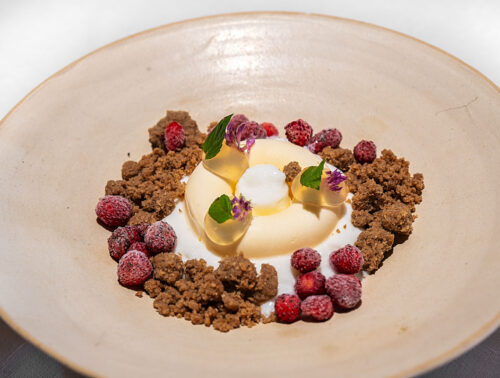
A small cheesecake topped with fresh raspberry balanced its creamy filling with a welcome touch of acidity, while the crème brûlée delivered the familiar pleasure of cracking through caramelized sugar into smooth custard.

Chocolate, Pecan Pie and the Pastries We Remembered
The cake selection ranged from fruit-based pastries to richer chocolate preparations, but the pecan pie and a flower-shaped chocolate mousse with caramel were the two desserts that stayed in my memory.

The mousse brought together a smooth chocolate filling and a firmer pastry base, while the pecan dessert offered a deeper nuttiness that worked particularly well after the brighter fruit-based sweets.

Anyone interested in another pastry-focused experience at the same hotel can also read our Mandarin Oriental Kuala Lumpur afternoon tea review, which follows a slower and more traditional approach to the sweet side of hotel dining.
Mandarin Oriental Buffet Prices
The Mandarin Oriental buffet price varies according to the service, with breakfast currently listed at MYR 98, regular lunch at MYR 205 and both Sunday seafood lunch and dinner at MYR 245 per person.
| Buffet Experience | Price in MYR | Approximate USD | Availability |
|---|---|---|---|
| Breakfast Buffet | MYR 98 | $24 | Daily |
| Lunch Buffet | MYR 205 | $51 | Monday to Saturday |
| Sunday Seafood Lunch | MYR 245 | $61 | Sunday |
| Dinner Buffet | MYR 245 | $61 | Daily |
The hotel states that these published prices include service charges and government taxes, while the approximate US dollar amounts may change with the exchange rate.
Our original visit cost around $50 per person, so readers should treat that figure as the historical price of our experience rather than an indication of what every buffet service costs today.
The regular lunch is the less expensive option for guests who want to experience Mosaic, while Sunday seafood lunch may justify the higher price for anyone particularly interested in shellfish.
The official restaurant page does not clearly explain which beverages are included with every buffet service, so it is best to ask whether coffee, tea, soft drinks or alcoholic beverages are included before confirming a reservation.
Breakfast, Lunch and Dinner Hours
Mosaic currently serves its breakfast buffet from 6:30 a.m. to 10:30 a.m., lunch from noon to 2:30 p.m. and dinner from 6 p.m. to 10:30 p.m., with the regular lunch offered Monday through Saturday and a seafood-focused lunch served on Sunday.
The restaurant is located inside Mandarin Oriental, Kuala Lumpur, Kuala Lumpur City Centre, 50088 Kuala Lumpur, beside KLCC Park and within walking distance of the Petronas Twin Towers.
Reservations can be made through the official Mosaic restaurant page or by calling +60 3 2330 8798, especially for Sunday seafood lunch, weekend dinners and public holidays.
Arriving closer to the beginning of lunch or dinner should give you more time to explore the stations at a comfortable pace, although actual crowd levels depend on the day and any special events taking place at the hotel.
How Mosaic Compares With Other Kuala Lumpur Buffets
Mosaic is particularly appealing for travelers who want seafood, a substantial dessert selection and a convenient location near KLCC, although its character differs noticeably from other hotel dining experiences we have tried around Kuala Lumpur.
Contango at The Majestic Hotel Kuala Lumpur offers another broad international buffet within a heritage hotel setting, while THIRTY8 at Grand Hyatt Kuala Lumpur is better suited to readers looking specifically for afternoon tea and elevated city views.
| Buffet session | Price (MYR) | Approximate price (USD) |
|---|---|---|
| Breakfast buffet (daily) | MYR 98 | Approximately $24 per adult |
| Lunch buffet (Mon–Sat) | MYR 205 | Approximately $51 per adult |
| Seafood lunch (Sunday) | MYR 245 | Approximately $61 per adult |
| Dinner buffet (daily) | MYR 245 | Approximately $61 per adult |
For a wider overview of the city’s hotel dining options, our guide to the best buffets in Kuala Lumpur compares several additional experiences beyond the KLCC area.
What Worked Beautifully, and What Did Not
The seafood and desserts were the clearest strengths of our meal, while the calm dining room and attentive staff gave the afternoon a more personal rhythm than I usually associate with a large hotel buffet.
The cheese counter was less compelling, and a few hot dishes lacked the care evident elsewhere, particularly the seafood broth and some of the more familiar Western preparations.
Those weaker moments never outweighed the better ones, but they did show why Mosaic is most rewarding when approached as a broad international buffet rather than a collection of specialist restaurants operating under one roof.
What We Loved
- Fresh seafood, including oysters and shellfish during our visit.
- A dedicated dessert area with macarons, cakes and chocolate pastries.
- A comfortable location beside KLCC Park and the Petronas Twin Towers.
- Attentive service and well-organized buffet stations.
- Vegetarian-friendly dishes, Middle Eastern dips and lighter options.
What Could Be Better
- The cheese selection lacked more distinctive varieties.
- Some Western dishes felt less interesting than the seafood and Asian counters.
- The quality of the hot dishes was not entirely consistent.
- One seafood broth needed better balance and seasoning.
Mandarin Oriental Mosaic Buffet Review Card
-
ATMOSPHERE – 9.5/109.5/10
-
FOOD OFFER – 9.7/109.7/10
-
PRESENTATION – 9.2/109.2/10
-
SERVICE – 9.4/109.4/10
-
FOOD TASTE – 9.2/109.2/10
-
VALUE – 9.6/109.6/10
A Feast That Was Never Going to End After One Plate
Looking back, what stays with me is the way the afternoon moved naturally from oysters and sashimi to Middle Eastern dips, warm curries and a dessert room that felt almost like a second restaurant.
The cheese selection could have been more adventurous and several hot dishes needed greater precision, but the freshness of the seafood and the attention given to the pastries carried the meal well beyond the weaker moments.

Ian and I left with the feeling that Mosaic had given us more than a generous hotel lunch, offering instead a relaxed afternoon shaped by good service, thoughtful surroundings and the pleasure of discovering one more worthwhile dish.
Frequently Asked Questions About the Mandarin Oriental Buffet
How much is the Mandarin Oriental buffet in Kuala Lumpur?
The breakfast buffet costs MYR 98, approximately $24, while the regular lunch buffet costs MYR 205, approximately $51, and both Sunday seafood lunch and dinner cost MYR 245, approximately $61, with the hotel stating that service charges and government taxes are included.
What is included in the Mosaic buffet menu?
The Mosaic buffet menu can include chilled seafood, sushi, sashimi, Malaysian specialties, Indian curries, Chinese dishes, Middle Eastern dips, Western roasts, salads and desserts, although the exact selection changes according to the service and availability.
Does Mosaic serve a seafood buffet?
Mandarin Oriental, Kuala Lumpur currently offers a dedicated Sunday seafood lunch at Mosaic, while seafood may also appear during other lunch and dinner services depending on the menu.
Does Mandarin Oriental Kuala Lumpur serve a breakfast buffet?
Mosaic serves a daily breakfast buffet from 6:30 a.m. to 10:30 a.m., with the hotel currently listing the price at MYR 98 per person, equivalent to approximately $24.
What time are lunch and dinner served at Mosaic?
The lunch buffet runs from noon to 2:30 p.m., while dinner is served from 6 p.m. to 10:30 p.m., with the regular lunch available Monday through Saturday and a seafood-focused lunch offered on Sunday.
Are drinks included in the Mandarin Oriental buffet price?
The official Mosaic restaurant page does not clearly state which beverages are included with each buffet service, so guests should confirm whether coffee, tea, soft drinks or alcoholic beverages are included when making a reservation.
Is Mosaic suitable for children?
Mosaic is family-friendly and offers a dedicated children’s menu, while the hotel also mentions complimentary buffet dining until the age of four, although families should confirm eligibility, applicable services and pricing for older children directly with the restaurant.
Is there a dress code at Mosaic?
Mosaic is generally listed as a casual dining restaurant, although neat smart-casual clothing is a sensible choice for a meal inside Mandarin Oriental, particularly during dinner.
Is the Mosaic buffet suitable for vegetarians?
Vegetarian diners can usually find salads, grilled vegetables, Middle Eastern dips, tropical fruit and selected Indian dishes, although anyone with specific dietary requirements should confirm ingredients and preparation directly with the restaurant.
Where is Mosaic at Mandarin Oriental Kuala Lumpur?
Mosaic is located inside Mandarin Oriental, Kuala Lumpur, in Kuala Lumpur City Centre beside KLCC Park and within walking distance of the Petronas Twin Towers and Suria KLCC.
Do you need to book the Mandarin Oriental buffet?
Reservations are recommended for dinner, weekend dining and Sunday seafood lunch, with bookings available through the official Mosaic restaurant page or directly by telephone.
What is the best time to visit the Mosaic buffet?
Arriving near the start of lunch or dinner allows more time to explore the buffet stations at a comfortable pace, while the Sunday seafood lunch is the most relevant service for guests particularly interested in shellfish.
Is the Mandarin Oriental buffet worth it?
Based on our visit, Mosaic is worth considering for its seafood, dedicated dessert area, attentive service and convenient KLCC location, particularly if you want a comfortable hotel buffet with a broad selection of international dishes.

You might also like