


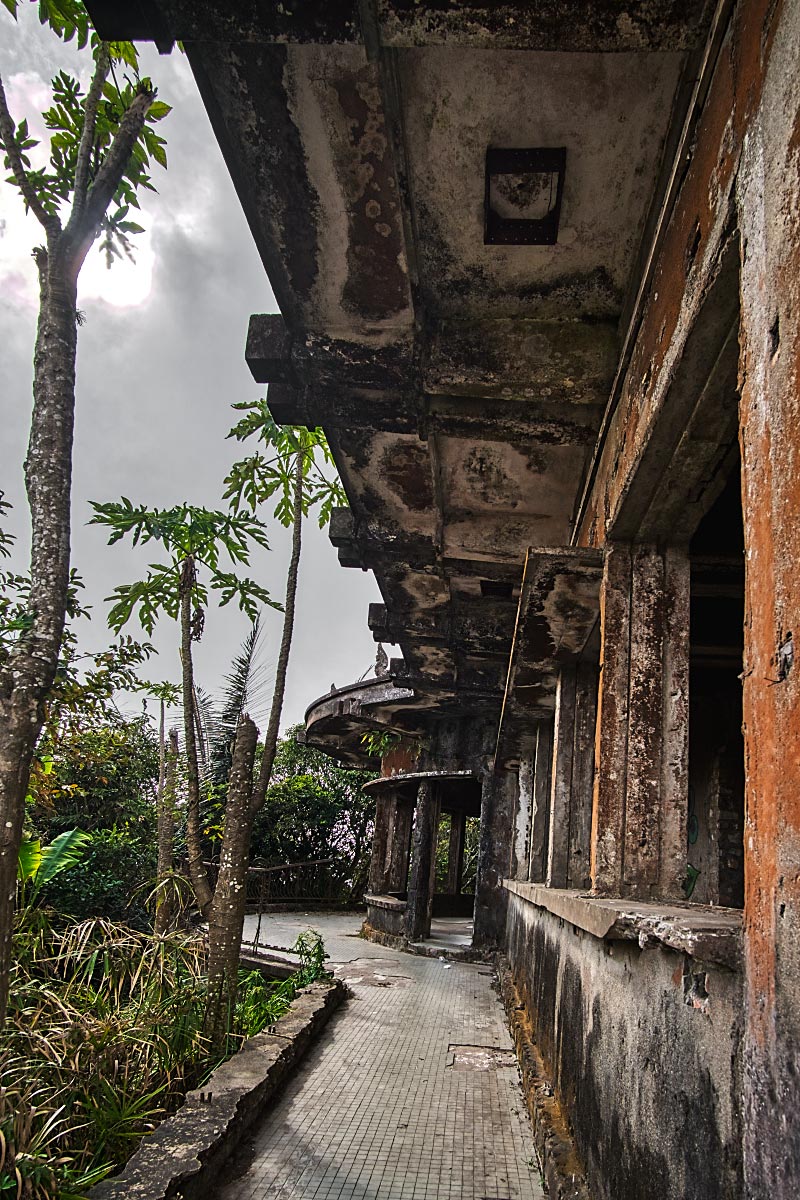
Bokor National Park in Cambodia left me with mixed memories. I enjoyed the clouds, rocky landscape and pitcher plants. I was much less impressed by the large hotels and construction sites sharing the mountain with them. If you are wondering whether Bokor is worth visiting, my answer is yes, provided you understand that the developed plateau is a complicated place to go looking for untouched nature.
This is my experience of the part of Bokor we visited, with all the disappointment that came with it. It is also worth keeping the scale of the place in mind: a road trip around the hill station cannot tell you everything about the much larger protected area.

Is Bokor National Park Worth Visiting?
For mountain scenery, unusual plants and photography, I would still consider Bokor worth the journey. The clouds gave the landscape the sort of drama that makes you reach for your camera. The rocky ground and remnants of the old hill station added interest, even when development kept interrupting the view.
My disappointment came from the gap between the words “national park” and what I saw on the tourist plateau. I expected conservation to be the obvious priority. Large buildings, cleared ground and unfinished projects made that difficult to believe. Travelers interested in this tension between landscape and tourism may find Bokor revealing; anyone planning a forest outing should arrange that specifically with a knowledgeable local guide.
Development Inside a Protected Landscape
The construction was not a small detail in the background of our visit. It became one of my main memories of Bokor. Seeing land prepared for more development inside a national park raised a simple question: how much can be built before the landscape that attracted people becomes secondary to the buildings?

There is documented context for that concern. In February 2021, Mongabay reported on plans for luxury housing inside Bokor National Park, citing a development master plan covering nearly 19,000 hectares and warnings from conservationists about forest loss. The report also carried the Cambodian Ministry of Environment’s response: it described a smaller development allocation and said the plan would protect natural resources. Those figures concerned plans discussed in 2021, not an assessment of how much has since been built.
My photographs record what we encountered, not a survey of the entire park. According to the ASEAN Centre for Biodiversity, Bokor includes several forest habitats as well as a high plateau. Open rocky ground is therefore not, by itself, evidence of deforestation. Cleared construction sites and buildings need to be discussed separately from the mountain’s naturally open areas.

Thansur Sokha Hotel and the Developed Plateau
Thansur Sokha Hotel was the clearest example of what bothered me about the built environment. Its size, green facade and institutional appearance seemed awkward in this setting. Looking around the complex, I was reminded more of a military facility than somewhere I would choose for a mountain escape. That is my reaction to its architecture, not a claim about the building’s use.

The hotel looked quiet when we passed, with little sign of guests. That observation says nothing about its occupancy at other times or its current operation. I can be quite firm about my own preference, though: the design did not make me want to stay. A green facade does not make a large building disappear into a landscape.

Clouds, Rocks and Bokor’s Pitcher Plants
The natural details were the part of Bokor I liked most. Clouds changed the scene, rocks gave it shape, and the pitcher plants rewarded a closer look. There was enough here to explain why people make the journey up the mountain, even after my enthusiasm had taken a hit from the construction.

The Nepenthes plants were particularly memorable. Their shape invited a few childish comparisons, which probably says more about me than the plants. The useful correction is botanical: those pitchers are modified leaves that catch insects, not flowers. Singapore’s National Parks Board explains how these traps work. I am keeping the identification at genus level, since our photograph alone does not establish a species. Look closely, take your pictures and leave the plants where they grow.

Bokor Hill Station and the Limits of a Day Trip
The old hill station is one part of Bokor National Park, not a name for the whole protected area. Its buildings add a historical layer to a mountain trip, and the abandoned structures we encountered made an evocative setting for photographs. Their appearance at the time should not be taken as a promise that each building remains unchanged or accessible today.

I also remember entrance structures that appeared unused. It was tempting to turn that into another joke about the place. It would be a poor basis for telling someone whether entry is free now. Access arrangements and any charges need a fresh local check, especially if your plans depend on particular stops.

Would I Recommend the Trip?
I would recommend Bokor to travelers who enjoy mountain scenery, photography and places that leave them with something to think about. I would also tell them about the hotels and construction before they set off. Those were a substantial part of my experience, and leaving them out would produce a more cheerful account than the visit deserved.
What stayed with me was concern for a place that still has so much worth protecting. The clouds and pitcher plants were enough to hold my attention without another grand project beside them. Bokor made me think harder about what tourism asks of a landscape, and how easily the reason for visiting can be damaged in the effort to accommodate more visitors.

Practical Details for Visiting Bokor from Kampot
Plan for a mountain outing with changing weather and separate stops. Decide whether your priority is the hill-station area, photography or a guided nature excursion, then confirm transport and access for that particular plan.
| Detail | Information checked in October 2026 |
|---|---|
| Destination | Preah Monivong (Bokor) National Park, southern Cambodia. Kampot is the usual base for trips to the hill-station area. |
| Elevation | The mountain plateau is roughly 1,000 meters above sea level. The entire national park is not at that elevation. |
| What to bring | A warm layer, waterproof outerwear, shoes with grip, drinking water and protection for camera equipment. |
| Transport planning | Arrange a return journey and agree on the stops before departure. For a motorbike trip, consider your experience and the mountain weather; a vehicle with a driver is another option. |
| Access and costs | A current official entrance tariff and opening schedule have not been confirmed for this update. Check road access, individual-site opening arrangements, parking and any admission charges locally. |
| Nature visits | Arrange a suitable guide if forest exploration is your priority. The developed sightseeing route is only one way to experience the area. |
| Conservation background | ASEAN Centre for Biodiversity: Bokor park profile |
Take the change in conditions seriously if you travel by motorbike. Cloud, rain and a cooler plateau call for more preparation than a short ride around Kampot. Choose transport that suits your experience, allow time for the return journey and avoid making the day depend on a clear view.
Bokor National Park FAQ
Is Bokor National Park worth visiting?
Yes, if mountain scenery, photography and the old hill station interest you. My experience of the developed plateau was mixed: the natural setting made the journey worthwhile, while hotels and construction were a substantial distraction. A visit to this area is different from a dedicated forest excursion.
Are Bokor Hill Station and Bokor National Park the same place?
Bokor Hill Station is the historic settlement on the mountain plateau. Preah Monivong, commonly called Bokor National Park, is the much larger protected area around it. The condition of the tourist stops does not describe every part of the park.
What should I wear for a trip to Bokor Mountain?
Bring a warm layer, rain protection and shoes with grip. The high plateau can be cooler than Kampot, and cloud can affect visibility. If you plan to travel by motorbike, prepare for changing weather and choose transport suited to your riding experience and the conditions.
What are the pitcher plants at Bokor?
They are Nepenthes, a group of carnivorous plants. Their pitchers are modified leaves that trap insects, not flowers. The photograph in this article is identified only to genus level; it does not establish a particular species. Leave plants undisturbed when photographing them.
Sources and Further Reading
Park geography and conservation
ASEAN Centre for Biodiversity: Preah Monivong (Bokor) National Park. Used for the park’s varied habitats, protected-area context and high-plateau geography. Historical wildlife lists are not treated as promises of current sightings.
Reporting on development plans in 2021
Mongabay: Luxury housing plans threaten Cambodia’s Bokor National Park, published February 25, 2021. The report was consulted through its authorized Eco-Business republication of March 1, 2021. It includes conservation concerns and the Ministry of Environment’s response; it is not a current construction-status report.
How Nepenthes pitchers work
National Parks Board, Singapore: Pitcher Perfect. Used to explain leaf-derived insect traps, without assigning a species to the plant photographed at Bokor.
You Might Also Like
For another side of the Kampot region, our visit to a pepper farm led to this guide to Kampot pepper and its different types. It follows the ingredient from the vine to the table, with notes from our tasting at La Plantation.

You might also like


