


Melaka is easy to remember through red colonial buildings, ornate temples and plates of Nyonya food. Yet one of our most vivid impressions came from a less polished corner of the city. At Pasar Besar Melaka in Bachang, the story was told through tangled herbs, shining fish, bunches of bananas and the quick, practiced movements of vendors preparing for another ordinary day.
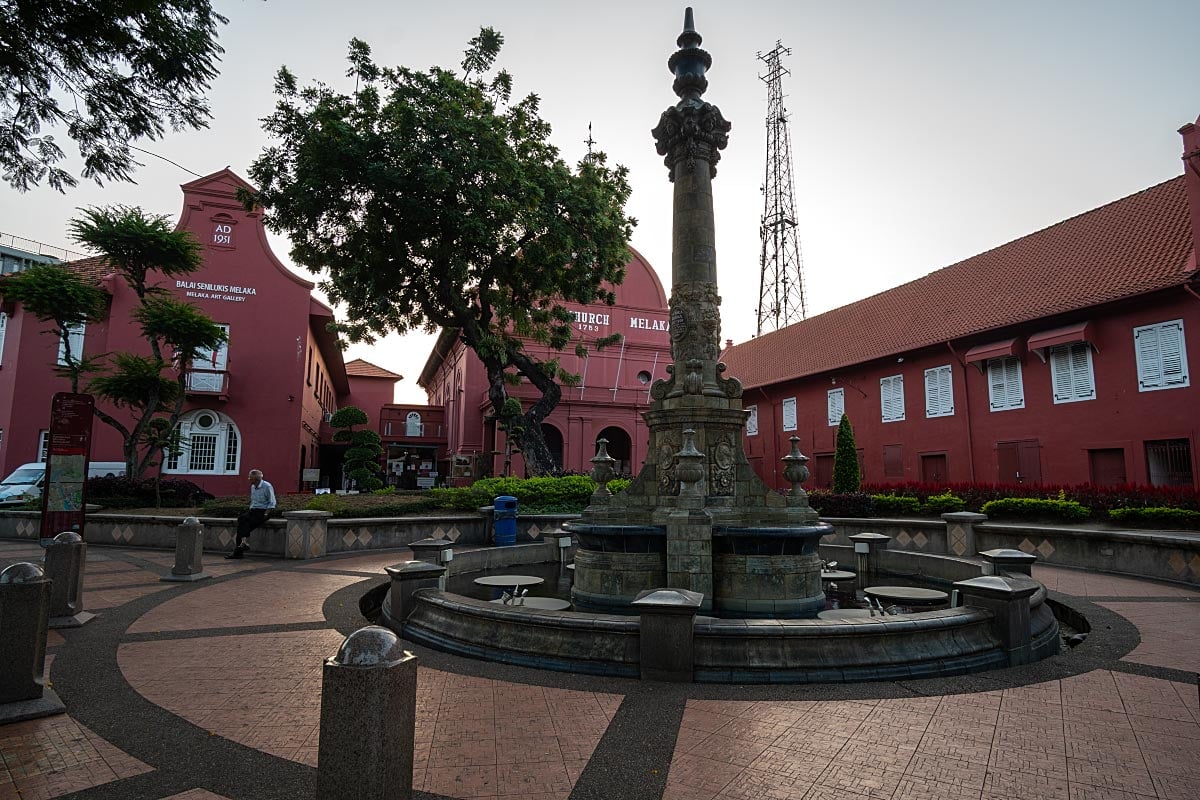
A market often gives a destination’s most honest introduction, long before its neatest one. Pasar Besar, which simply means “big market,” is a working wet market in Kampung Bachang. It functions purely as a place for local shoppers to buy what they will cook that day. Sellers arrange produce with an eye trained by repetition, and the floor carries the familiar signs of a place where vegetables, fruit and fresh fish all share the same roof.
Why Pasar Besar Melaka Is Worth Visiting
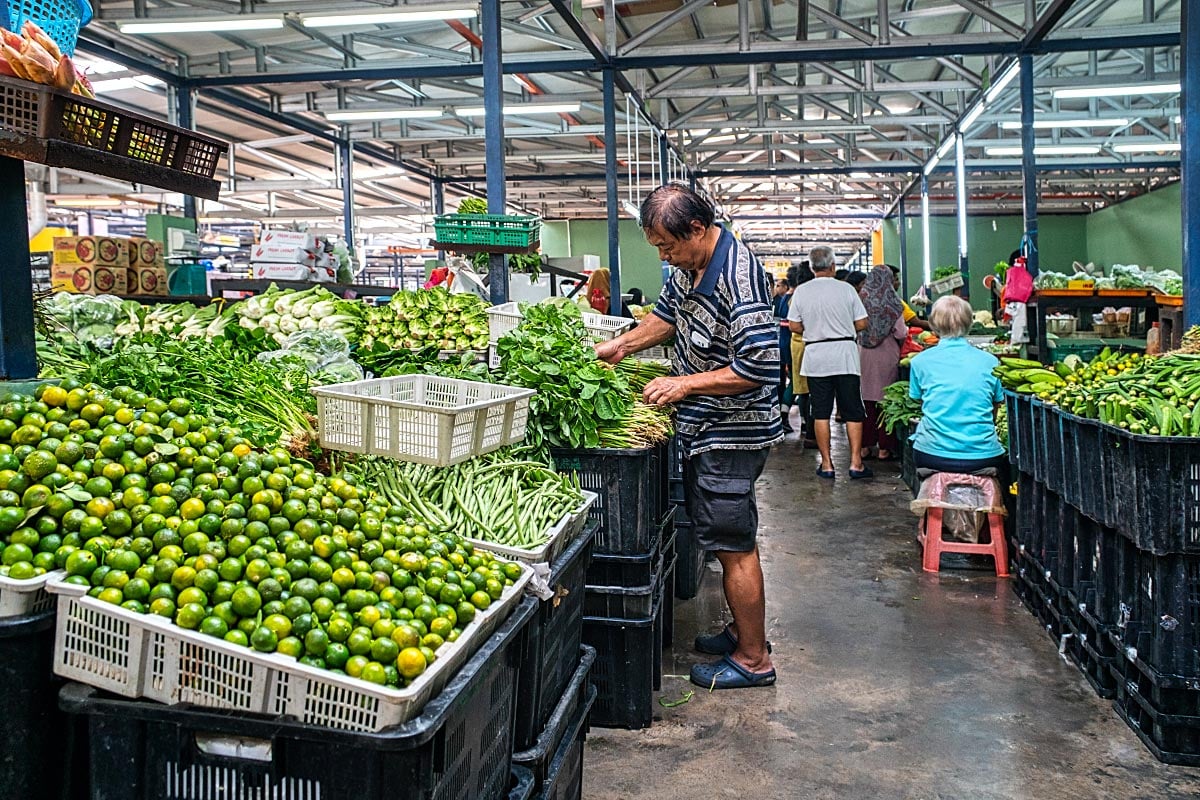
We came for the atmosphere as much as the ingredients. The covered hall felt open and practical, with rows of black crates, simple counters and signs suspended above the aisles. There was no decorative market theater here. The color came from the produce itself: red chilies, glossy eggplants, pale green gourds, citrus in several stages of ripeness and leaves piled in generous bundles.

That directness is the reason to visit. Melaka’s food is often introduced through finished dishes, but the market reveals the raw vocabulary behind them. The ingredients do not explain every layer of the city’s Malay, Chinese, Indian, Peranakan and Eurasian traditions, although they make those connections easier to understand. Our guide to what to eat in Melaka becomes more tangible after seeing where part of that daily cooking begins.
Vegetables, Herbs and the Colors of Melaka Cooking
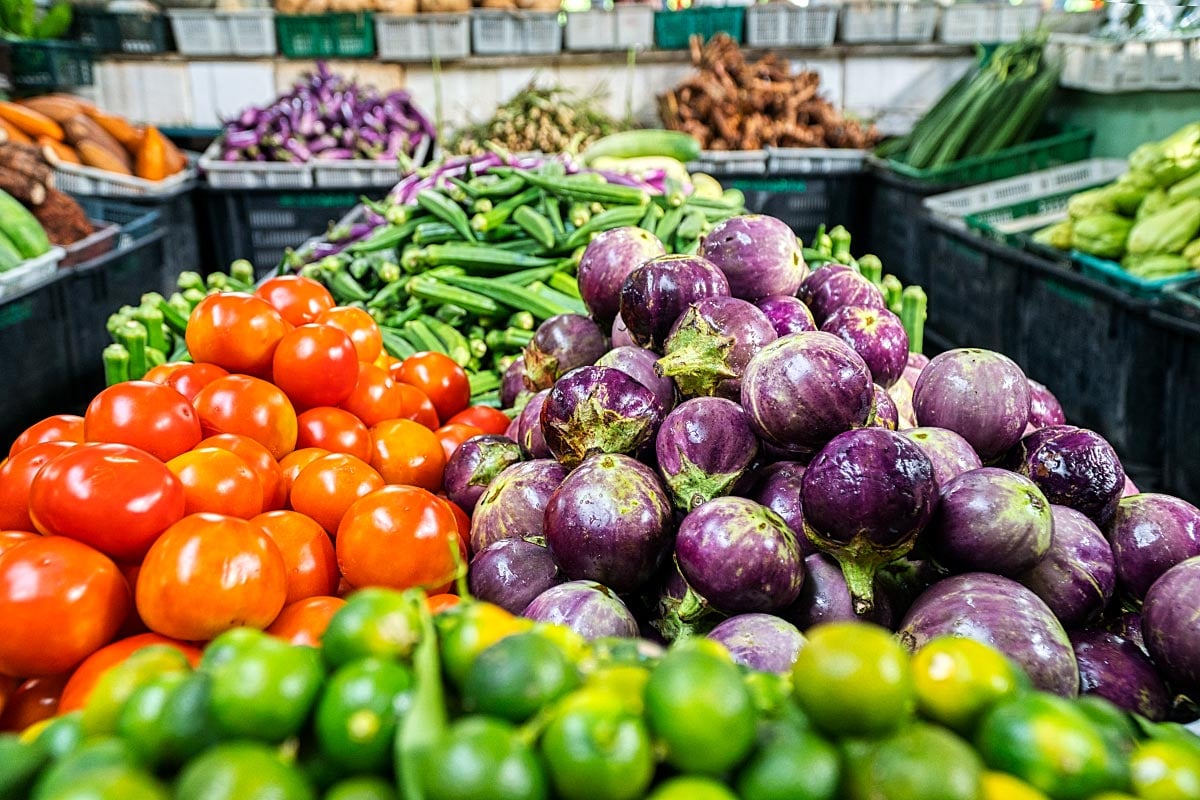
The vegetable section was the most photogenic part of our walk, although “photogenic” probably ranks rather low among the concerns of anyone working there. Tomatoes, peppers and purple eggplants filled one counter, while long beans and leafy greens spilled across another. Nothing looked styled, and that made the displays far more appealing than a carefully arranged hotel buffet.
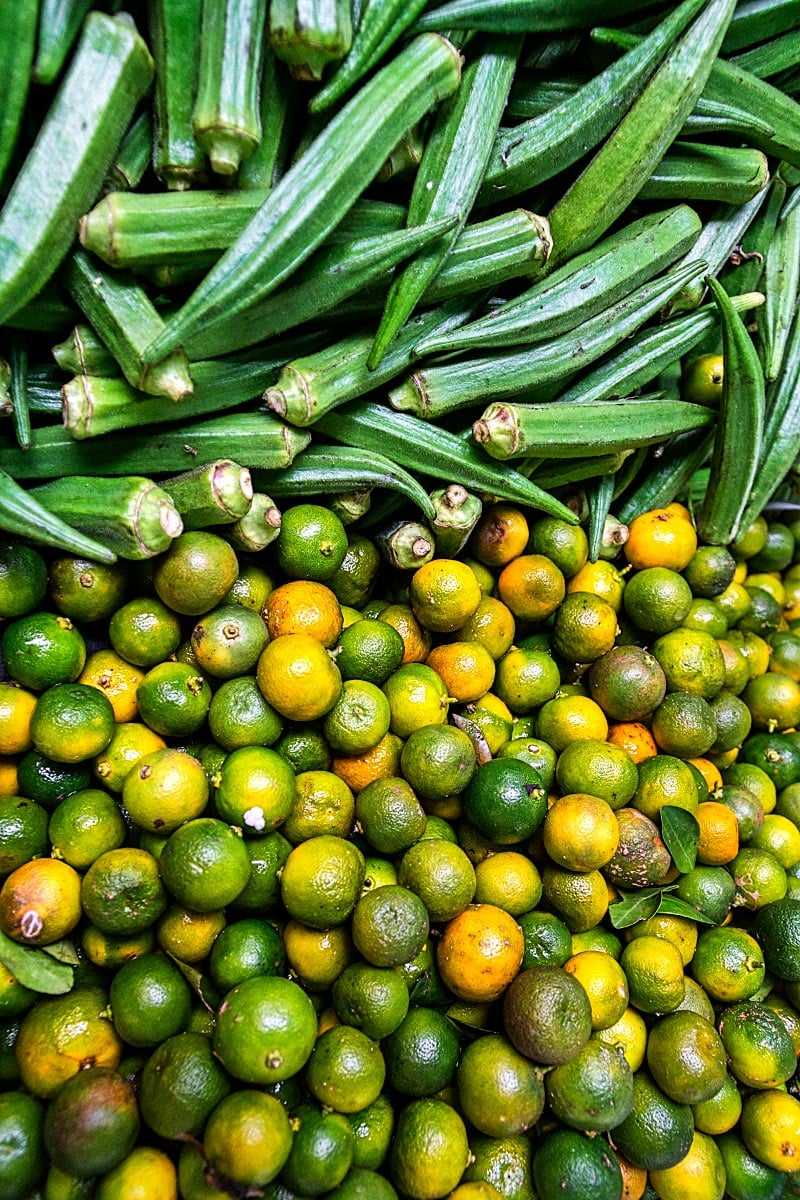
At another stall, okra lay above a mound of small citrus fruit, their green skins broken by flashes of yellow and orange. Nearby, a large pile of chilies shifted from deep green to vivid red. These are simple ingredients, yet in Melaka they can lead toward sambal, curries, seafood dishes and family recipes shaped by centuries of exchange.

We also stopped at a pile of broad, crinkled leaves gathered around thick pale stems. The market reminded us not to treat unfamiliar produce as decoration. Each leaf has a name, a method and a place at someone’s table. When we are not certain of the exact variety, it is better to ask than to turn confidence into fiction, a useful rule both in markets and in travel writing.

Inside the Wet Market’s Fish Section
The mood changed in the fish section. Here, the palette became silver, gray and coral, with rows of fresh catch laid over counters and trays. Vendors worked close to the produce area, making the market feel less like a collection of separate shops and more like one functioning pantry for the surrounding neighborhoods.

One fishmonger held up a large pink fish for the camera, a small moment that brought personality to the practical business around him. Another vendor stood behind her counter beneath a line of bright cloths and plastic bags. The market’s character came entirely from people at work.


Bananas, Everyday Shopping and a Different Side of Melaka
The fruit stalls softened the scene again. Bunches of green bananas filled one display, while more fruit hung above a narrow aisle crowded with baskets, crates and bags. It was visually chaotic in the most agreeable way. Every object had a purpose, even if only the person running the stall could explain the system.

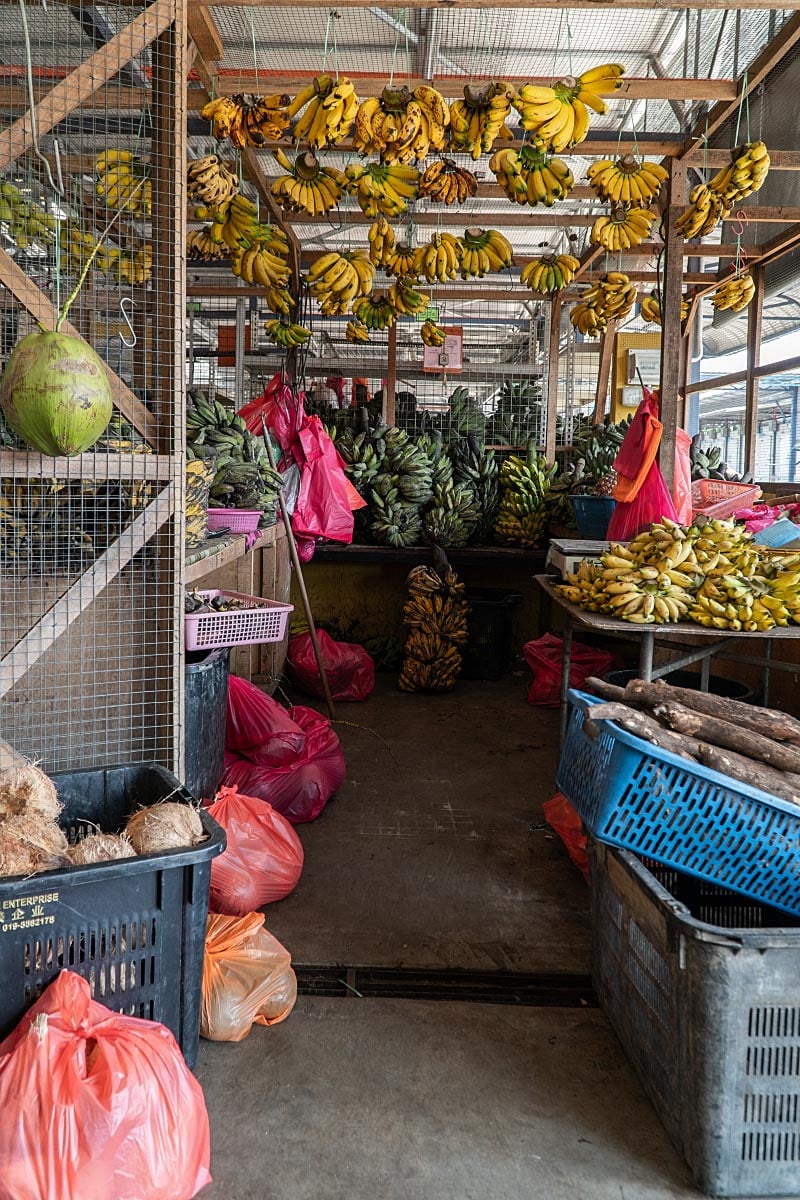
For travelers staying in the historic center, Bachang offers a useful shift in perspective. The elegant Majestic Hotel Melaka interprets the city through polished heritage, while its afternoon tea turns local references into a refined hotel ritual. Pasar Besar shows the other end of the same food story: produce in crates, fish on counters and ingredients chosen for lunch rather than presentation.
From Market Ingredients to Kristang Kitchens
Melaka’s cuisine is inseparable from migration, trade and adaptation. That history is especially visible in Kristang cuisine and its Portuguese-Eurasian legacy, where familiar local ingredients meet techniques and memories passed between generations. A market visit adds useful context to that heritage: it shows the raw ingredients that later become the recipes and traditions travelers taste elsewhere in the city.

We understood this even better during a Kristang cooking class. Recipes become easier to remember when they are connected to people and place, and markets provide that missing geography. They show what is abundant, what is seasonal and what home cooks can buy without ceremony.
Tips for Visiting Pasar Besar Melaka
- Visit earlier in the day. A working wet market is generally at its liveliest when people are buying fresh ingredients, and the indoor temperature is also more comfortable before the heat builds.
- Wear practical shoes. Floors in the fish section can be wet, so this is not the moment for delicate footwear.
- Ask before taking close portraits. A smile and a small gesture toward the camera are usually clearer than silently photographing someone at work.
- Bring small Malaysian ringgit notes. The market serves local shoppers, and cash is the simplest option for small purchases.
- Check local closure notices. Municipal markets can have scheduled cleaning or closure days, so confirm locally if the visit is important to your itinerary.
Is Pasar Besar Melaka Worth Adding to Your Itinerary?
Yes, particularly if food is one of the ways you understand a place. Pasar Besar Melaka’s appeal sits entirely in its ordinary details: a vendor sorting citrus, a fishmonger holding up the morning’s catch and a narrow aisle made greener by dozens of banana bunches.
Melaka’s grand history is impossible to miss in the center. At the market, history becomes quieter and more useful. It survives in ingredients, habits and the daily decision of what to cook. For us, that made Bachang more than a detour. It became one of the places where the city felt most convincingly alive.
Pasar Besar Melaka Practical Information
| Detail | Information checked in September 2026 |
|---|---|
| Market | Pasar Besar Melaka |
| Address | Kampung Bachang, 75350 Melaka, Malaysia |
| Market type | Covered local wet market and produce market |
| Best time to visit | Morning, when shopping for fresh produce and fish is most active |
| Admission | Free |
| Payment | Bring cash and small Malaysian ringgit notes for purchases |
| What to wear | Comfortable clothes and shoes suitable for wet floors |
| Opening hours | Confirm locally before visiting, especially around scheduled municipal closure days |
| Location | View on Google Maps |
Frequently Asked Questions
What is Pasar Besar Melaka?
Pasar Besar Melaka is a covered local wet market and produce market in Bachang. Its stalls sell fresh vegetables, fruit, herbs, fish and other everyday ingredients.
Where is Pasar Besar Melaka?
The market is in Kampung Bachang, 75350 Melaka, Malaysia, outside the main historic tourist area.
When is the best time to visit Pasar Besar Melaka?
Most stalls are busiest before mid-morning and start winding down by early afternoon, so a morning arrival gives the best chance of seeing the market at full activity. It’s worth confirming the current hours and any scheduled closure day locally before making a special trip.
Is Pasar Besar Melaka a tourist market?
No. It is primarily a working neighborhood market for local shoppers. That everyday character is the main reason food-focused travelers may find it interesting.
Can I take photographs inside the market?
Yes, but remember vendors are working, not posing for visitors. A quick smile or gesture before lifting the camera usually gets a friendlier response than shooting from a distance, and it helps to step back from busy stalls so shoppers can move through the aisles.

You might also like


