
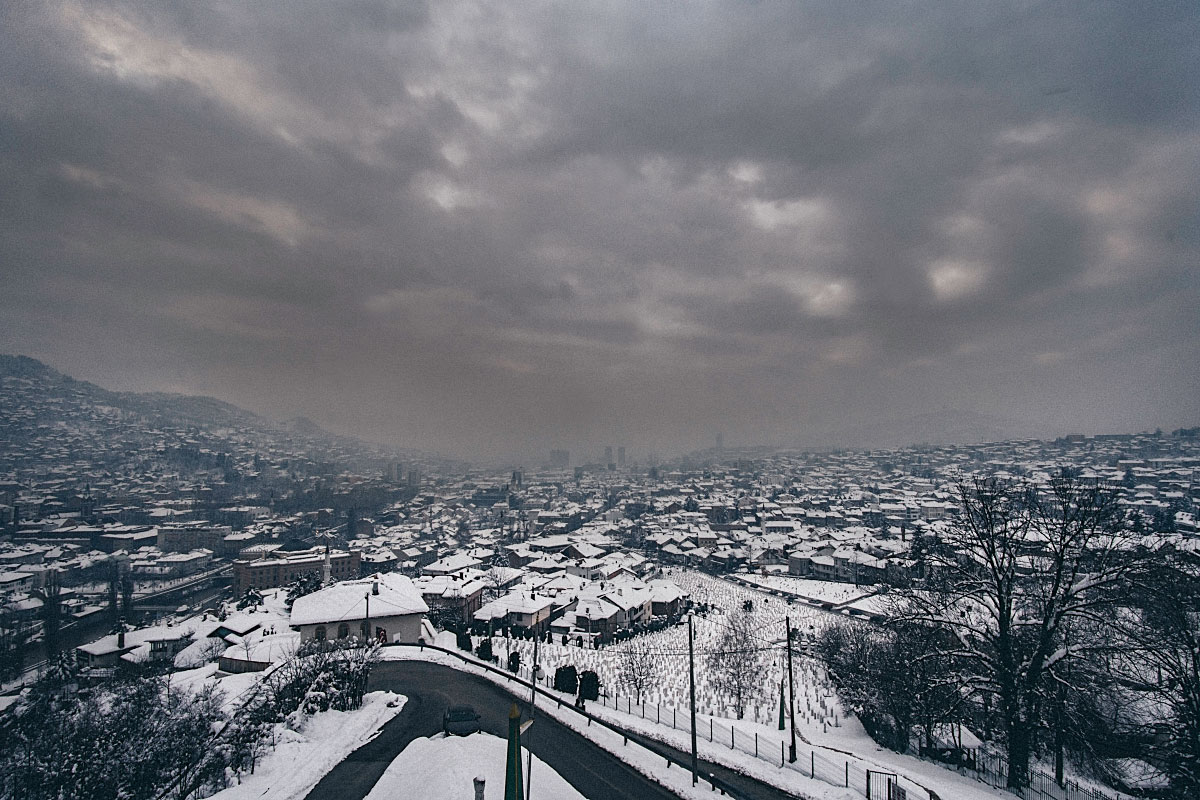
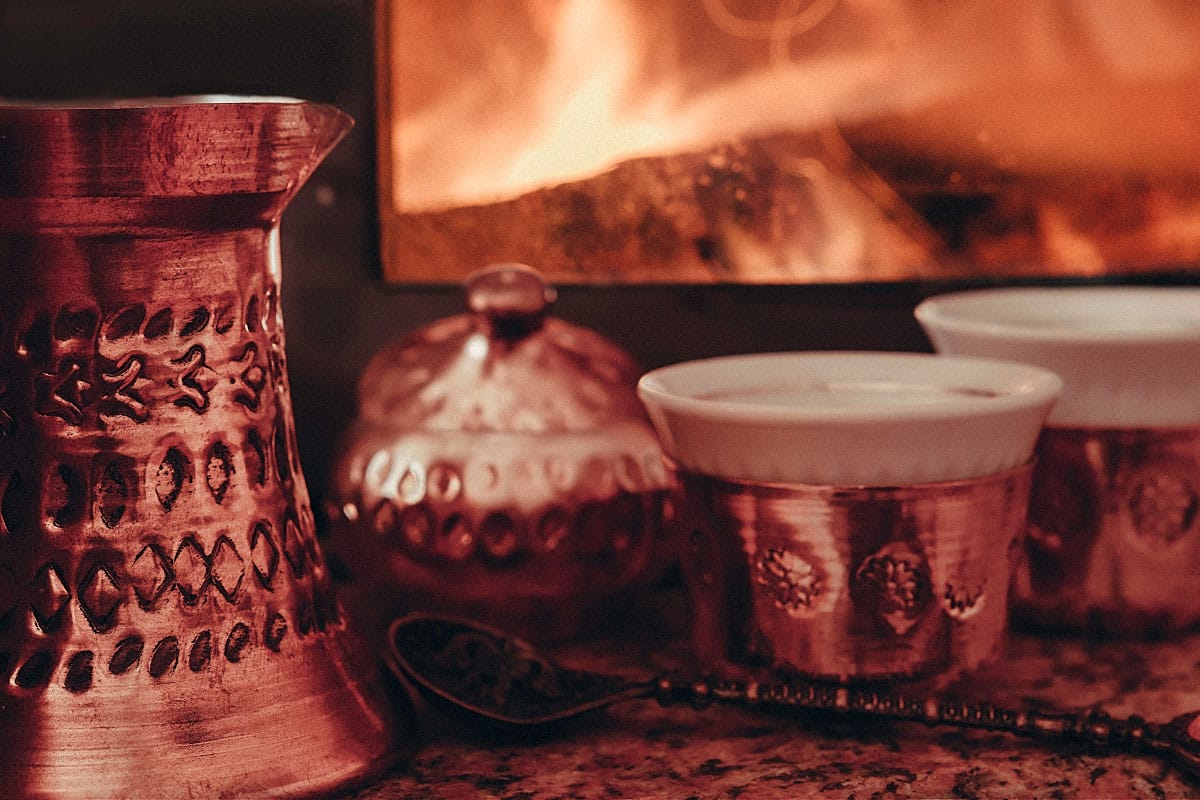
Our introduction to Sarajevo old town involved a difficult drive, a very welcome meal, and shops that proved hard to leave empty-handed. We came in winter, when snow covered the city and poor air quality became the least enjoyable part of the trip. The things that won us over were much closer to the table: ćevapi, Bosnian coffee, and the small shops of Baščaršija, where we bought a handmade plate and a copper džezva.
Sarajevo in Brief
- What we enjoyed: Bosnian food, welcoming service, and browsing the old bazaar.
- Where to begin: Baščaršija, with time for a meal and the craft shops.
- What we would reconsider: A winter visit without checking air quality beforehand.
- What to ask before buying: Who made the copperware and whether it is intended for kitchen use.
Best for: Travelers who enjoy discovering a city through its food, coffee traditions, and locally made objects.

Arriving in Sarajevo in Winter
Winter air quality is worth considering when planning Sarajevo. Residential heating and traffic contribute to pollution, and temperature inversions can hold polluted air close to the ground. That gives some context to the air we encountered, without assuming that every winter day has the same conditions or that another season guarantees clear air.
The drive also tested our patience. We witnessed repeated risky overtaking on stretches where visibility ahead was limited, and I was relieved when we finally arrived. That was our experience of one journey, not a description of every driver in Bosnia and Herzegovina. For another road trip, I would leave plenty of time and check the route and weather before setting out.
Food in Sarajevo: Ćevapi, Pita, and a Proper First Meal
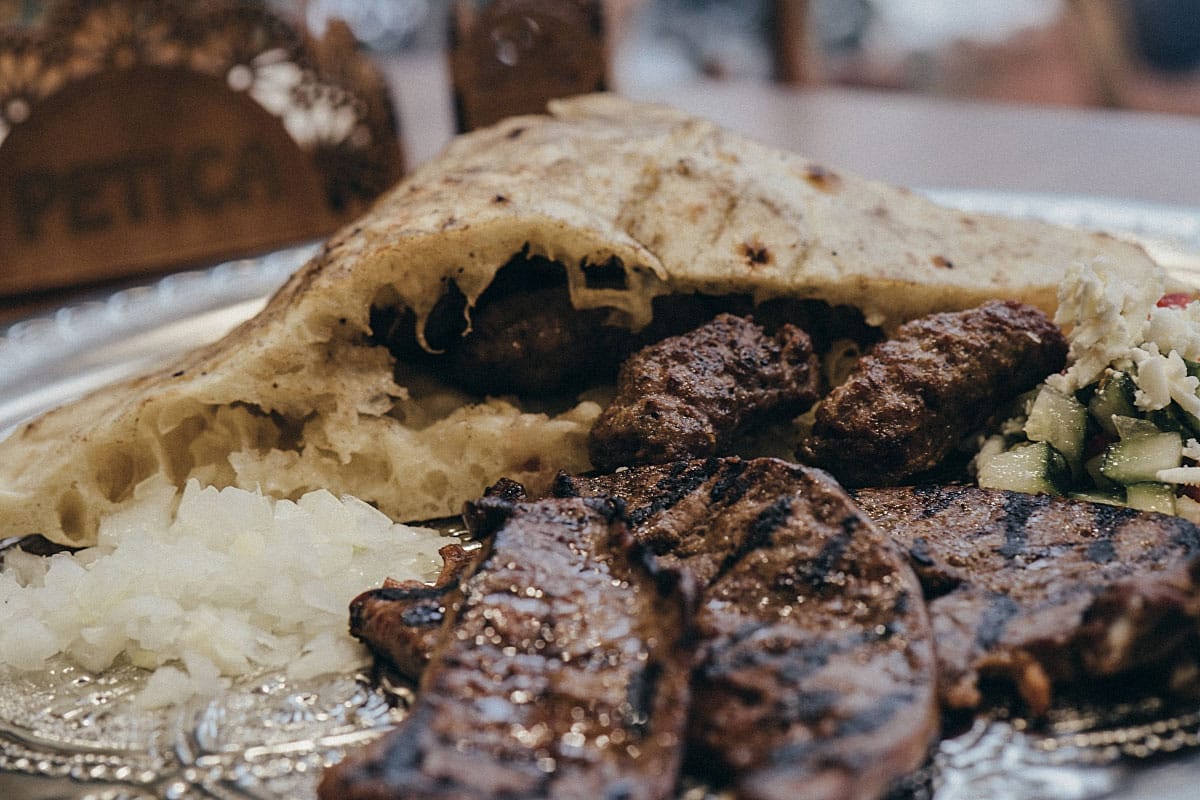
Ćevapi are an easy place to begin with Sarajevo’s food. These small rolls of grilled minced meat are commonly served with somun, the local flatbread, and chopped onion. Meat blends vary by producer, so there is little point in presenting one recipe as the rule for every ćevabdžinica, the restaurants specializing in them.
We arrived hungry and went straight for ćevapi, pita, and grilled veal liver. The smell from the grill made waiting difficult, and fortunately the food came quickly. I particularly recommend trying the liver if you enjoy it. Our ćevapi road trip through Leskovac and Sarajevo looks more closely at the grilled meat that brought us to both cities.
One useful distinction when ordering is that Bosnian pita means a filled pastry pie, not the flatbread served with ćevapi. Buregdžinice specialize in these pies, while aščinice are places to look for cooked Bosnian dishes. We also visited a small bistro serving local food in traditional dishes, another reminder that Sarajevo’s cooking deserves more than a single meal at a grill.


Exploring Sarajevo Old Town: Baščaršija
Baščaršija is Sarajevo’s historic bazaar, with origins in the 15th century. Its name comes from Turkish and means the main market. The area brings together shops, places to eat, and religious and historic buildings, making it a useful starting point for exploring the old town.
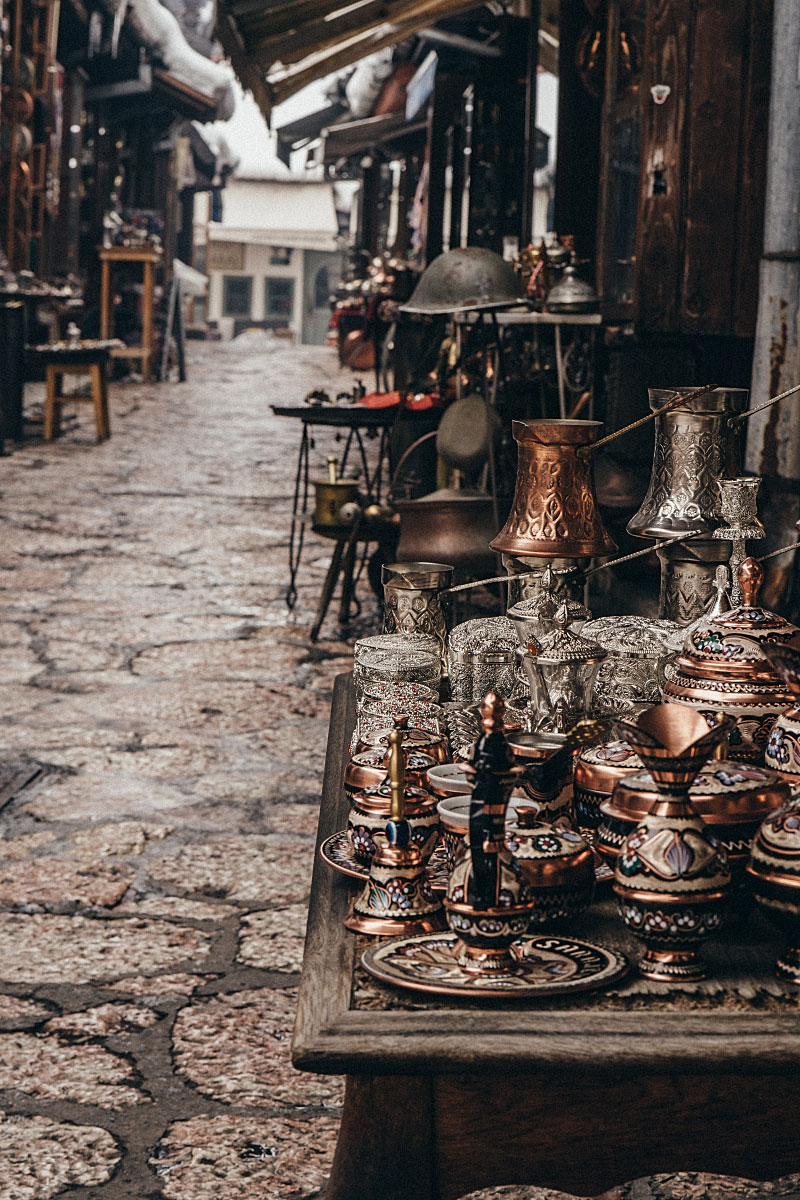
What caught my attention was the care put into the little shops. Some were traditional, others more contemporary, and the service we encountered was welcoming and professional. We were especially taken with the lanes selling antiques and souvenirs. For anyone interested in metalwork, Kazandžiluk is the street associated with coppersmiths, a useful name to remember when looking for a džezva or coffee set.

Bosnian Coffee: From Džezva to Fildžan
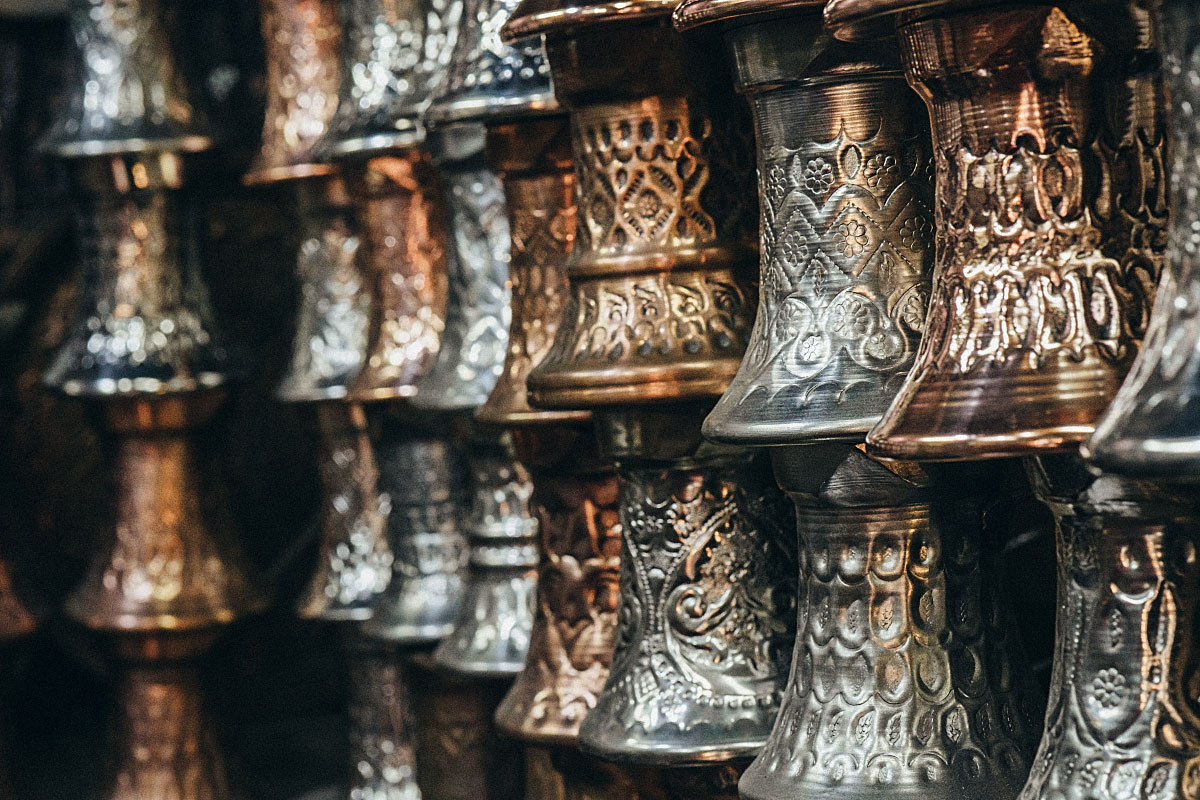
Bosnian coffee is an unfiltered drink made with very finely ground beans and a small pot called a džezva. It shares roots with Turkish coffee, with local differences in preparation and serving. Calling it simply Turkish coffee misses the identity it has here, and treating either tradition as one inflexible recipe misses the variations between households.
In one common Bosnian method, water is heated separately and poured over the grounds in the džezva. The pot returns to the heat until the foam rises, then is removed before it boils over. Coffee is poured into a small cup called a fildžan. Some serving sets place the cup inside a metal holder; the holder is separate from the cup itself.
Sugar is often served alongside, sometimes with rahat lokum, the soft confection also known as Turkish delight. The combination gives you a good reason to pause between shops. Our own shopping ended with a handmade plate and a copper džezva, something connected to the food and drink that had interested us throughout the visit.

Buying Copper Souvenirs in Sarajevo
When buying a copper coffee pot, ask two separate questions: who made it, and whether it is suitable for preparing drinks. A maker’s name can help establish provenance. It does not, by itself, confirm that an object is intended for contact with food or suitable for heating.
Ask about the material, the interior lining, and the maker’s care instructions. Decorative pieces should stay decorative, and a damaged lining needs attention before the pot is used again. Health Canada’s cookware guidance advises against cooking or storing food in uncoated or scratched copper cookware. If a seller cannot explain an item’s intended use, I would choose it for display or keep looking for a pot made for the kitchen.
Our Sarajevo Video
The video below accompanies our Sarajevo story. Watch it alongside the photographs for another look at the trip.
Would We Return to Sarajevo?
I would return for the food and the chance to spend more time in Baščaršija. The ćevapi, grilled liver, helpful shopkeepers, and the plate and džezva we bought gave the visit its character. A traveler who enjoys a meal followed by browsing and coffee will find plenty to appreciate in this part of Sarajevo.
Next time, I would plan around the air quality more carefully and favor dates outside the coldest part of the heating season. Our winter trip gave us good reasons to recommend Sarajevo, along with a practical reason to think about when to go.
Practical Details for Sarajevo Old Town
| Detail | Information checked in October 2026 |
|---|---|
| Destination | Sarajevo, Bosnia and Herzegovina; this story focuses on Baščaršija and the old town. |
| Visit context | A historical winter visit, first published January 2, 2018. The exact travel dates are not recorded here. |
| Food vocabulary | Ćevabdžinica: grilled ćevapi. Buregdžinica: filled pastry pies. Aščinica: cooked Bosnian dishes. |
| Coffee vocabulary | Džezva: coffee pot. Fildžan: small coffee cup. |
| Craft shopping | Kazandžiluk is associated with coppersmiths. Ask about the maker and intended use of anything bought for the kitchen. |
| Winter planning | Check current air-quality readings, local notices, and weather before traveling. |
| Prices and hours | Check individual businesses directly. This account does not provide current restaurant prices or shop opening hours. |
| Official visitor information | Visit Sarajevo |
Frequently Asked Questions About Sarajevo Old Town
What is Baščaršija in Sarajevo?
Baščaršija is Sarajevo’s historic bazaar, with origins in the 15th century. It is an area of shops, craft streets, places to eat, and historic buildings. Kazandžiluk is associated with coppersmiths.
What food should you try in Sarajevo old town?
Ćevapi, commonly served with somun flatbread and onion, are a good starting point. Look for filled pastry pies at a buregdžinica and cooked Bosnian dishes at an aščinica. We particularly enjoyed the ćevapi and grilled veal liver we ate on our trip.
How is Bosnian coffee prepared and served?
Bosnian coffee uses very finely ground beans and a džezva. In one common method, hot water is poured over the grounds before the pot is returned to the heat until the foam rises. It is served in a small fildžan, often with sugar or rahat lokum alongside. Methods vary between households.
What should you consider before visiting Sarajevo in winter?
Consider air quality as well as the weather. Heating emissions, traffic, and temperature inversions can contribute to winter pollution. We encountered poor air on our trip, so we recommend checking current readings and local notices when planning a visit.
Sources
Background and practical guidance checked October 27, 2026. Personal observations and photographs come from our winter trip.
- Visit Sarajevo: Baščaršija and its history
- Visit Sarajevo: craft streets and food in Baščaršija
- Visit Sarajevo: visitor guide, including ćevapi and somun
- Destination Sarajevo: ćevabdžinice, buregdžinice, and aščinice
- Bowling Green Bosnia Oral History Project: Bosnian coffee and a family’s preparation method
- Hasanović et al.: seasonal air pollution and temperature inversions in Sarajevo
- Health Canada: safe use and maintenance of copper cookware
You Might Also Like

You might also like

