




Why is Singapore so strict about drugs? There is a serious answer involving public safety, deterrence, and the harm caused by drug trafficking. Walking around the city, I came up with a less serious theory: Singapore already supplies enough strange sights to keep your brain occupied without any chemical assistance.
The buildings looked like something from science fiction. Pedestrian crossings made sounds that reminded me of a video game, lights appeared everywhere, and themed bars could transport you to another decade before you had even ordered a drink. After the practical frustrations of crossing Singapore’s land border, the city itself gave my imagination considerably more pleasant work to do.

Why Is Singapore So Strict About Drugs?
Singapore’s government describes its strict drug policy as a way to prevent addiction, protect families, and deter trafficking. Its approach combines enforcement and severe penalties for suppliers with education, treatment, and support for people who use drugs. That is the rationale set out by the Ministry of Home Affairs. The city’s unusual architecture has, as far as I can establish, played no part in drafting the legislation.
The legal distinctions matter. Under section 17 of the Misuse of Drugs Act, possession of more than 15 grams of cannabis creates a presumption that it is held for trafficking, which can be rebutted. It is not an automatic conviction or a fixed sentence. Separately, trafficking, importing, or exporting more than 500 grams of cannabis can attract the death penalty, subject to the Act’s limited sentencing exceptions. Possession and consumption are also offenses. The Central Narcotics Bureau’s cannabis guidance explains the different penalty categories.

Now Imagine Sam in Singapore
Sam is my imaginary visitor, having made the very poor decision to take psychedelic mushrooms before exploring Singapore. This is where my unofficial theory begins. He walks outside and finds himself in what appears to be the year 2050. Buildings do things he was fairly certain buildings were not supposed to do. The crossing starts making noises. Someone passes in an outfit that deserves its own exhibition, and Sam begins to wonder whether the future has a dress code.

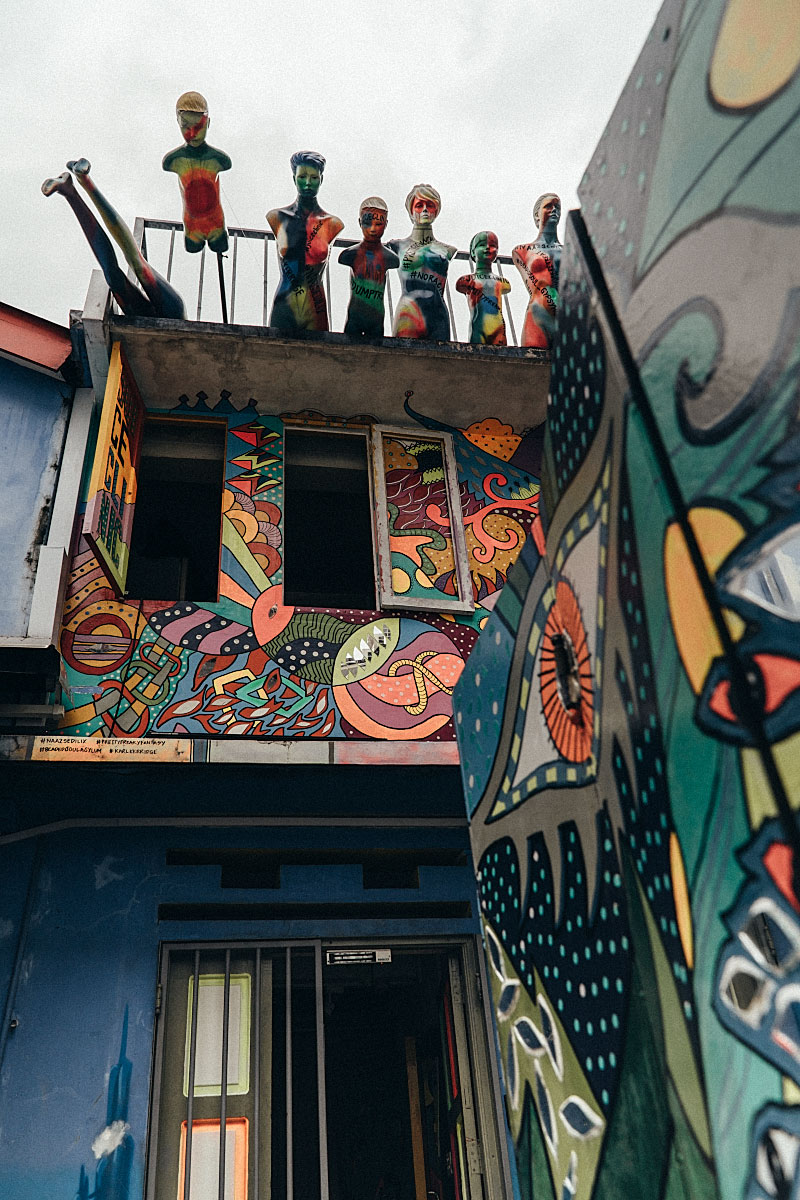
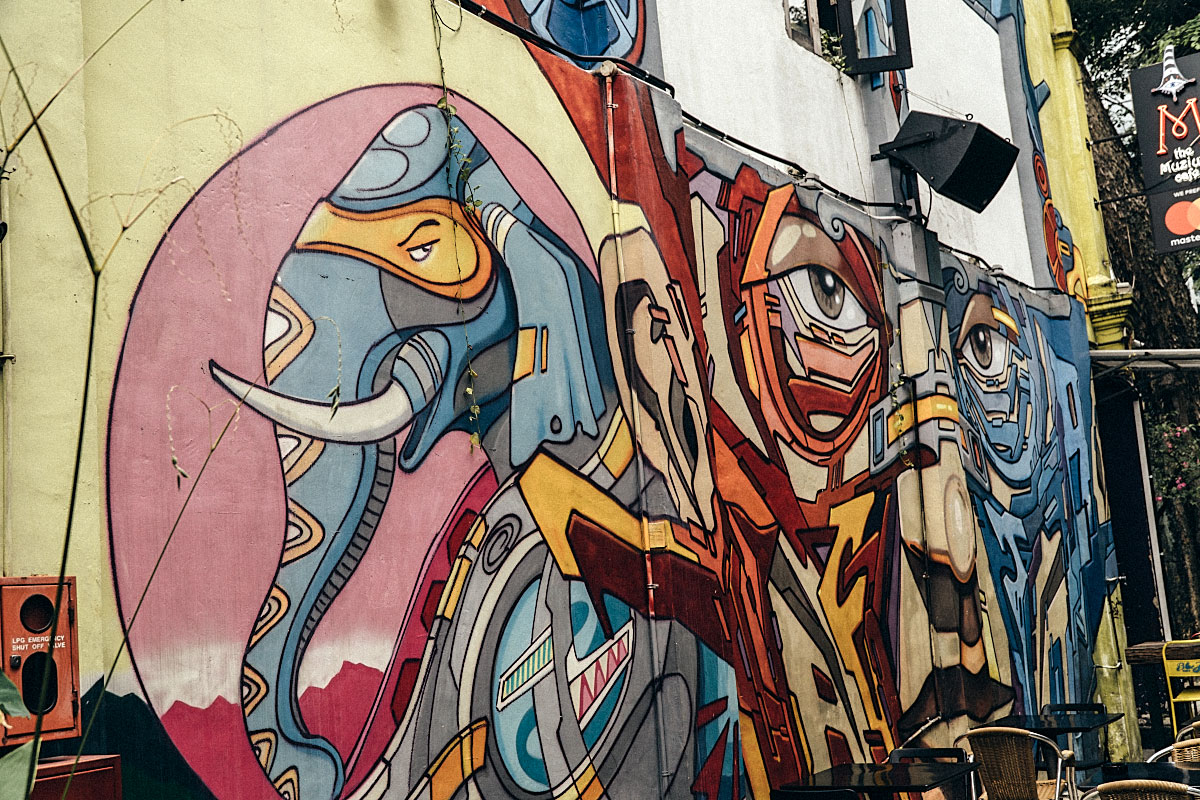
Around the next corner, street art changes the scenery again. He needs somewhere familiar, preferably somewhere with a chair. A bar looks promising until he steps inside and discovers that he has apparently wandered into an episode of Friends. Joey could arrive at any moment. Sam had expected a drink, not a supporting role in an American sitcom. Whoever supplied those mushrooms must have been Merlin.

He retreats through a shopping mall, because so many of our journeys around Singapore seemed to involve one. There is a boat inside. Of course there is. By the time he reaches another bar, he is hoping for something reassuringly ordinary. Then he walks into Atlas Bar, whose interior reminded us of The Great Gatsby. Now he has traveled backward from 2050 to the Jazz Age. The clock shows the correct time, which somehow makes the whole situation worse. Sam decides that a park would be a sensible place to recover his bearings.

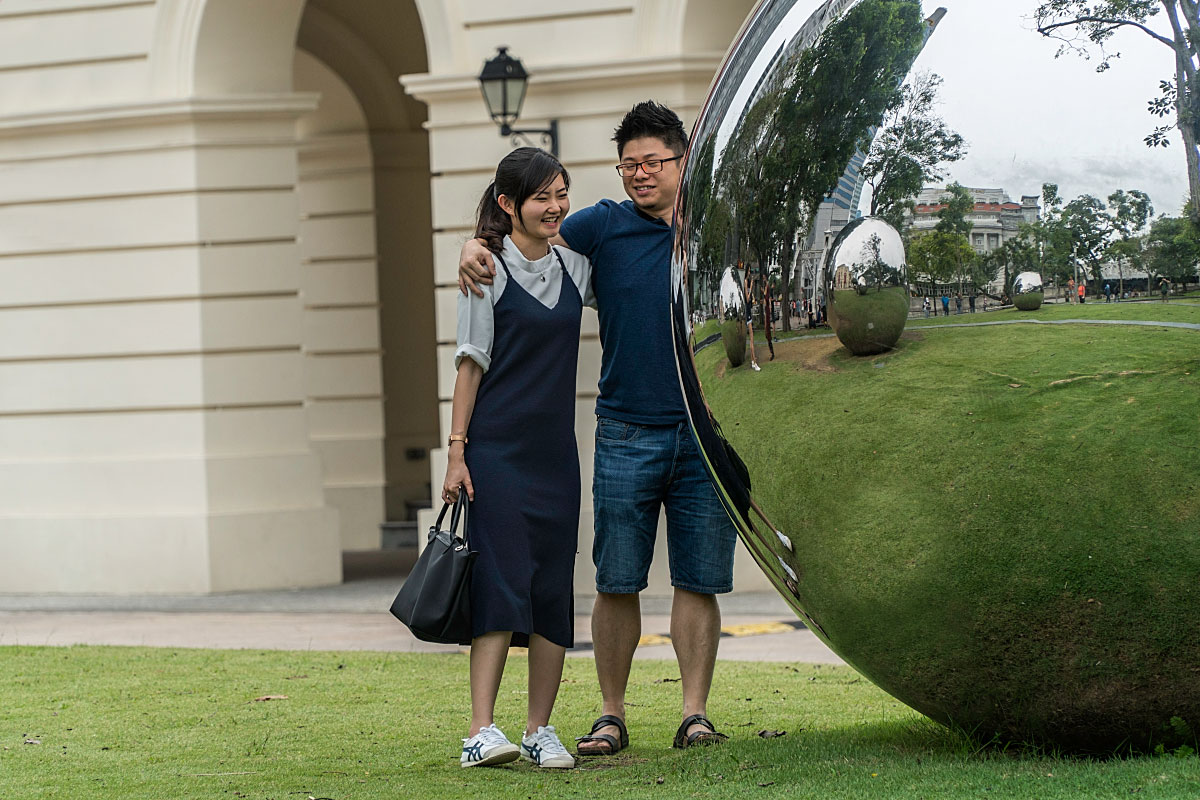
Outside, a large reflective sphere provides no help at all. His reflection has acquired proportions he does not remember having at breakfast. Everyone around him looks strangely rounded too. He considers asking the sphere what happens next, then decides he would prefer not to know. Somewhere with a little greenery should settle things.

Haw Par Villa Is Not the Park Sam Had in Mind
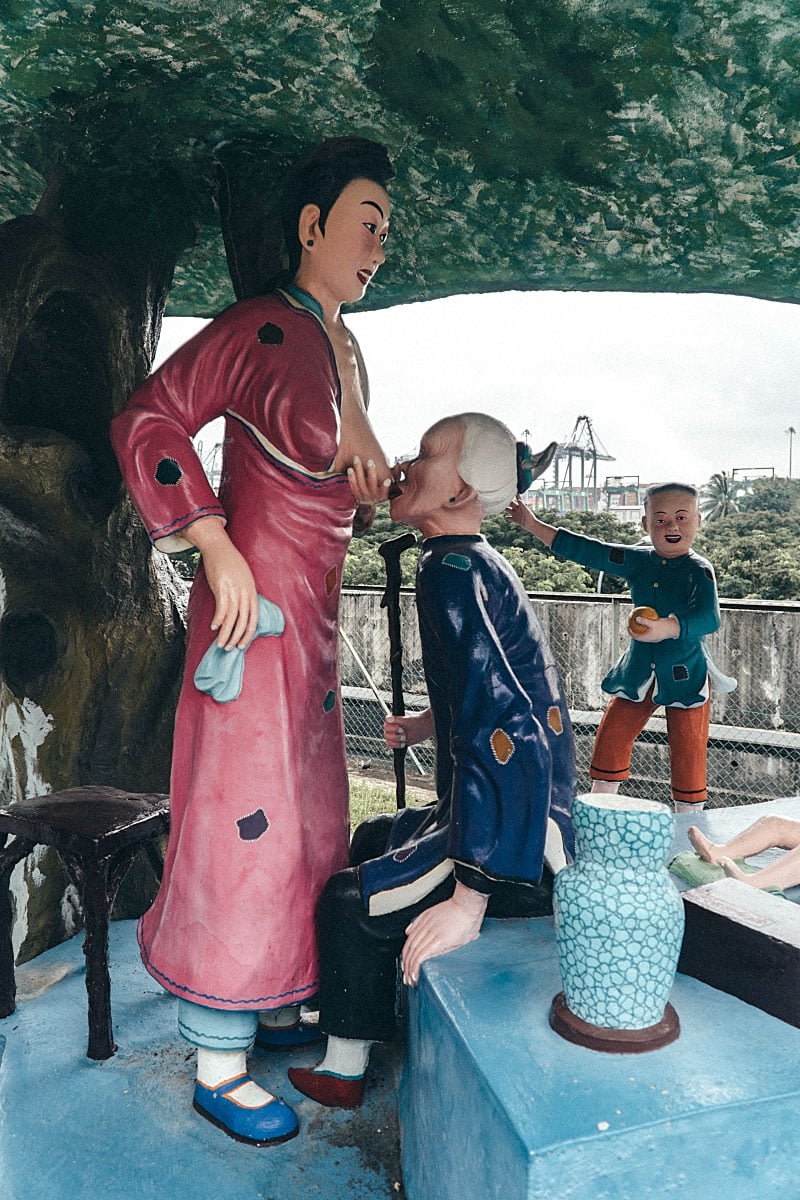
For the next scene, my imagination sends him to Haw Par Villa, the park of Chinese mythology and moral tales. Its sculptures were among the strangest things we saw in Singapore even with completely clear heads. In Sam’s version of events, an elephant appears to be chasing giant cockroaches with a gun, rats are preparing for battle, and a quiet walk has become a very complicated afternoon.
Then come the scenes of punishment in the Ten Courts of Hell. The moral lessons are considerably more graphic than a stern conversation about behaving yourself. Sam’s plan to find a peaceful corner has failed spectacularly. As darkness brings more lights elsewhere in the city, his brain has enough material for several sleepless nights. Eventually, hunger gives him something straightforward to think about. On our own walks, food seemed to be everywhere, especially in the malls. At least this part of his adventure should be easy to understand.

Conclusion
My unofficial theory says more about how I saw Singapore than it does about its drug policy. I kept encountering places that looked as though they belonged in entirely different cities, films, or centuries. Following those changes was one of the pleasures of being there. Sam can remain safely fictional; I was quite happy exploring with a clear head and a camera.


Questions About Singapore’s Drug Laws
Is recreational cannabis legal in Singapore?
No. Singapore prohibits recreational cannabis, including possession, consumption, trafficking, and unauthorized import or export. Tourists are subject to these laws too.
Does possessing 15 grams of cannabis automatically mean a trafficking conviction?
No. Section 17 sets a rebuttable presumption of possession for trafficking at more than 15 grams of cannabis. A presumption is not an automatic conviction, and smaller quantities are not legal.
Can cannabis offenses carry the death penalty?
Yes. Trafficking, importing, or exporting more than 500 grams of cannabis can carry the death penalty. Limited statutory sentencing exceptions exist; a possession offense should not be confused with a trafficking conviction.
Sources
Official legal and policy sources
- Singapore Statutes Online: Misuse of Drugs Act 1973, particularly sections 17 and 33B and the Second Schedule.
- Central Narcotics Bureau: Singapore’s anti-drug laws on cannabis.
- Ministry of Home Affairs: Ministerial Statement on Singapore’s National Drug Control Policy, May 8, 2024.
Legal and policy references checked in October 2026.

You might also like


