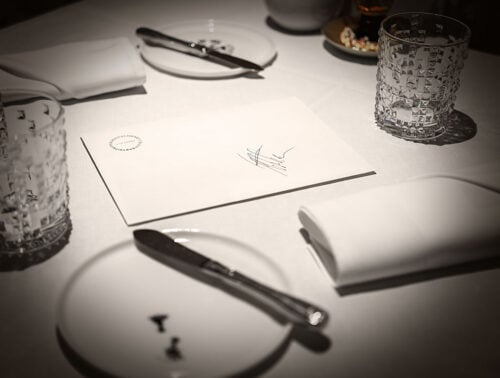
A warm scone is a good reason to reconsider the order of a three-tiered stand. At Park Hyatt Saigon, Ian and I reached for ours first, while the crust was still crisp and the strawberry jam was within reach. If you’re looking for a place to start with afternoon tea etiquette, the usual order is savory bites, scones, then sweets. A warm scone or a suggestion from your server is reason enough to change it.
Most of the questions people have about afternoon tea come up in the first few minutes. Do I pour for the table? What do I do with the strainer? Which spoon is for the jam? Here’s how to get from the first pour to the last pastry, including which of the old customs still make sense at a hotel table.
Contents
What Do You Eat First at Afternoon Tea?
On a classic British-style stand, begin with the sandwiches or other savory bites, move on to the scones, and finish with cakes and pastries. Look at the food itself before relying on the position of the tiers. Some kitchens send the scones separately, and a pastry can arrive on its own plate. The AfternoonTea.co.uk guide describes the traditional sequence.

Use your fingers for a finger sandwich and take the cake fork if a pastry is soft, sticky, or likely to fall apart. A hotel can also build its tea around local dishes. At Erawan Tea Room in Bangkok, our savories included a flower-shaped crab dumpling and grilled sour pork sausage with pickled ginger. If you’re unsure where to start with a spread like that, ask the server to walk you through it.

How to Eat Scones at Afternoon Tea
Open the scone with your fingers over your plate, then pull off a piece you can eat in a bite or two. Use the serving spoons to put some jam and cream on your plate, and use your own knife to spread them on the piece you’re about to eat. Breaking off a little at a time keeps crumbs and drips on the plate, especially if the scone is warm. Fortnum & Mason’s tea guide also favors breaking off pieces by hand.

The Eternal Debate: Jam or Cream First?
Both camps defend their order with great passion, yet neither one is wrong. In Devon, spread the clotted cream first and spoon the jam on top. In Cornwall, spread the jam first and finish with a dollop of clotted cream. Try a different order on each half and see which you prefer. The Ritz London describes both regional traditions.

The cream itself can vary by venue. The scones we tried at Park Hyatt Saigon came with whipped cream, which was lighter than the clotted cream we’d have preferred.

How to Pour, Serve, and Drink Tea
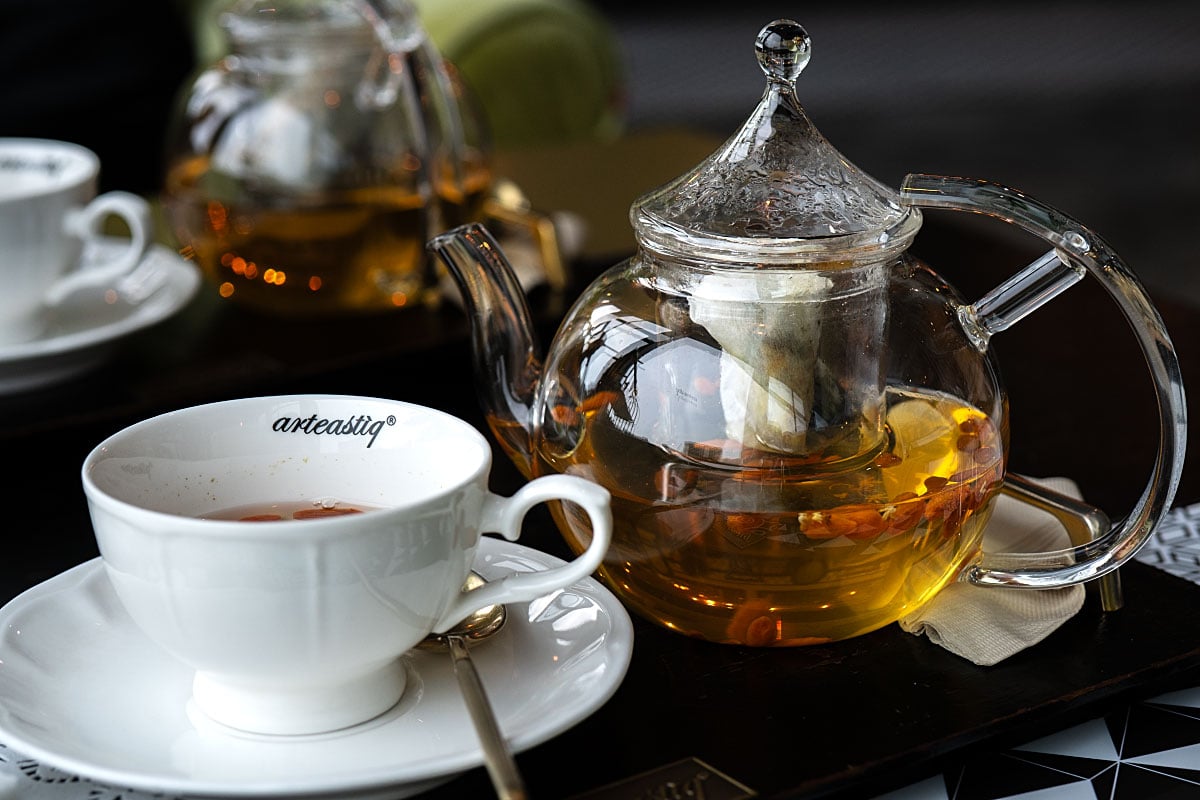
If the server starts the service, let them make the first pour. If you’re sharing a pot and pouring for yourselves, offer your companion a cup first. When loose leaves are in the pot and a separate strainer is provided, set the strainer over the cup before pouring, then return it to its little drip dish. Leave enough room for anyone who takes milk. Debrett’s covers the traditional way to serve a shared pot.

For a black tea you like with milk, pour the tea first so you can decide how much to add. When you’re trying an unfamiliar tea, take a sip as it comes. Keep the saucer on the table at normal dining height. At a low lounge table, bring it up with the cup if that makes it easier to drink comfortably.
Etiquette & Protocols
- Hold the cup. Hold the handle lightly between your thumb and index finger. Keep the rest of your fingers relaxed, with your pinkie tucked in.
- Stir quietly. Move the spoon gently back and forth from 6 to 12 o’clock. Keep it clear of the sides of the cup and set it on the saucer before you sip.
- Use your fingers for sandwiches and scones. Use the knife to spread the jam and cream, and save the cake fork for pastries that need it.
The Fortnum & Mason guide describes the traditional cup grip and back-and-forth stir.

Tea Pairing & Steeping Guide
Try a full-bodied black tea with richer sandwiches and a lighter green or white tea with fruit or delicate pastries. If you’re brewing at home, use the table as a starting point for the first steep. Follow the instructions on the package when they differ. Brewing advice varies by tea, as the guides from Whittard of Chelsea and Twinings show.
| Tea | Water and first steep | Try it with |
|---|---|---|
| Black tea English Breakfast or Earl Grey | 203–212°F (95–100°C) 3–5 minutes | English Breakfast with egg or ham sandwiches. Earl Grey with a lemon tart. |
| Green tea Jasmine green tea | 167–176°F (75–80°C) 2–3 minutes | Cucumber sandwiches or a light fruit tart. |
| White tea Silver Needle | 167–185°F (75–85°C) 2–3 minutes | Fresh pear or a lightly sweet sponge cake. |
| Herbal or floral infusion Pure chamomile or rose petals | 212°F (100°C) 3–5 minutes | A plain butter cookie or a simple slice of cake. |
Once the tea tastes right, lift out the infuser or strain the tea into a second pot so the leaves stop steeping. For a caffeine-free finish, choose pure chamomile or an infusion made only with rose petals. If a menu simply says “rose tea,” ask what’s in it. Some rose blends contain black or green tea leaves.
Afternoon Tea Etiquette at a Hotel
Check the dress code and mention dietary needs when you reserve. Once seated, put the napkin on your lap and let the server introduce the tea and the food. If you’re sharing a stand and there’s only one of a particular pastry, ask whether your companion would like to split it before transferring it to your plate. If you’re choosing an outfit, our afternoon tea dress code guide covers what to wear in different hotel settings.
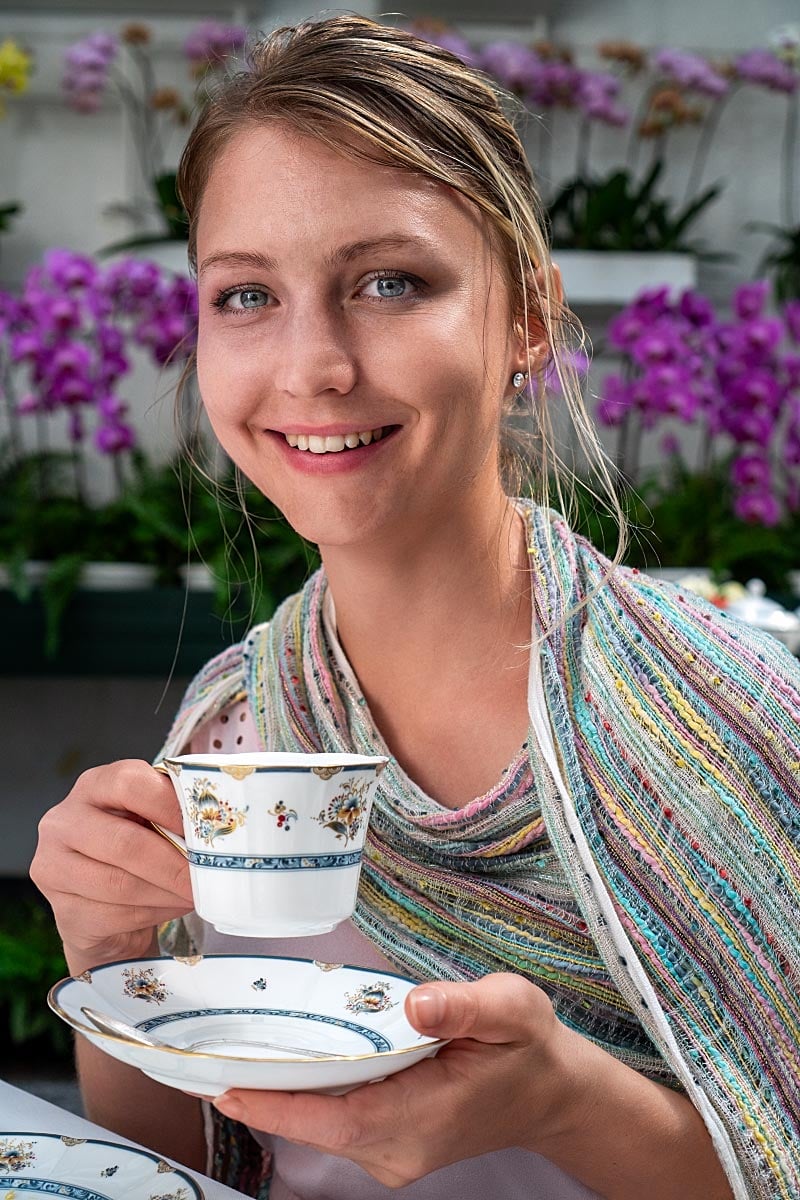
Taking a quick photo is perfectly acceptable. Check the room’s photography policy and keep other guests out of the frame. Leave yourself enough time to sit over a second cup if you want one. Some of the nicest moments at a tea come once the stand has been cleared and nobody at the table feels rushed to leave.
Frequently Asked Questions About Afternoon Tea Etiquette
Can I eat the scones before the sandwiches?
Yes. Sandwiches are the customary starting point, and there’s nothing wrong with trying a freshly served scone while it’s hot. If the kitchen serves the tea in courses, follow the order in which the dishes arrive.
Should I raise my pinkie when drinking tea?
Keep your fingers relaxed and hold the cup by the handle. A raised pinkie isn’t part of the customary grip.
Can I ask for another pot of tea?
Yes. If the menu is unclear, ask whether the price includes more hot water, a fresh pot of the same tea, or a different blend. Venues can treat each of those requests differently.
You Might Also Like
- Afternoon Tea vs. High Tea explains the history and why hotel menus sometimes use both names.
- Browse our afternoon tea reviews and guides to find a tea room or hotel lounge for your next trip.