

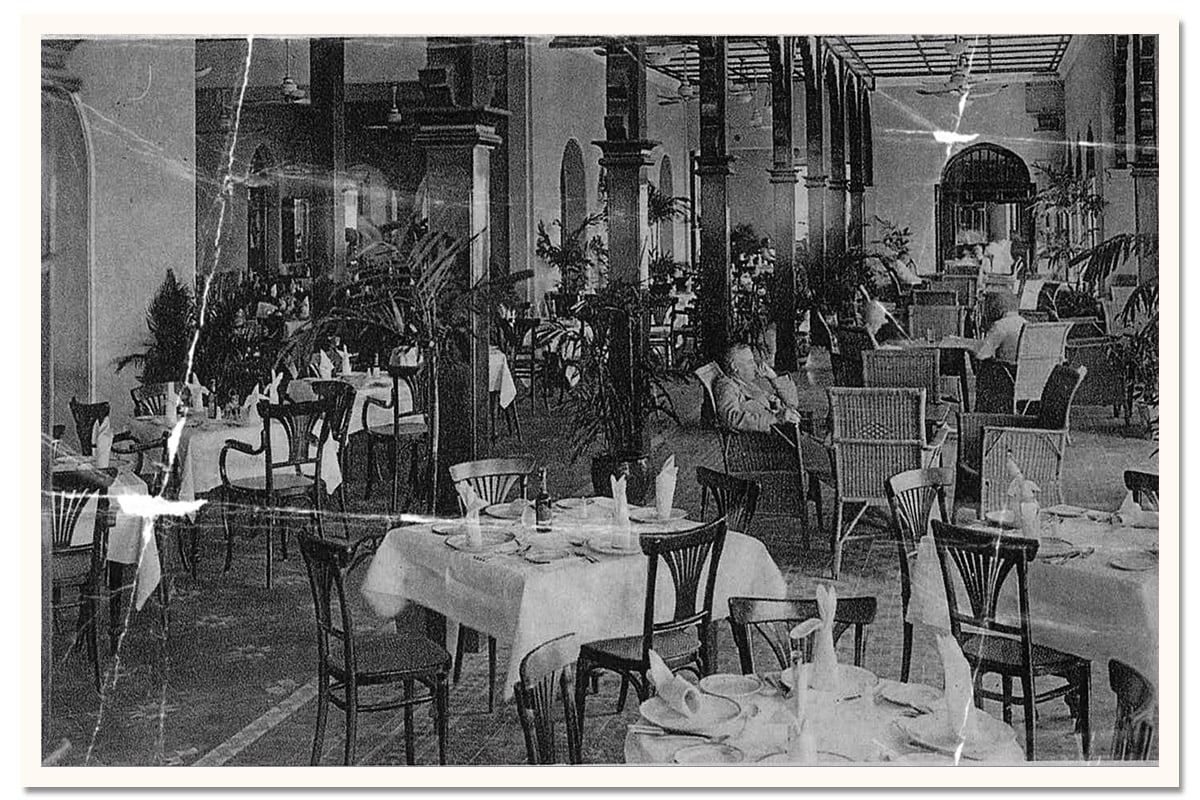
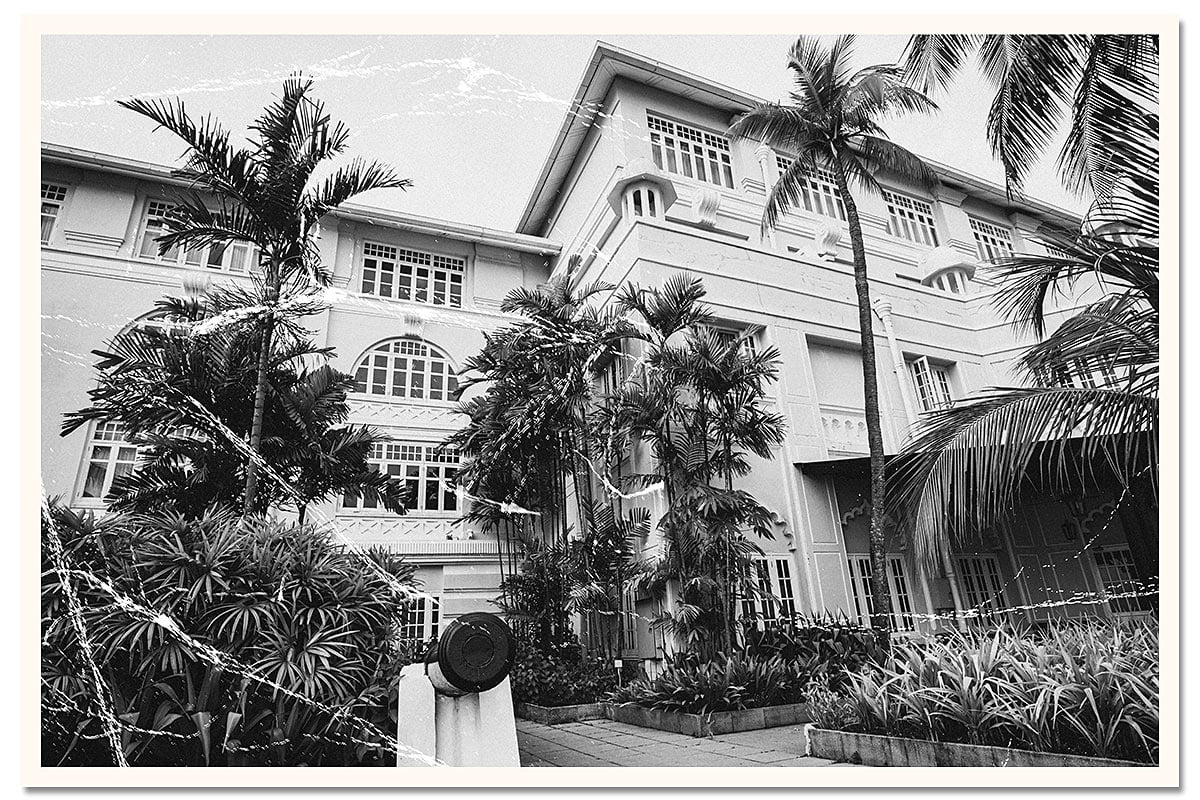
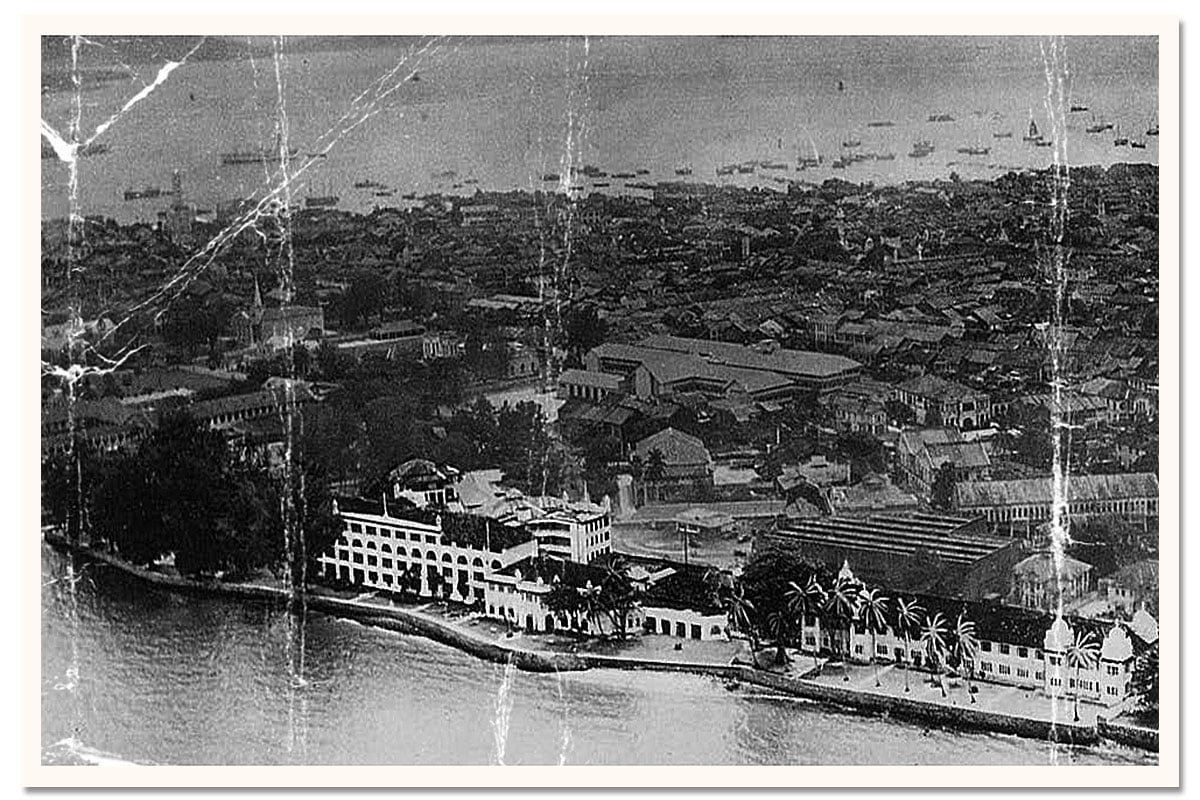



The history of the Eastern & Oriental Hotel in Penang stretches from the ambitions of four Armenian brothers to wartime occupation, financial collapse, long closure and repeated restoration. Few hotels have been allowed so many lives. Fewer still have kept enough of their original character for a guest to recognize the past without needing too much imagination.
We stayed at the E&O because we love heritage hotels, then became interested in the people and decisions that shaped it. The story is not always comfortable or neat. Colonial society, extravagant expansion, personal debt and the difficult question of what should be preserved all belong to it. This account follows that history from the early days of British Penang to the restored Heritage Wing and the hotel operating today.
E&O Hotel History at a Glance
| Year | Key event |
|---|---|
| 1884 | Tigran Sarkies opens the Eastern Hotel in George Town. |
| 1885 | The Sarkies brothers acquire the former Hotel de l’Europe and operate it as the Oriental Hotel. |
| 1889 | The refurbished Oriental property takes the combined Eastern & Oriental name. |
| 1901–1929 | Successive extensions turn the hotel into one of the best-known grand hotels east of Suez. |
| 1931 | Arshak Sarkies dies as the hotel and his personal finances face severe debt. |
| 1938 | The financially troubled hotel is sold to its old rival, the Runnymede Hotel company. |
| 1941–1945 | Japanese forces requisition the hotel during the occupation of Penang. |
| 1951 | The Choong family takes control during the postwar recovery. |
| 1965 | The hotel closes during a labor dispute and reopens under new ownership. |
| 1996–2001 | A planned 18-month restoration becomes a five-year closure. |
| 2013 | The modern Victory Annexe opens beside the historic hotel. |
| 2019 | The Heritage Wing reopens after a nine-month restoration and refurbishment. |
| 2022 | International guests return after the pandemic-era closures and travel restrictions. |
| 2025 | Eastern & Oriental Hotel celebrates 140th anniversary |
Penang Before the E&O Hotel
The E&O story began in a port shaped by trade and migration. The British flag was raised on Penang on 11 August 1786, and George Town developed into a commercial center where Malay, Chinese, Indian, Armenian, Eurasian and European communities lived and worked in close proximity. The island’s older name, Pinang, referred to the areca palm that grew there in abundance.

Straits-born Chinese communities, commonly described as Baba and Nyonya, became prominent in business and civic life. Their cultural influence remains visible in Penang’s architecture, decorative arts and Peranakan cooking traditions. Armenian merchants formed a much smaller community, though the Sarkies family would leave an unusually large mark on Asian hospitality.


The Sarkies Brothers and the Birth of the E&O
Tigran Sarkies opened the Eastern Hotel in 1884. The following year, the brothers acquired the former Hotel de l’Europe on Farquhar Street and renamed it the Oriental Hotel. They eventually gave up the earlier Eastern property, refurbished the Oriental and retained the commercial value of both names. In 1889, the hotel became known as the Eastern & Oriental.

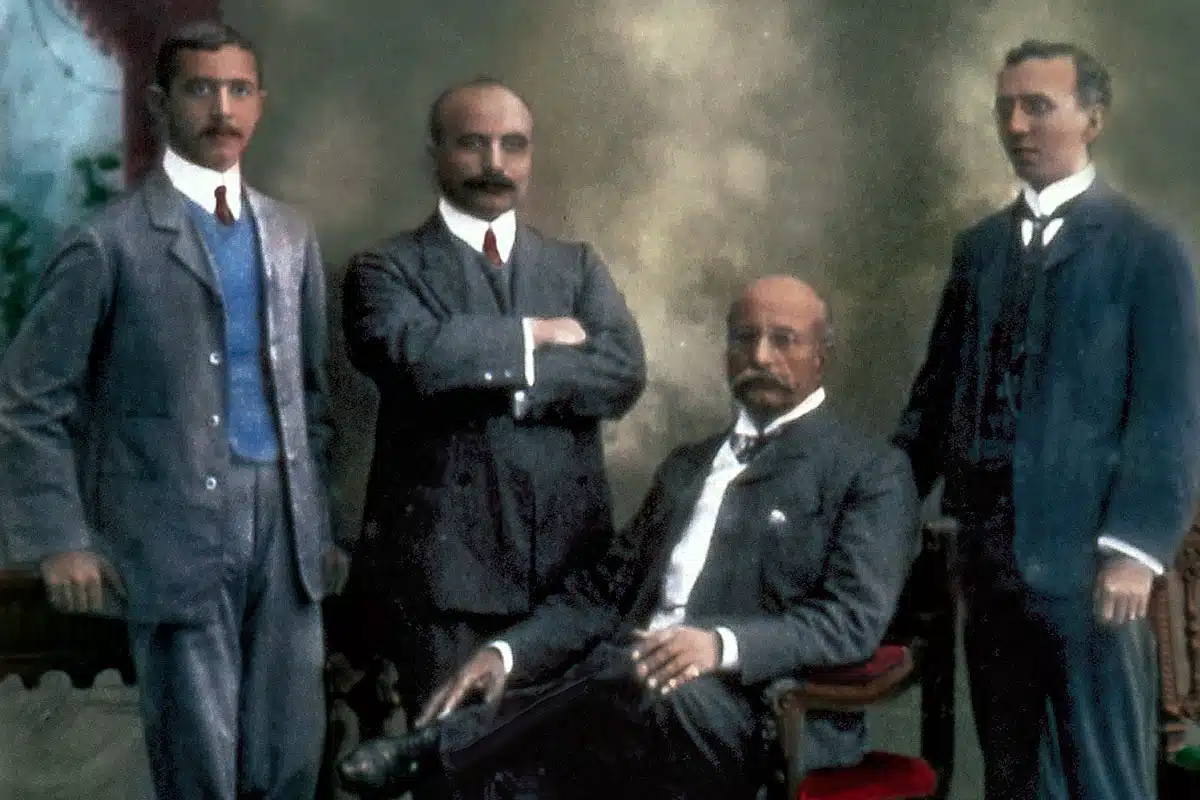
Martin, Tigran, Aviet and Arshak Sarkies were born into an Armenian family in Isfahan. Their ventures later included Raffles Hotel in Singapore and the Strand Hotel in Rangoon, now Yangon. The family did not create a modern hotel chain in the corporate sense. They built a network of grand hotels through personal management, shared reputation and a clear understanding of what affluent travelers expected after a long sea journey.

Expansion of the E&O Hotel
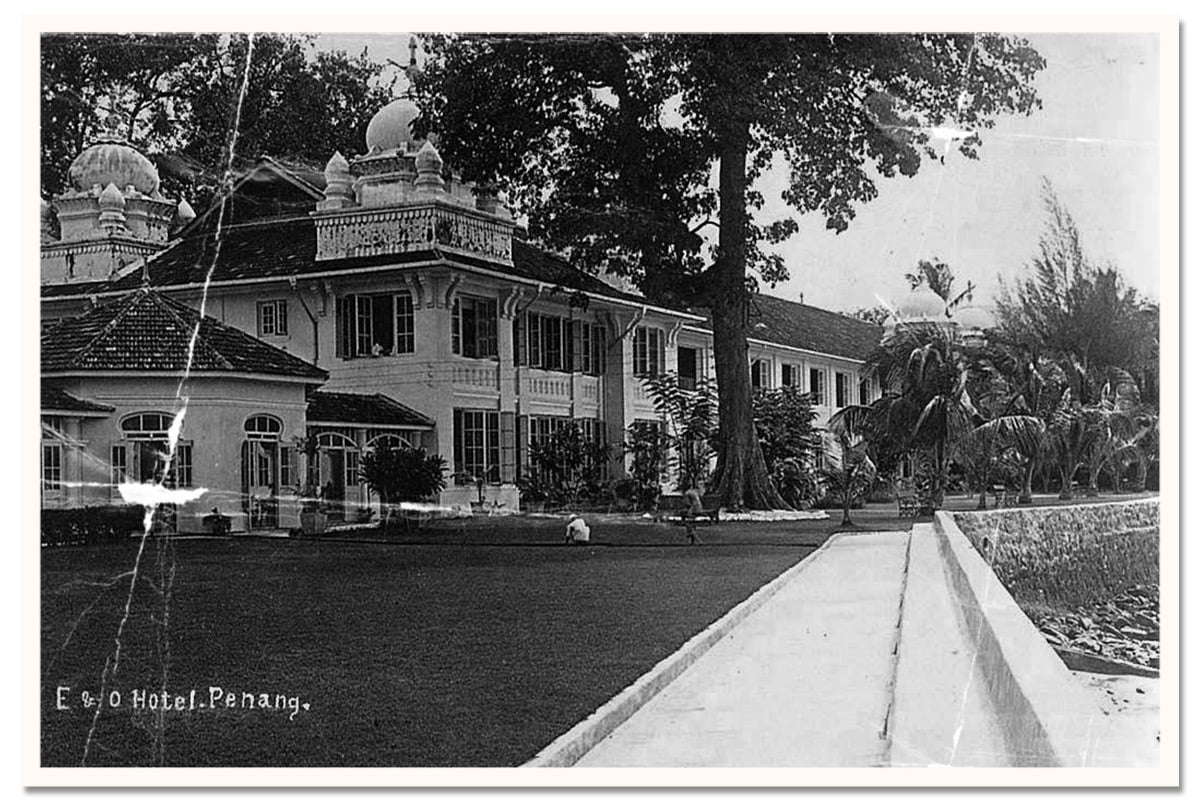
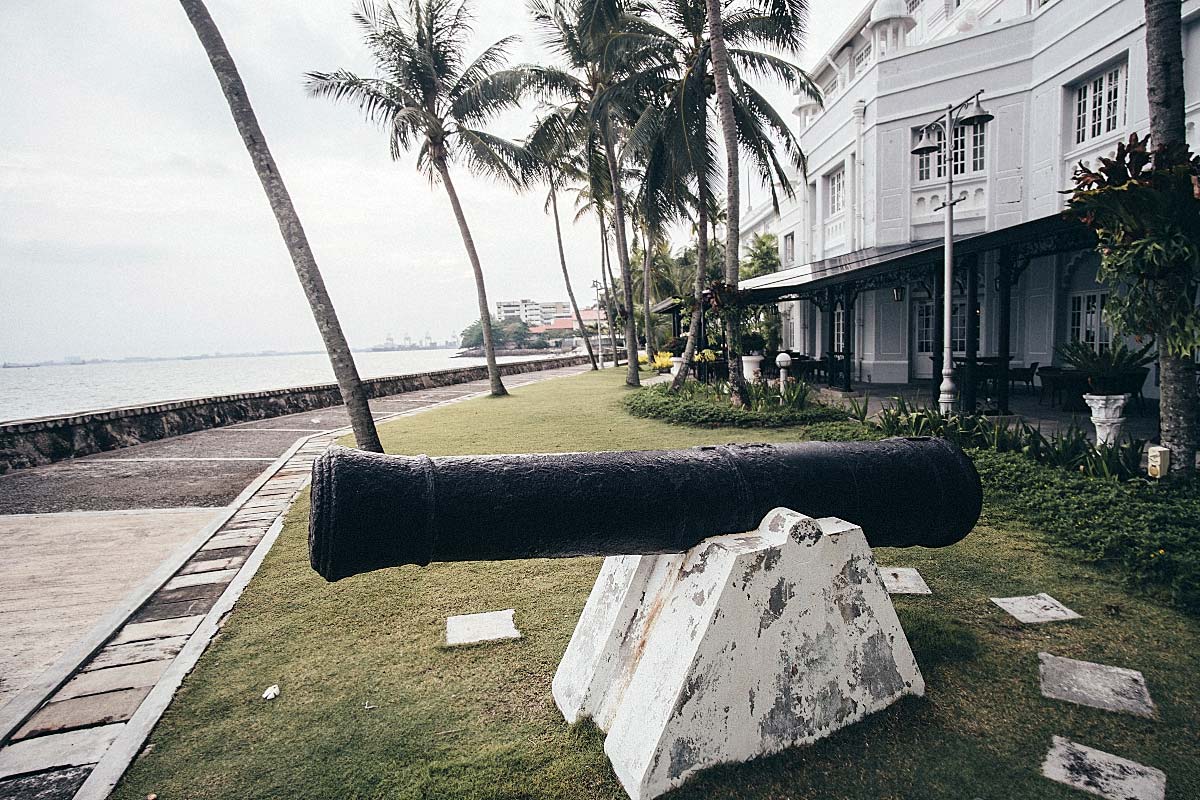
The hotel expanded repeatedly during the first decades of the twentieth century. Teak furniture arrived in 1901, followed by a two-story north wing with 45 bedrooms. A seawall, dining room, dance floor, bar, electric lighting and mechanical fans placed the hotel ahead of many regional competitors.
Across the road, the former International Hotel was converted into an annexe with a marble-floored dining room, roller-skating rink and motor garage. Moorish arches and a domed garden gazebo connected it visually with the main hotel. By 1910, the E&O had approximately 70 rooms. The purchase of neighboring Penang Hall soon increased that figure to around 100 rooms, supported by a 200-seat dining hall, an enlarged bar and a new arrival porch.

Competition came from the nearby Runnymede Hotel. Arshak’s response was further construction, including the Victory Annexe developed after World War I and enlarged during the 1920s. Its sea-facing rooms had private bathrooms with English long baths, hot and cold running water, telephones, electric fans and private balconies. These details sound ordinary now. In the 1920s, they separated a grand hotel from a merely expensive one.

The Golden Era of the 1920s
By the 1920s, the E&O had become Penang’s leading social address. Guidebooks described it as “The Premier Hotel East of Suez,” while the property promoted a 256-meter seawall as the longest hotel seafront in the world. Its facilities included a ballroom, billiards room, hairdressing salon, curio and jewelry shop, and a post and telegraph office.

Tuesday and Friday dances drew local society, travelers and newly arrived visitors. Up to 500 people could mingle at the largest occasions. Formal dress remained demanding in Penang’s heat: men wore stiff shirt fronts and short mess jackets, with black dinner suits as the alternative. The Charleston and Black Bottom may have represented modernity, though dancing them while dressed for an English dining room required commitment.


The 1929 Extension and Passenger Lift
Plans announced in 1927 called for another three-story wing on land owned by Thaddeus Paul. The arrangement combined a long lease with substantial financing from Paul, while the French architectural firm Brossard Mopin Malaya Ltd worked on the project. The extension was completed in 1929 and celebrated with a masked ball.

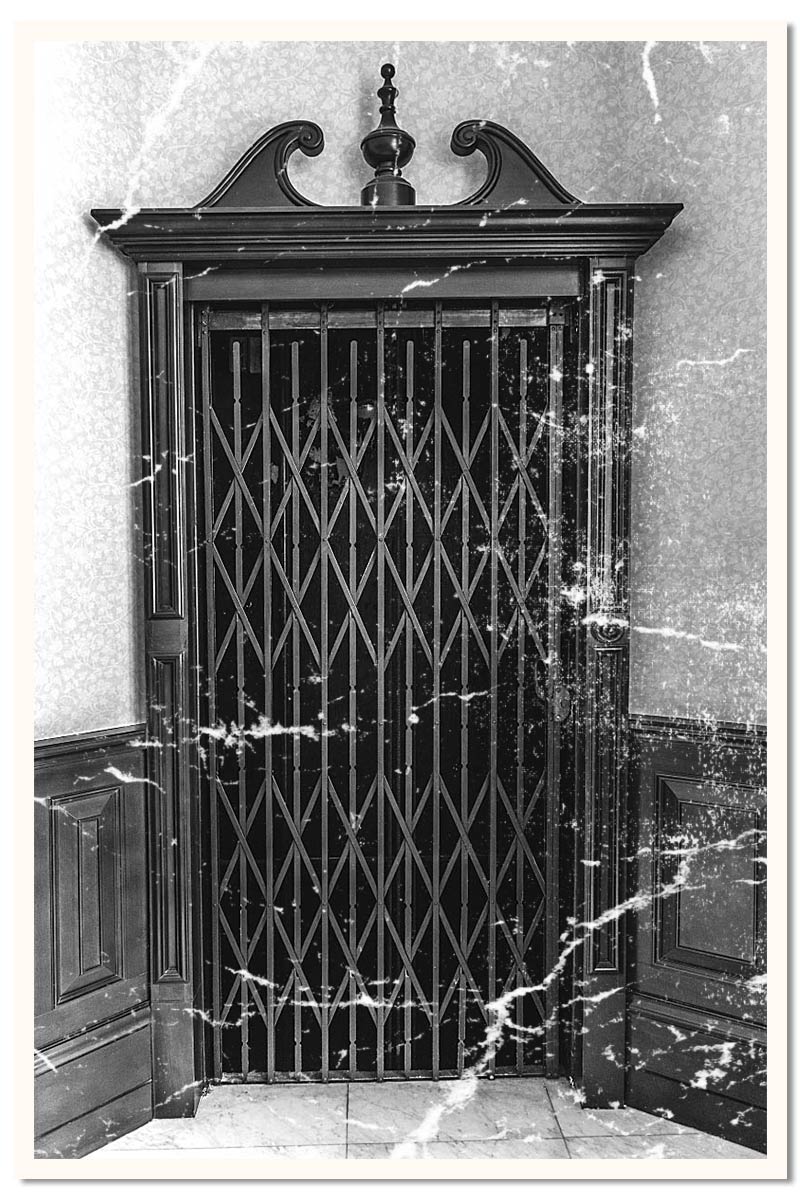
A dome almost 16 meters in diameter occupied the former open courtyard and was promoted as the biggest dome in the East. Palm Court became a favored meeting place and hosted Sunday orchestral concerts. The new passenger lift was among the earliest of its kind in Malaya. It survives as a piece of engineering history, though it is no longer used by guests.


Debt and Financial Collapse
The E&O’s polished public rooms concealed an increasingly fragile financial structure. Long-term guests often signed chits instead of paying immediately, with settlement sometimes delayed for three to six months. One regular guest accumulated a bill of 9,000 Straits dollars. When the rubber and tin industries entered recession, personal promises stopped functioning like cash.
Arshak Sarkies also treated the hotel as an extension of his social life, inviting friends to stay without charge and running up a personal account of about 14,000 Straits dollars. New construction added further pressure. Historical money can be converted in several incompatible ways, including consumer prices, wages and precious-metal value, so the original sums are retained here. Their importance lies in the scale of the obligations relative to the hotel’s income.

Arshak died of liver failure at Penang General Hospital on 9 January 1931. According to Ilsa Sharp’s account, he owed about half a million Straits dollars to his own hotel company and another 40,000 to moneylenders charging annual interest of between 8 and 15 percent. His funeral was among the largest Penang had seen in decades.

The hotel was absorbed into the newly formed Raffles Hotel Ltd in 1933, though it remained a financial burden. In 1938, it was sold for 120,954 Straits dollars to the company behind the neighboring Runnymede Hotel. The old rival had finally acquired the E&O, just as a far greater crisis approached.
The E&O Hotel During World War II
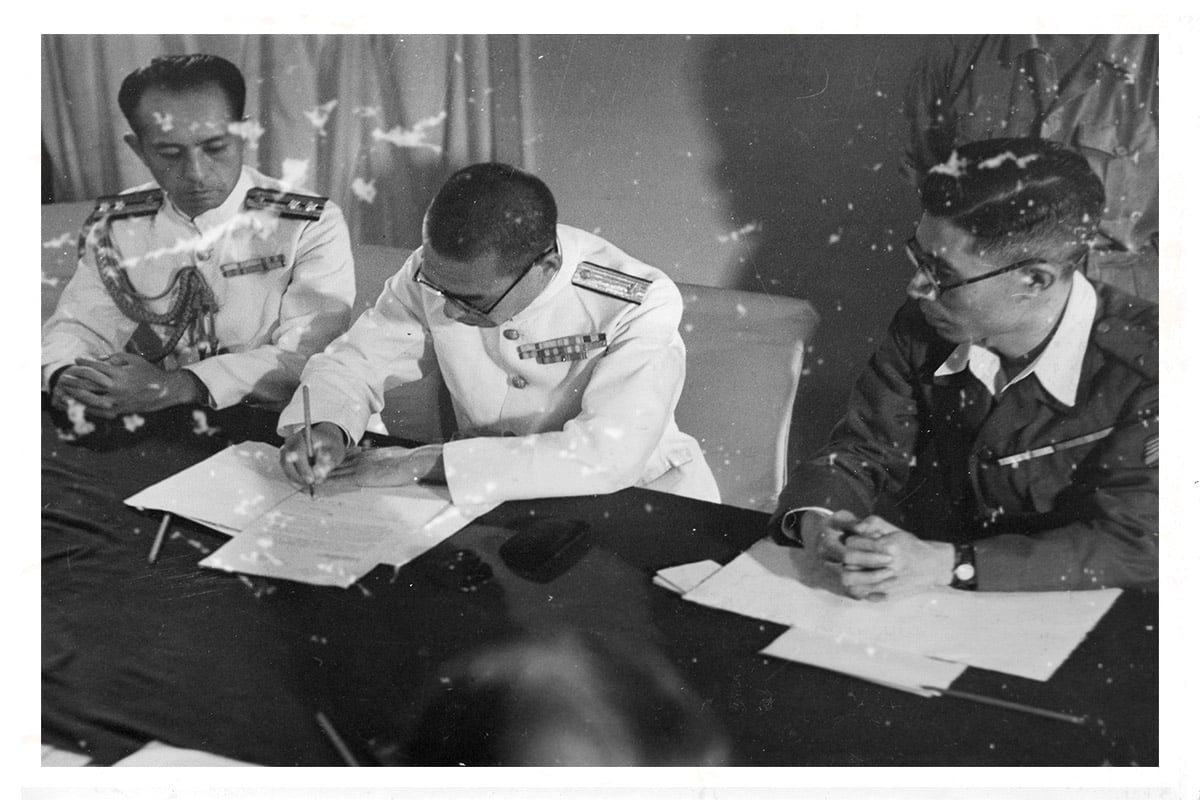
Japanese forces reached Penang in December 1941 after a controversial British evacuation that favored European residents. Liquor at the hotel was poured away or destroyed before the occupation. Japanese military officers subsequently requisitioned the property, renamed it the Penang Haitan Ryokan and used it as a private club.

The nearby military headquarters placed the hotel at risk during Allied air raids, though the building escaped major destruction. Its contents did not fare as well. Crockery, glassware, cutlery, silver and linen disappeared, furniture deteriorated and business records were lost. Around 3,000 company shares could no longer be traced after the war.
Postwar Recovery and the Choong Family
Peace returned without restoring the hotel’s finances overnight. A claim of 409,431 Malayan dollars for repairs to the E&O, Runnymede and Crag properties was eventually settled in 1955 for only 69,000. By then, the Choong family had bought out most shareholders and taken control of the business.

Local ownership carried symbolic weight as Malaya moved toward independence. The restaurant gained a reputation for Chinese and Western cooking, weekly dances returned and air-conditioning appeared in selected rooms. The E&O was no longer simply recreating an English hotel overseas. It was gradually becoming part of postcolonial Penang, even as its rituals and architecture remained tied to an earlier age.
The 1965 Closure and Return
A ten-day dispute with hotel workers ended with the Choong family announcing the property’s sale. On 1 August 1965, the E&O closed. The interruption was short. Businessman Chan Eng Hock bought the hotel in late September for just under three million Malayan dollars, rehired former staff and returned it to operation.
The comeback was rapid. Tables at the restaurant reportedly carried a three-week waiting list, while weddings filled the calendar. Many Penang families came to associate the hotel less with visiting colonial administrators and more with their own celebrations.
Competition, Decline and New Ownership
Modern hotels changed guest expectations during the 1970s and 1980s. Chan Eng Hock formed an alliance with Jack Chia-MPH Ltd, which acquired a controlling interest in the E&O. Sarkies Corner opened as a 24-hour coffee house, though other large plans stalled. The old Victory Annexe was demolished in 1981, and renovation work begun the following year could not prevent declining reviews and mounting losses.

Property developer Terry Tham later led a local consortium that acquired a 90.7 percent stake. Buying an aging hotel with a complicated structure and an expensive conservation problem appeared risky. Tham’s longer view became decisive to the next stage of the E&O story.
The Five-Year Restoration
The E&O closed in 1996 for what was expected to be an 18-month restoration. The work lasted five years. Conservation advocates worried that renovation would remove too much original material, and some of those concerns proved justified. Bathroom fittings, patterned tiles, teak doors, casement windows and crockery were sold, along with other pieces associated with the old hotel.


A restoration of this scale always involves compromise. An operating hotel needs safe wiring, plumbing, climate control and rooms that function for contemporary travelers. The harder question is how much replacement a historic building can absorb before it becomes a reproduction of itself.
Reopening in 2001
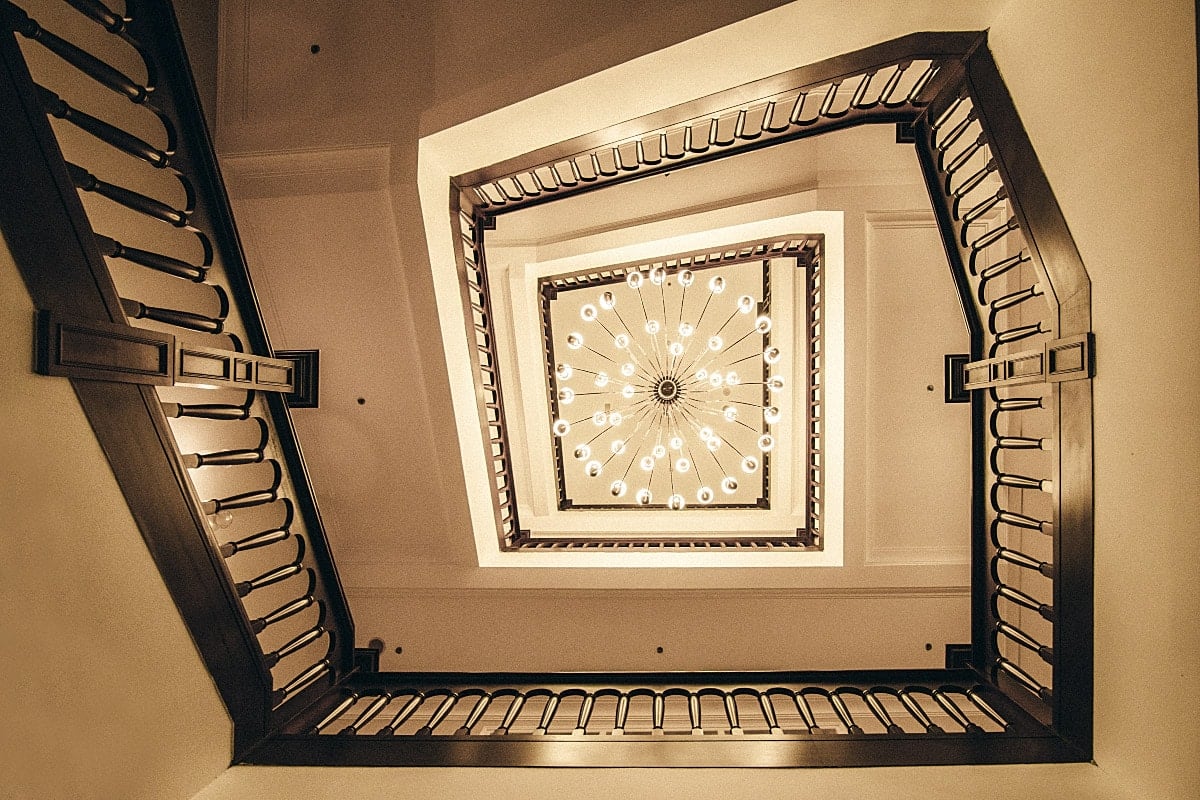
The Eastern & Oriental Hotel reopened on 3 April 2001. Its seafront gardens, lobby dome, ballroom and broad corridors again formed the public face of the property. Reproduction furniture joined surviving antiques, while a rebuilt grand staircase replaced the missing centerpiece of the lobby.
George Town and Melaka were jointly inscribed on the UNESCO World Heritage List in 2008. The E&O stands within the buffer zone of the George Town site, which places its future within a larger conservation landscape. The designation does not freeze the hotel in time, though it makes alterations to such a prominent building more consequential.
The New Victory Annexe in 2013
The new Victory Annexe opened in 2013, restoring a name that had disappeared with the demolition of its predecessor in 1981. The multi-story wing added 122 sea-facing accommodations at opening, comprising 118 Studio Suites and four Corner Suites. Its larger scale allowed the older Heritage Wing to remain the more intimate half of the hotel.


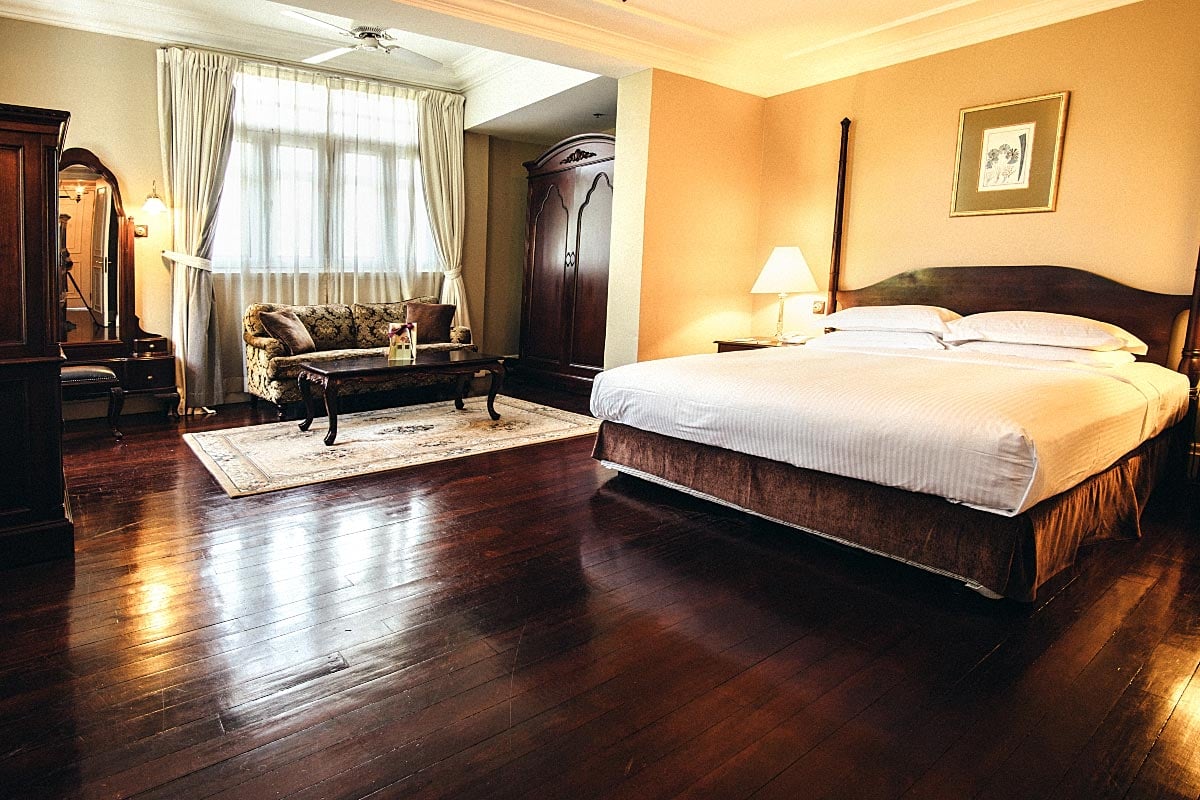
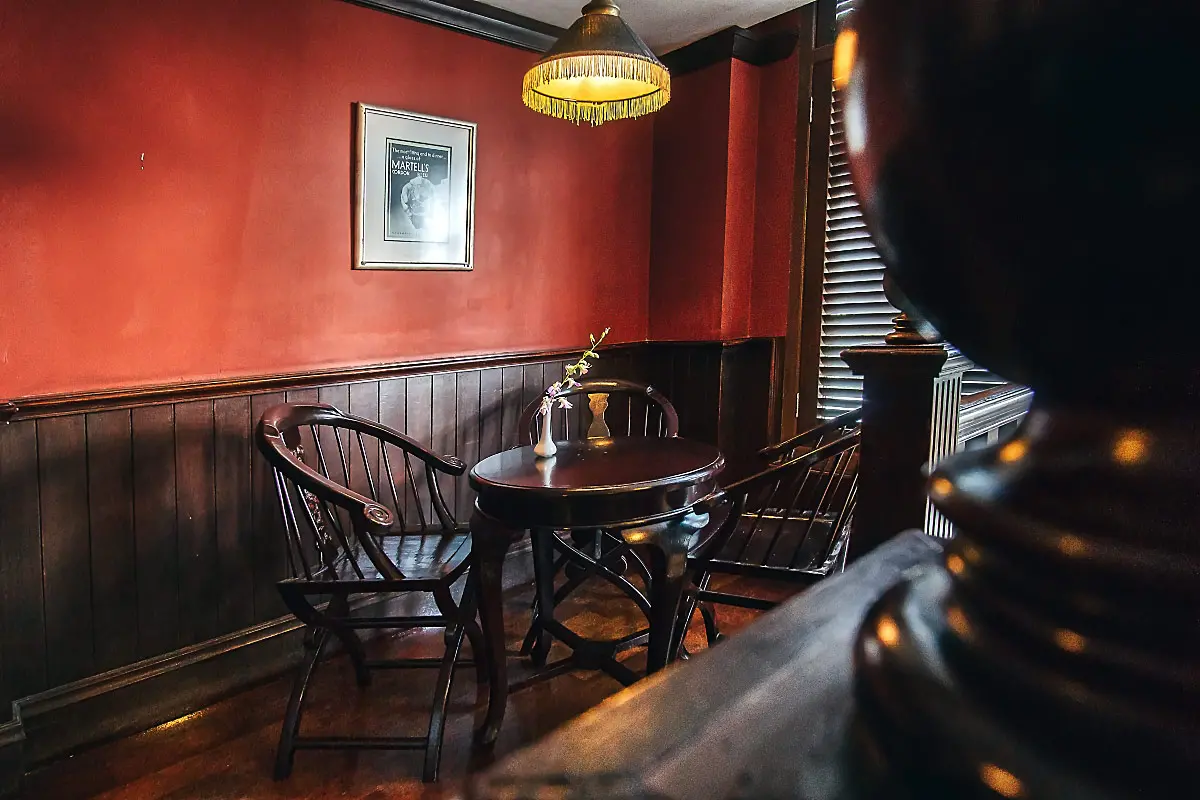
We chose to stay in the Heritage Wing because its proportions, corridors and architectural details carried more of the old hotel’s identity. Our impressions belong to that pre-2019 version of the wing and can be read in our Eastern & Oriental Hotel review. We also returned to its public rooms for afternoon tea at 1885, lunch at the hotel buffet and a drink at Farquhar’s Bar.
The Heritage Wing Restoration of 2019
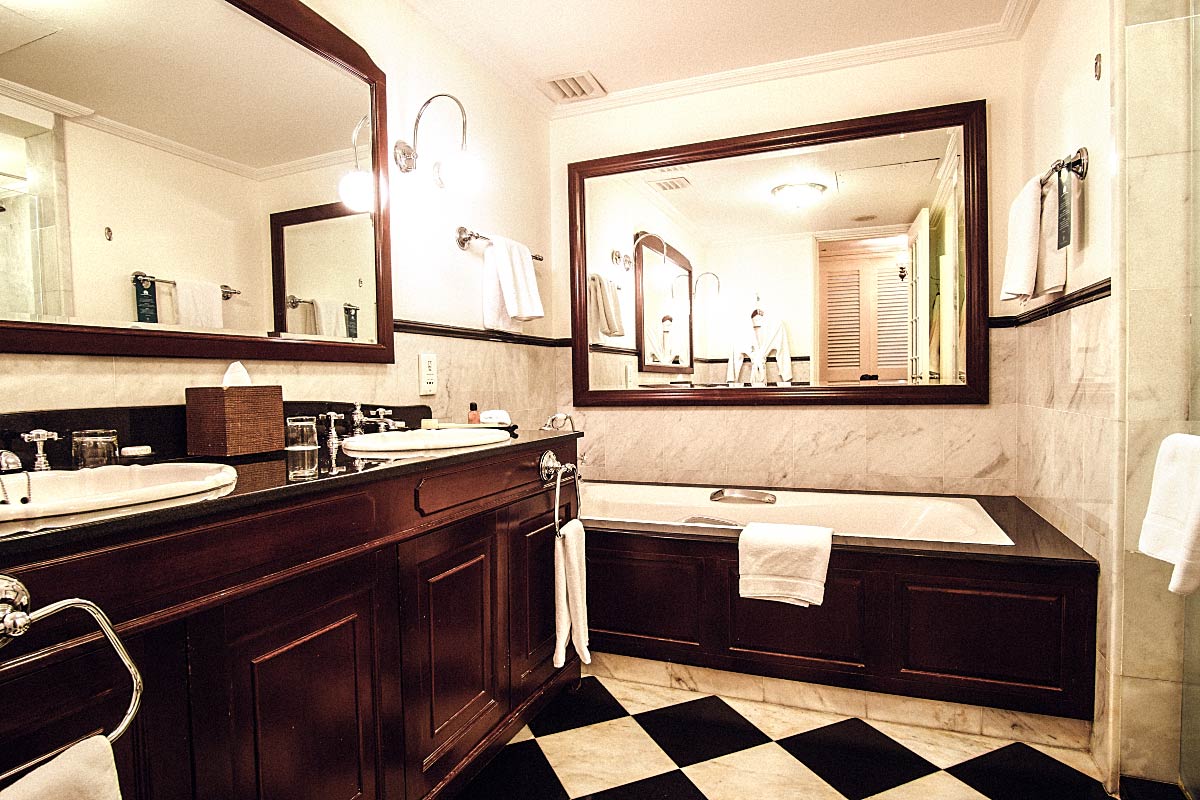
The next major chapter began in March 2019, when the Heritage Wing closed for a comprehensive nine-month restoration and refurbishment. It reopened in December with refreshed suites, more natural light and a softer palette. Signature features, including twin bathroom vanities, long baths, the echo dome and the historic cage lift, were retained.
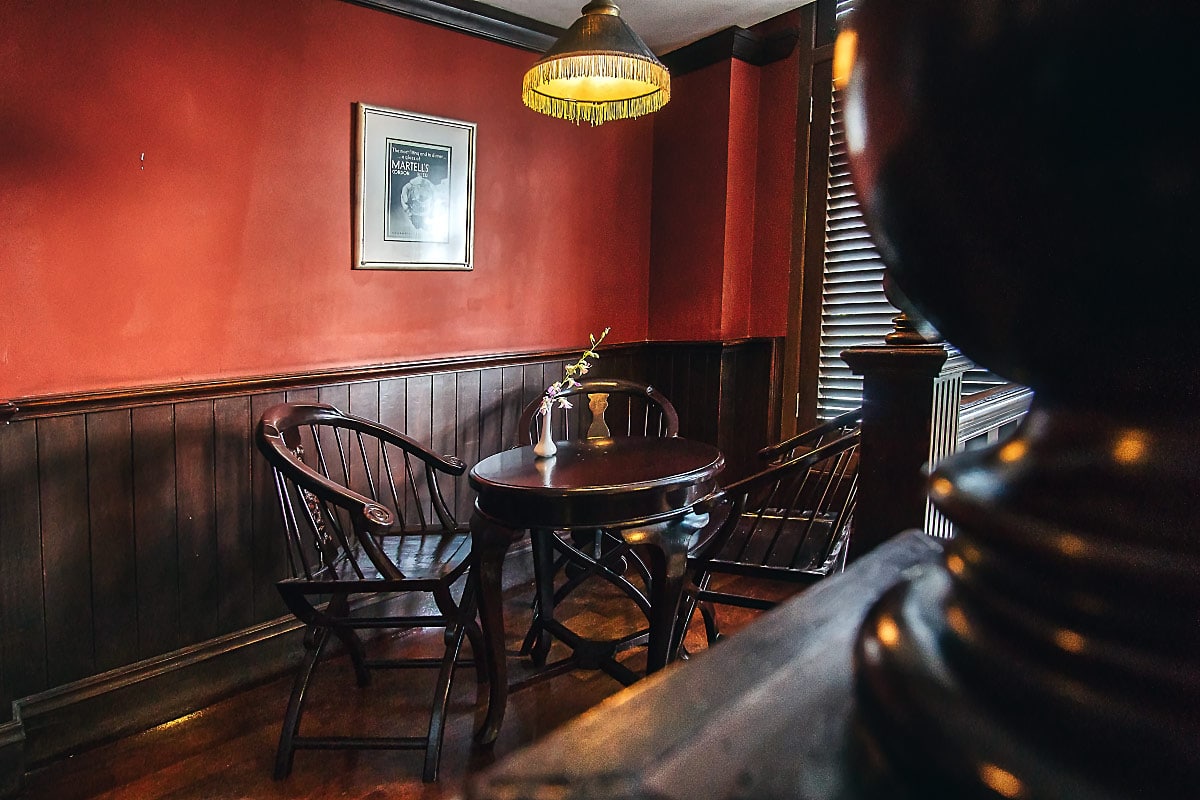
The project also changed how the old wing functioned. Farquhar’s Bar moved into a new setting and adopted the appearance of a vintage cocktail bar. Palm Court and Java Tree formed part of a revised collection of dining spaces, while The Cornwallis became a private lounge for eligible guests. The work was led by Datin Tham Oi Wah of Interiors International, who had also been involved with the Victory Annexe.
Renovation photographs show a brighter hotel than the one in our original images. Whether every change improves its atmosphere is a question for a future stay. What can be confirmed is that the restoration preserved several physical anchors that allow the Heritage Wing to remain recognizable.
The Pandemic and the E&O Hotel Today
The timing of the reopening was cruel. Only months after the Heritage Wing returned, Malaysia introduced movement controls in response to the COVID-19 pandemic. General manager Alison Fraser later said the hotel closed for most of each of the country’s three Movement Control Order periods. Domestic weekend demand offered some support, though international guests and Penang’s cruise traffic largely disappeared.

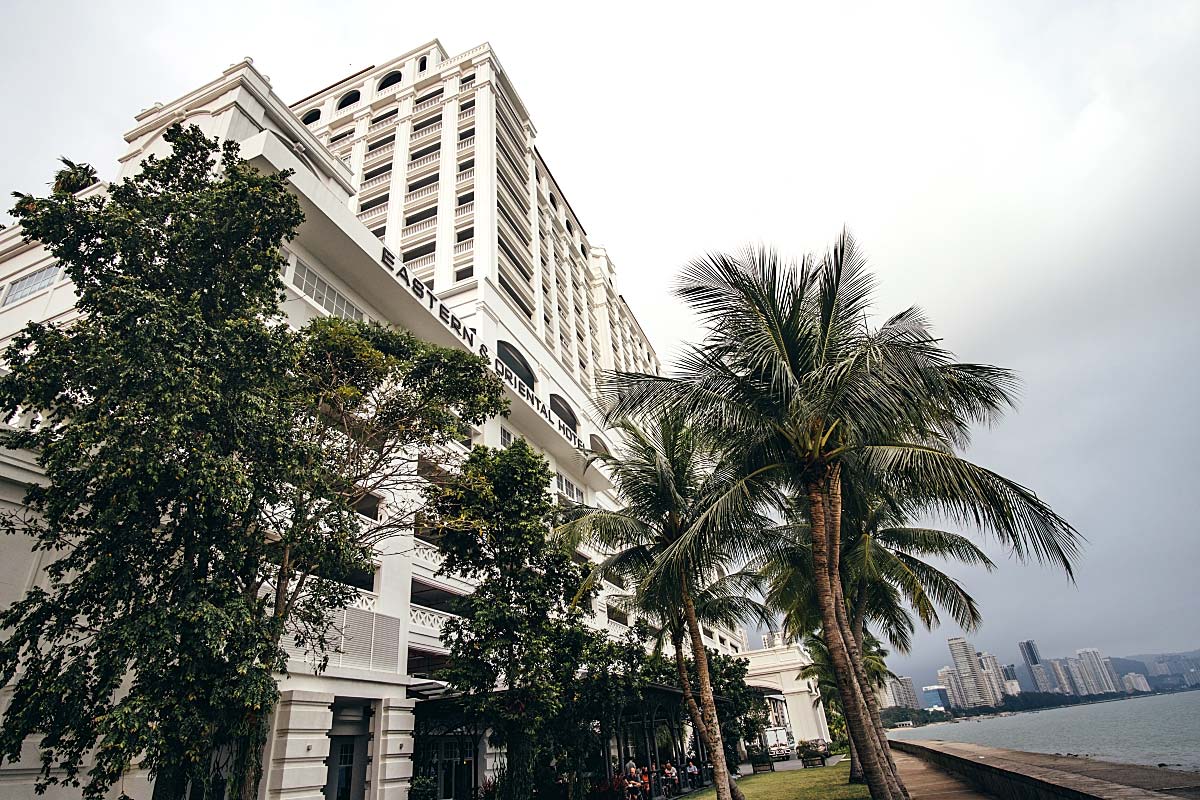
Malaysia reopened its borders to international travelers on 1 April 2022. Since then, the E&O has continued to operate through two connected but different identities: the restored Heritage Wing for travelers drawn to the historic suites and old public rooms, and the larger Victory Annexe for a more contemporary hotel experience. The current property is therefore not one untouched nineteenth-century building. It is a record of expansion, demolition, reconstruction and conservation, with each period leaving something visible.
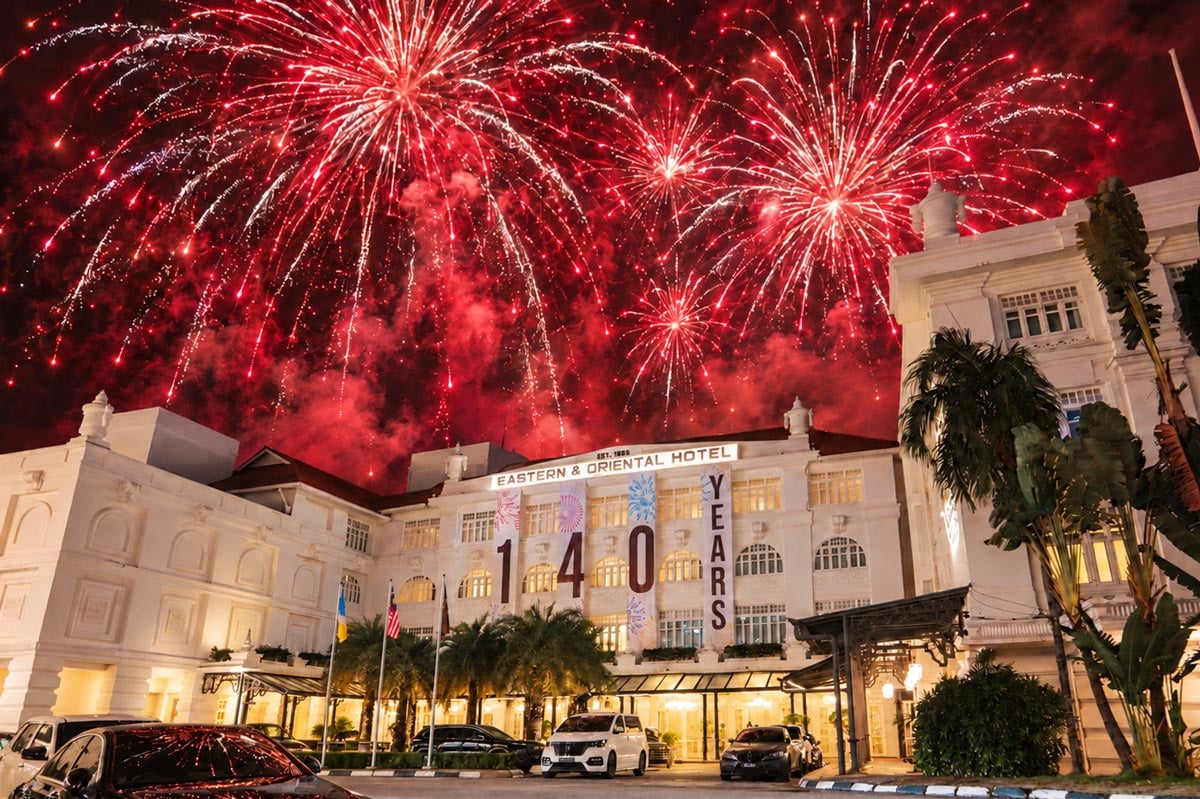
In 2025, the E&O marked its 140th anniversary with a gala ball in the Grand Ballroom. The evening looked back to the Sarkies brothers’ first Penang venture of 1885, with live music, a formal dinner and fireworks over the hotel. After the long closure of the 1990s, the reopening of 2001 and the Heritage Wing restoration completed in 2019, the anniversary carried more weight than a date on a calendar: the E&O had survived by returning to use, not by becoming a museum.
That layered character may be the E&O’s greatest strength. The hotel has survived because successive owners were willing to change it. It remains historically valuable because, at crucial moments, they also decided what should not disappear.
Conclusion
The Eastern & Oriental Hotel has outlived its founders, several owners, war, labor unrest, changing travel habits and more than one ambitious renovation. Its history is not a straight line from colonial grandeur to modern luxury. It is a sequence of recoveries, with occasional mistakes left in the record.
For travelers interested in historic hotels, the E&O is valuable precisely because those layers remain readable. The dome, lift, broad corridors, seafront and surviving objects connect the present operation to the Sarkies era, while the newer wings reveal how much adaptation was required to keep the hotel alive. A perfect museum might preserve more. A hotel, inconveniently, must continue welcoming guests.
Historical Sources
Sources used for this E&O Hotel history
Principal historical source: Ilsa Sharp, The E&O Hotel: Pearl of Penang. The book is the main source for the detailed early chronology, historical debts, ownership changes and wartime account.
The 2001 reopening and present hotel structure were checked against the official Eastern & Oriental Hotel website and the E&O Group. The 2019 Heritage Wing restoration was checked against the hotel’s official announcements and contemporary reporting. Information about George Town’s protected area was checked against the UNESCO World Heritage listing.
Frequently Asked Questions
Who founded the Eastern & Oriental Hotel?
The E&O was founded by the Armenian Sarkies brothers. Tigran Sarkies opened the Eastern Hotel in 1884, and the family developed the Oriental Hotel before adopting the combined Eastern & Oriental name in 1889.
When did the E&O Hotel open?
The hotel traces its beginnings to the Eastern Hotel, opened in 1884. The Oriental Hotel followed in 1885, and the Eastern & Oriental name was adopted in 1889.
What happened to the E&O Hotel during World War II?
Japanese forces requisitioned the hotel after occupying Penang in December 1941. It was renamed the Penang Haitan Ryokan and used as a private club for military officers. The building survived, though much of its equipment and many business records were lost.
When was the Heritage Wing last renovated?
The Heritage Wing underwent a nine-month restoration and refurbishment beginning in March 2019. It reopened in December 2019 with refreshed suites and reorganized dining and bar spaces.
What is the difference between the Heritage Wing and Victory Annexe?
The Heritage Wing contains the historic heart of the hotel and its restored suites. The Victory Annexe is the larger modern wing that opened in 2013, designed with architectural references to the older property.
You Might Also Like

You might also like