This review is based on our visit to Erawan Tea Room in Bangkok. We refreshed the article in September 2026, improved the structure and checked the restaurant’s current opening hours, location and dress code. Menus and prices can change, so use the practical information below when planning your visit.
Our Erawan Tea Room Bangkok review began with a lunch break after walking through the city centre. Managed by Grand Hyatt Erawan Bangkok, this Thai restaurant serves familiar regional dishes in an elegant dining room above one of the city’s busiest intersections. It occupies a useful middle ground between Bangkok’s street-food energy and the comfort of five-star hotel dining.
We ordered several classics from the Erawan Tea Room menu, including Tom Yum, green curry and Pad Thai. The visit eventually continued with Thai afternoon tea and Black Ivory Coffee. Below, we cover the food we tried, the retro interior, prices from our visit and the current practical details worth knowing before you go.
Is Erawan Tea Room worth visiting?
What We Loved
- Confident versions of classic Thai dishes
- Excellent Tom Yum with a rich fish stock and succulent prawns
- Elegant retro interior overlooking central Bangkok
- Thai afternoon tea and rare Black Ivory Coffee under one roof
What Could Be Better
- The green curry looked less polished than it tasted
- The mall setting is less intimate than a standalone restaurant
- The extensive menu can make choosing difficult without guidance
Best for: Travelers looking for polished Thai classics, a comfortable lunch near the Erawan Shrine and an easy introduction to Bangkok hotel dining.
Contents
- The Story Behind Erawan Tea Room
- Erawan Tea Room Atmosphere and Interior
- Erawan Tea Room Menu: Thai Classics We Tried
- Pad Thai at Erawan Tea Room
- Dessert and Black Ivory Coffee
- Is Erawan Tea Room Worth Visiting?
- Erawan Tea Room Review Card
- Erawan Tea Room Prices, Location and Practical Details
- Frequently Asked Questions About Erawan Tea Room

The Story Behind Erawan Tea Room
Long before the present Grand Hyatt opened, the original Erawan Hotel stood near the Oriental Hotel among the best-known names in Bangkok hospitality. Its Erawan Tea Room operated from 1953 until 1988 and became one of the city’s fashionable meeting places. The modern restaurant continues that name close to the original location, now on Level 2 of Erawan Bangkok and connected to Grand Hyatt Erawan Bangkok.
That history matters because this is more than a tearoom in the European sense. The menu is built around Thai food, with curries, soups, salads, noodles, traditional desserts and a separate Thai-inspired afternoon tea. It works equally well for a full lunch or a quieter stop between the surrounding malls, hotels and the Erawan Shrine.
Erawan Tea Room Atmosphere and Interior
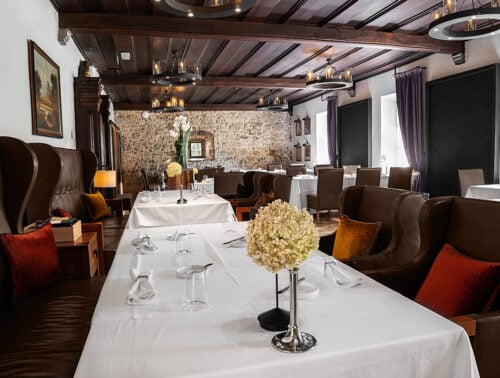
The dining room carries a polished 1960s mood without becoming a rigid period set. Asian ceramics and teakwood furniture establish the traditional side, while Cambodian-style colonial chairs, low-slung lights and deep red velvet sofas add a little theatre. The room is spacious, and daylight enters through the broad glass wall facing the Ratchaprasong intersection.

Watching traffic move through one of central Bangkok’s busiest areas gives the restaurant energy, while the glass and air conditioning keep the commotion at a comfortable distance. During our visit, a small shop inside the tearoom sold tea, dried fruit, biscuits, cooking ingredients and handmade tableware. It was a pleasant extension of the dining room, especially after seeing the ceramics used throughout our meal.
We also noticed references to thoughtfully sourced ingredients and the Earth Net Foundation on the menu. The current restaurant still states that ingredients are sourced locally and organic produce is used whenever possible. Sustainability claims can become vague very quickly, but traceability was at least presented as part of the kitchen’s approach.
Erawan Tea Room Menu: Thai Classics We Tried
Our server recommended the Erawan Tea Room appetiser, a selection of crabmeat dumplings, Thai herbs in a crisp basket and pomelo salad. It gave us several textures and levels of seasoning without turning the opening course into a heavy platter. The pomelo brought freshness to the more concentrated flavours, while peanuts and sweet-and-sour dressing enlivened the crisp crab cake.

The dumplings were slightly sweet and firm, and the delicate filling remained easy to taste. Our crisp herbal basket was the most concentrated bite of the three. Its caramelised sweetness softened the herbs’ gentle bitterness and tied the selection together. It was an assured start and a useful indication that the kitchen handled familiar Thai combinations with care.

Tom Yum with Prawns
Tom Yum has a way of catching us unprepared, even when we know exactly what is coming. The heat and acidity arrived first, followed by a deep, savoury fish stock. Eating such an intense soup after walking through Bangkok’s humidity might sound ambitious, but the cool dining room made it thoroughly enjoyable.

The soup had enough body to carry its complex seasoning, and the sustainably caught prawns were plump and juicy. This was one of our most memorable Tom Yum soups in Bangkok. Its intensity never erased the quality of the stock or seafood, which is where less careful versions often go wrong.
Thai Green Curry
The green curry continued in a fragrant, generous direction. Tender chicken and soft eggplant absorbed the sauce, while kaffir lime leaf and Thai basil lifted the richness of the coconut. The seasoning was layered and satisfying, with the chicken cooking juices adding extra depth.
Its appearance was the only disappointment. The coconut cream had curdled slightly, leaving the curry less refined on the plate than the other dishes. Fortunately, that visual flaw did not affect the flavour, and we soon stopped paying attention to it.
Pad Thai at Erawan Tea Room
A lunch built around Thai classics would have seemed incomplete without Pad Thai. The restaurant served it with a small set of condiments, allowing us to adjust the salt, sweetness, acidity and heat at the table. Fresh bean sprouts brought crunch and moisture, while compact pieces of tofu made the noodles more substantial.

We had eaten our share of greasy, scorched Pad Thai around Khao San Road, so the kitchen’s cleaner execution was welcome. The noodles carried the seasoning without becoming oily, and the components remained distinct. There are cheaper bowls all over Bangkok, of course, but this version justified its hotel setting through balance, ingredients and presentation.

Dessert and Black Ivory Coffee
By dessert, a single sweet no longer seemed sufficient. Erawan Tea Room’s Thai-inspired afternoon tea offered the best opportunity to try a broader range, so our lunch quietly continued into the afternoon. The separate Erawan afternoon tea review covers the savoury bites, scones, Thai sweets and tea selection in detail.
We finished with Black Ivory Coffee, one of the rarest coffees we had encountered during our travels. Its unusual production story attracts attention, but the cup itself gave us a lasting memory. After several Thai courses and a full afternoon tea, it was an extravagant ending to what had originally been planned as a simple lunch.

Is Erawan Tea Room Worth Visiting?
Yes. Erawan Tea Room is a strong choice for travellers who want classic Thai food with the comfort and service of an established Bangkok hotel. The Tom Yum was the highlight of our lunch, closely followed by the varied appetiser and fragrant green curry. Pad Thai was handled with similar care, and the ability to continue with a Thai afternoon tea makes the restaurant unusually versatile.
The setting carries traces of the old Erawan name, although its place inside a modern retail complex naturally limits the sense of historical escape. We also remember the curry’s uneven presentation. Those reservations were minor beside the flavour of the meal, the comfortable room and the central location. For a polished introduction to Thai classics near Chit Lom and the Erawan Shrine, this remains an address we can recommend.
Erawan Tea Room Review Card
-
ATMOSPHERE – 8.8/108.8/10
-
SERVICE – 8.9/108.9/10
-
PRESENTATION – 9.2/109.2/10
-
FOOD – 9.4/109.4/10
-
DRINKS – 9/109/10
-
VALUE – 9.3/109.3/10
Erawan Tea Room Prices, Location and Practical Details
| Detail | Information checked in September 2026 |
|---|---|
| Restaurant | Erawan Tea Room, Grand Hyatt Erawan Bangkok |
| Address | Erawan Bangkok, Level 2, 494 Rajdamri Road, Bangkok 10330, Thailand |
| Opening hours | Daily, 10:00–22:00 |
| Afternoon tea | Daily, 14:30–17:30 |
| Dress code | Smart casual |
| Price during our visit | Our lunch cost approximately USD 30. This is a historical price from our visit, not a current quotation. |
| Reservations | Recommended for afternoon tea and busier dining periods |
| Phone | +66 2 254 1234 |
| Website | Official Erawan Tea Room website |
| Location | View on Google Maps |
You Might Also Like
Frequently Asked Questions About Erawan Tea Room
Is Erawan Tea Room worth visiting?
Yes. It is especially suitable for travellers who want well-prepared Thai classics in a comfortable, central Bangkok setting. We particularly enjoyed the Tom Yum, appetiser selection and green curry.
Where is Erawan Tea Room located?
Erawan Tea Room is on Level 2 of Erawan Bangkok at 494 Rajdamri Road. It is connected to Grand Hyatt Erawan Bangkok and close to the Erawan Shrine and Chit Lom BTS station.
What type of food does Erawan Tea Room serve?
The menu focuses on Thai cuisine, including regional favourites, curries, soups, salads, noodles and traditional desserts. The restaurant also serves a separate Thai-inspired afternoon tea.
How much does a meal at Erawan Tea Room cost?
Our lunch cost approximately USD 30 at the time of our visit. This is a historical price and should only be used as a guide. Check the current official menu before visiting because menu prices are subject to service charge, tax and change.
What is the dress code at Erawan Tea Room?
The current official dress code is smart casual. Neat daytime clothing is suitable for lunch or afternoon tea.
What are the Erawan Tea Room opening hours?
The restaurant is currently open daily from 10:00 to 22:00. Afternoon tea is served from 14:30 to 17:30. Check the official website before travelling because hours may change.
Does Erawan Tea Room serve afternoon tea?
Yes. Its signature afternoon tea uses Thai flavours across savoury and sweet bites. We tried it after lunch and covered the complete experience in a separate Erawan afternoon tea review.

You might also like